Land of Mystery

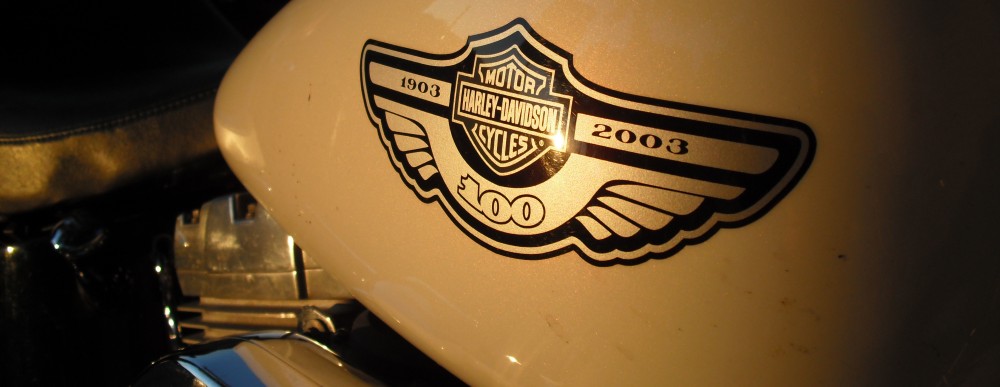
Lovely early summer days have arrived here in Cornwall and for me the best way to enjoy them is from the saddle of one of my beloved Harley Davidson motorbikes!

On my last post I took you to the times of Arthurian Legend, this time lets go back further in time. . . a lot further back.

High on the South Eastern edge of Bodmin Moor is the small and incredibly named village of Minions, yes honestly that’s the name of the place! Here can be found evidence of human habitation that stretches back to the Neolithic Period, at least 2500BC, or to put it another way, thats over four and a half thousand years ago! Around the parish can be found burial mounds, standing stones, ditch-ways and a host of other mysterious works.

Most impressive of all can be found on the Western edge of the village where three intriguing stone circles laid in a straight line lie. These are known as “The Hurlers,” or in the local Cornish language, “An Hurlysi.” They are probably the best example of ceremonial circles in South West England and folklore has it that they are the petrified remains of men punished for playing Cornish Hurling on a Sunday.P1030830
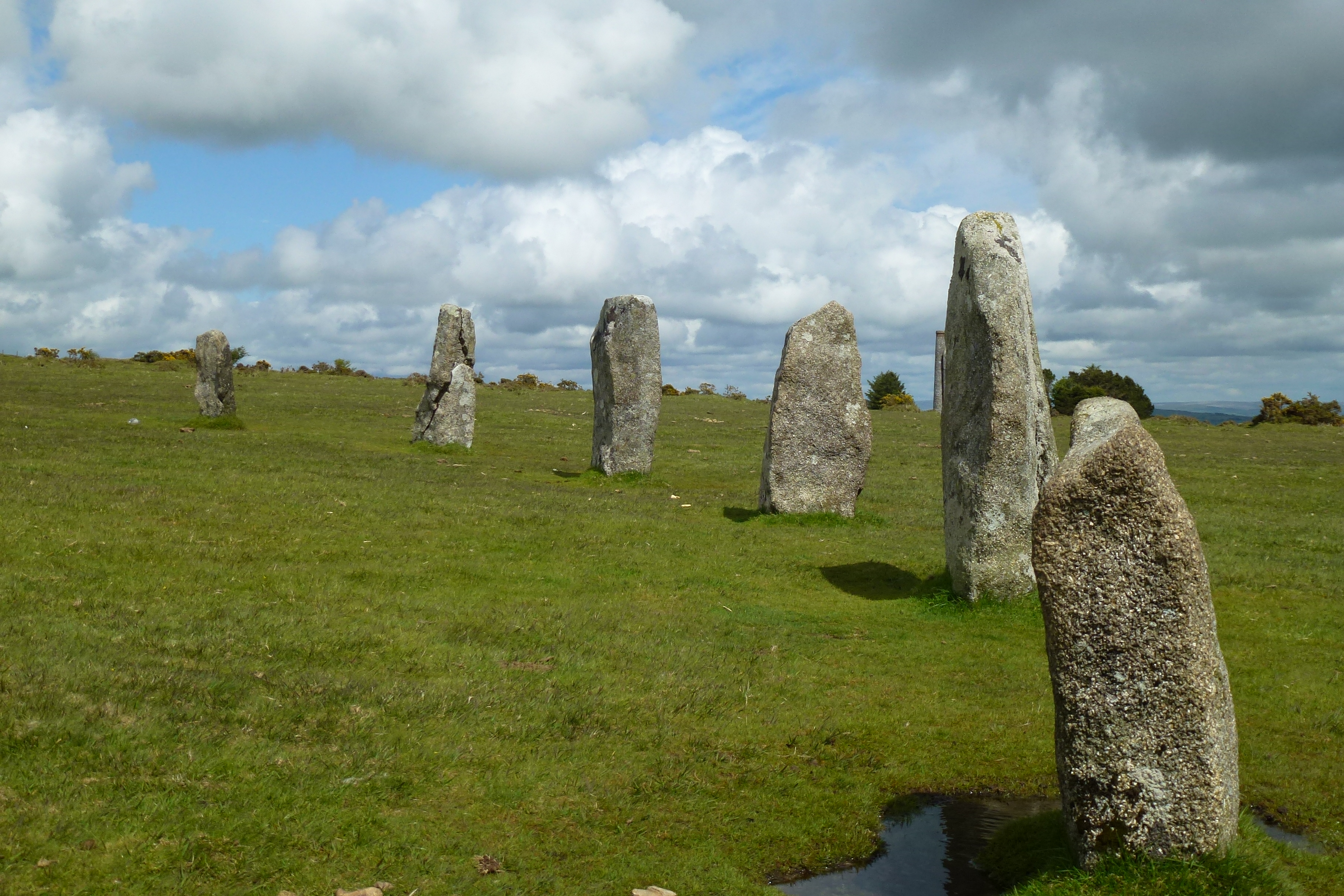
The three large circles are aligned on an axis running NNE to SSW. The largest circle is the centre one and measures just over 41 metres in diameter, with its flanking neighbours both just over 30 metres across. Just off to the West are two separate stones known as “The Pipers,” possibly they were playing for the Hurlers when they were set in stone! The whole site is big! 


Now don’t go expecting another Stonehenge, the more famous site on Salibury Plain, the Hurlers are nowhere near as grand, but to the Ancient people in this part of the world, probably just as important.

It is fair to say that what they represent is, today, a mystery. Some scholars have suggested that the layout of the stones concurs with stella alignment particularly linked to the stars Vega and Arcturus, or at least where that combination would have appeared in antiquity. Others have linked the layout to the stars in the constellation of Orion, specifically the “Belt,” though as recent archaeology has revealed that there once was a fourth circle I guess that kicks that theory into touch! 
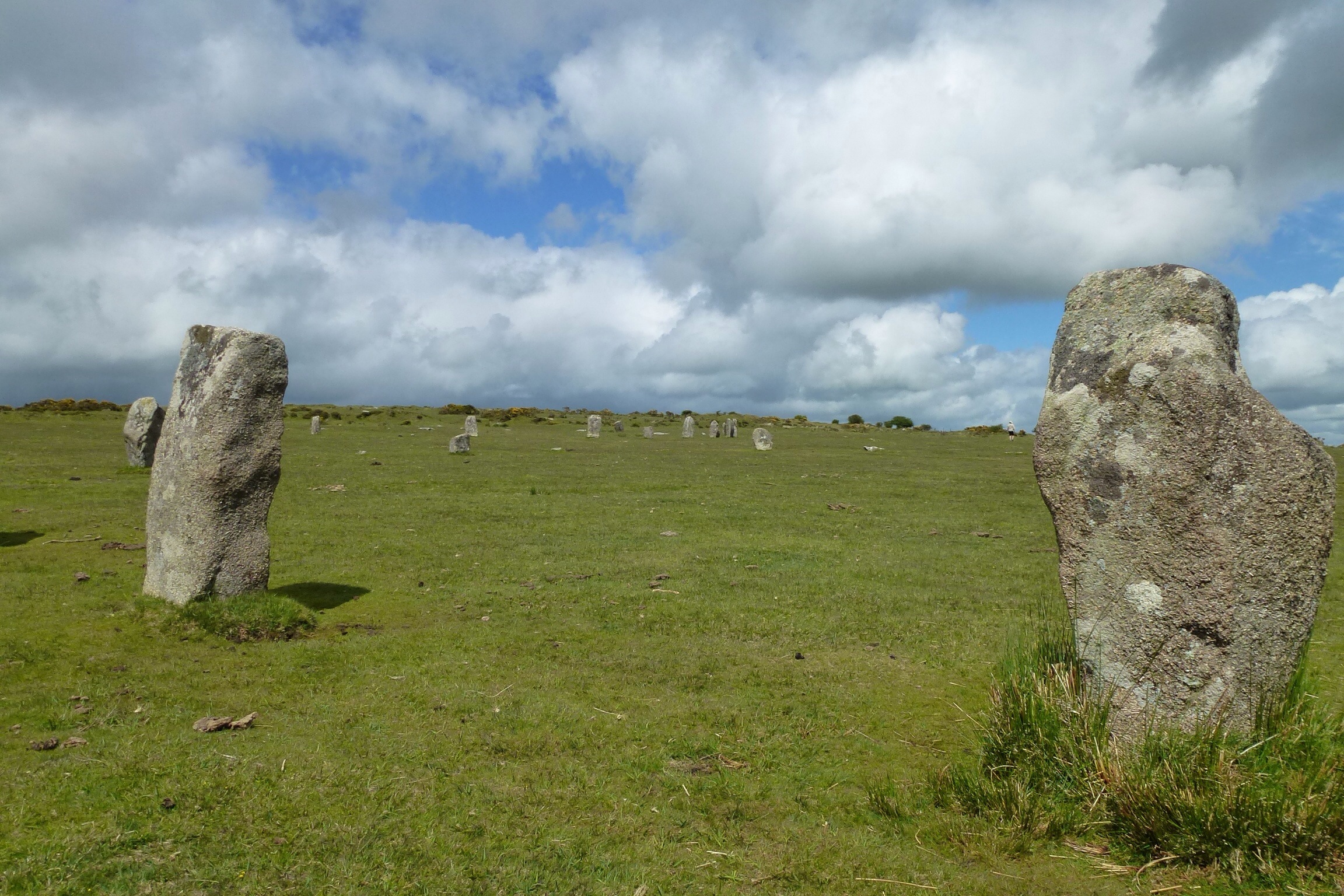
 The stones that remain show clear signs of being crafted and hammered smooth. Originally there were 28 in the centre circle but now only 14 survive, whilst the North circle has 15 out of 30 remaining.

As a place to visit it is certainly worth the effort, particularly on a nice clear day and if industrial archaeology also floats your boat, there are countless reminders of Cornwall’s tin and copper mining heritage to be seen as well. More on that in a future post. I couldn’t resist a bit of monochrome either! 

 About half a mile South of the Hurlers is another fascinating relic of ancient times. This is “Long Tom” also known as “The Long Stone,” an ancient Menhir that possibly pre-dates even the Hurlers. Again the original reason why this 2.8 metre tall stone has been placed here is lost in the mists of time. The most fascinating thing about Long Tom is that at some time the rather phallic stone has been “Christianised,” a simple Celtic Cross has been roughly carved in the head. I found it quite hard to define in a photograph, but trust me, there is a cross there.  


 Now here’s an interesting thing, if you take Long Tom as the starting point a line can be drawn right along the axis of The Hurlers and it leads to an ancient burial mound known as Rillaton Barrow. Local legend says that that Rillaton is haunted by the spirit of a Druid Priest, who offers travellers a drink from an undrainable cup. During archaeological excavations back in 1837 a variety of finds were unearthed. Human remains, obviously, but also “grave goods” including a bronze dagger, beads, pottery and a wonderful gold cup. Now known as The Rillaton Cup this beautiful, 90mm high, relic of an ancient time can be seen in the British Museum, London; could this be the cup of the Druid Priest? 

 Pondering the past and happy to be a Druid, I eased Harley into gear and nodded a distant salute to the Priest as I rode away; luckily I wasn’t thirsty!

“Forget about the cheque we’ll get hell to pay, have a drink on me!

Catch you soon.

Dookes
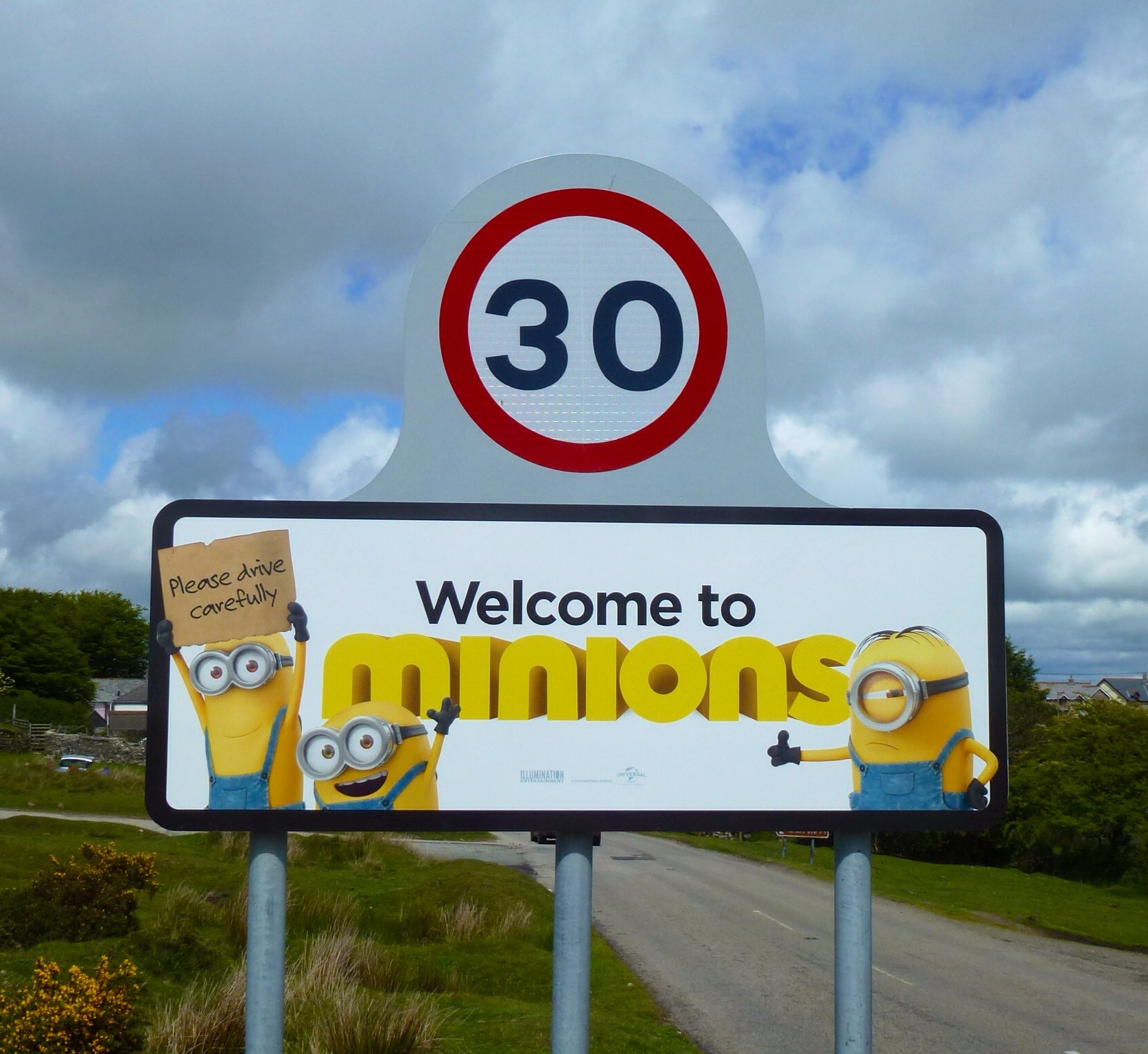
Oh yes, I nearly forgot. Someone in the village of Minions has a sense of humour and I fully approve!  
   

Land Of Legends

The County of Cornwall, home of Dookes H.Q., nestles at the extreme South West Corner of the United Kingdom and juts out into the Atlantic Ocean.

The name “Cornwall” is believed by some to come from the Anglo-Saxon “Corn-Wallis,” meaning Land of the Welsh. This stems from the time when invading Saxons pushed the indigenous Celts out of England into what we now know as Wales, Scotland, Cornwall and Ireland. In the old Cornish language, the County is known as “Kernow,” though strictly speaking Cornwall is not a County, it’s really a Duchy, but that’s for another day! Confused? Welcome to the club!

Cornwall is also known as “The Land of The Saints.” It has an incredibly high number of saints associated with it, over fifty to my knowledge. There are numerous villages and places named after various of them; St Neot, St Minver and St Teath are just three that spring to mind.

All that aside, Cornwall is arguably most famously associated with King Arthur, the legendary King of the Britons.

The big trouble with Arthur though, is that the real man and the legend have become totally separated. It’s not just Hollywood films to blame for that either, the Welsh cleric Geoffrey of Monmouth was “bigging up” Arthur way back in the 12th Century!

There are two main sites in Cornwall that are indelibly linked with the Arthurian Legends. The dramatic, yet forbidding Tintagel Castle and the remote, hauntingly beautiful, Dozmary Pool.

Tintagel is reputedly the place where Arthur was conceived, though some people also believe it to be the site of his famous court of Camelot. The truth, not surprisingly, is a little different! Located on the peninsula of Tintagel Island and standing high above the Atlantic surf, there is evidence of habitation going back to the Dark Ages, well before the Romano-British period over 2000 years ago. It is believed that the regional Kings of Dumnonia may have built a summer residence here as well.

The real Castle that we know today, however, dates from the 13th Century when Richard Duke of Cornwall began construction and it is the romantic ruins of this castle that people from all over the world are drawn to visit.

Tintagel Castle ruins.

Tintagel Castle ruins.

Leaving the legend for one moment, the place is stunning and no wonder that it attracts hundreds of thousands of visitorsP1020885. . . who I must admit mostly come to look for King Arthur!
Barras Head.

Barras Head.

Looking due north from Tintagel Castle is Barras Head a strangely shaped headland that some say is a slumbering dragon, have a look at the photograph and you might be able to see what they mean.

The other place I mentioned is Dozmary Pool. P1030794

Situated high up on Bodmin Moor, this is one of the few natural inland bodies of fresh water in Cornwall. Way back in 1951 it was designated as a Site of Special Scientific Interest for its biology, ecology and wildlife. Evidence of human activity around the lake stretches back to prehistoric times, that’s over ten thousand years ago. More than 2,500 pieces of worked flint have been found including many implements, tools and arrow heads. Interestingly the nearest source of flint to Dozmary is nearly twenty miles away whilst some examples appear to have originated over one hundred miles further east. Clearly our ancestors were not afraid of a good walk!

According to legend Dozmary Pool is where Arthur rowed out to the Lady of the Lake to receive the sword Excalibur. The Pool is also where Sir Bedivere returned the sword, as Arthur lay dying.

Legend says that the sword was received by a female hand, Tennyson wrote;
“Clothed in white samite, mystic, wonderful, that caught him by the hilt and brandished him three times, and drew him under in the mere.”

On a sunny day it is certainly very pleasant, but when the mists roll across the moor it’s waters take on a forbidding leaden hue and it is best left alone with its ghosts. Could this really be Avalon?

Of course there is another Legend seen around these parts too. . .

An American Legend!

An American Legend!

Another day I’ll tell you about more Cornish Legends, like Knockers, Spriggans and the Beast of Bodmin Moor; gotta dash, gotta ride!

“. . . and your destination, you don’t know it, Avalon.”

Catch you soon.

Dookes

Sometimes You Just Gotta Ride!

There are days when I begin to hanker for being out on two wheels, but in the back of my mind I know that the list of jobs that need attention at Dookes H.Q. over-rides my selfish whims.

Today started just like that and when you consider that I spent most of yesterday watching the incredible climax of this year’s Six Nations Rugby Competition…the chances of getting out on Harley looked remote!

Even worse, the weather was sublime.

Then again, you have to remember that I am married to a rather remarkable lady.

You see, Mrs Dookes has the ability to recognise the “Harley hankering” symptoms and also knows what a pain in the backside I can be when the condition strikes! I spent this morning finishing a small project for the house out in my Man-Cave, the workshop. Whilst I began to ponder “what next” over a cup of tea, Mrs D suggested it was time for me to go for a ride… I told you she is amazing!

It didn’t take long before Harley and I were out on the road.

I didn’t fancy tearing about, better to take your time and enjoy the day in a mellow way. We set off North East and soon crossed over the county boundary into Devon.

For those of you who do not hail from these shores, the County of Devon is one of the most quintessential of all English Counties; the scenery is gentle on the eye, “chocolate box” thatched cottages abound and the roads meander the contours in sweeping curves and bends…just right for a motorbike!

We passed through small villages with delightful names; St Giles on The Heath, Chapmans Well, Clawton.

At Holsworthy we stopped and explored part of the long closed railway, the old viaduct standing silent testament to the thousands of trains that once passed here.

Holsworthy Viaduct

Holsworthy Viaduct


From Holsworthy we turned West and crossed back into Cornwall near the source of the River Tamar, which for most of its course forms the boundary between the two counties.

Soon we had that tantalising first glimpse of the sea, the dark line of horizon where sky meets water. Whenever I experience that view, living in Cornwall it happens a lot, I still get a surge of excitement like a small child on a seaside holiday!

OK, looks like we are going to the seaside again… I really can’t help it!

The evocative poem “Sea Fever” by John Masefield, started running through my mind;

“I must go down to the seas again, to the lonely sea and the sky,
And all I ask is a tall ship and a star to steer her by.”

I love that poem.

We paused at Widemouth Bay; that’s pronounced “Widdmuth.” Standing on the cliff above the bay the spring sunshine, yes we have now passed the Equinox, bathed the scene. Shallow rollers lazily rippled in from the Atlantic, not big enough to surf today, but easy on the soul and uplifting to world-weary eyes.

Low Tide at Widemouth Bay

Low Tide at Widemouth Bay


Heading for home, I mused that last time I rode Harley I was returning from scattering a friend’s ashes, today was altogether brighter and much more cheerful. The sentries of bright yellow daffodils that line the lanes here at this time of year certainly contributed to the cheerful mood.

Arriving back at Dookes HQ, I shared the last of Lili’s wonderful Bikers Cake with Mrs D; then set to giving the grass its first cut of the year.

Yes, sometimes you just gotta ride!

“Oh, I’m a travelin’ man”

Catch you all soon.

Dookes

Todays ride is dedicated to David.

Motion

Photography 101. Todays assignment: Moment and Motion.

Right, so everyone thought there was going to be a photograph of a Harley or some other motorbike. Well, to be honest that would have been nice, but as I can’t ride one and take a photo of it at the same time we will all have to settle for something else!

Again the old Dookes grey matter has been stretched, but I came up with something that I think fits the task.

The lunchtime train running bunker first on the Bodmin and Wenford Railway, near the wonderfully named “Crabtree Lane” bridge.DSC_0006
My variation on the “Motion” theme was to use a slow shutter speed and “pull” the zoom at the same time as shooting, it’s like panning, but use it for when something is moving towards you. The background blurs, but the subject should stay reasonably sharp.

It sorta works, but not the best in my opinion!!! The shot certainly has blurred motion though.

I have to admit that I’m not a great fan of this sort of photograph, it’s an engineering mindset I guess, I like things to be sharp. I’m happy to hear what you think though!

“Gonna be your man in motion, all I need is a pair of wheels”

Catch you all soon.

Dookes

PS Don’t you all think it’s time for a motorbike type post? 🙂

Solitude

Photography 101. Todays assignment: Solitude – And The Rule of Thirds.

Hmmm. Tricky this one. I spent all morning thinking about solitary trees.

Then maybe a single apple on a plate, but that would have been a bit desperate!

Time for a ride on Harley, that normally gets the old mind back in working order! The light was fantastic, just perfect for taking colour photographs

We trundled around the North East side of Bodmin Moor and then ended up on the old World War Two airbase, Royal Air Force Davidstow Moor.

This is a very special place. It nestles high up in an ethereal corner of Cornwall; though when the mists roll in it can feel cold and sinister, time to leave it and it’s spirits alone.

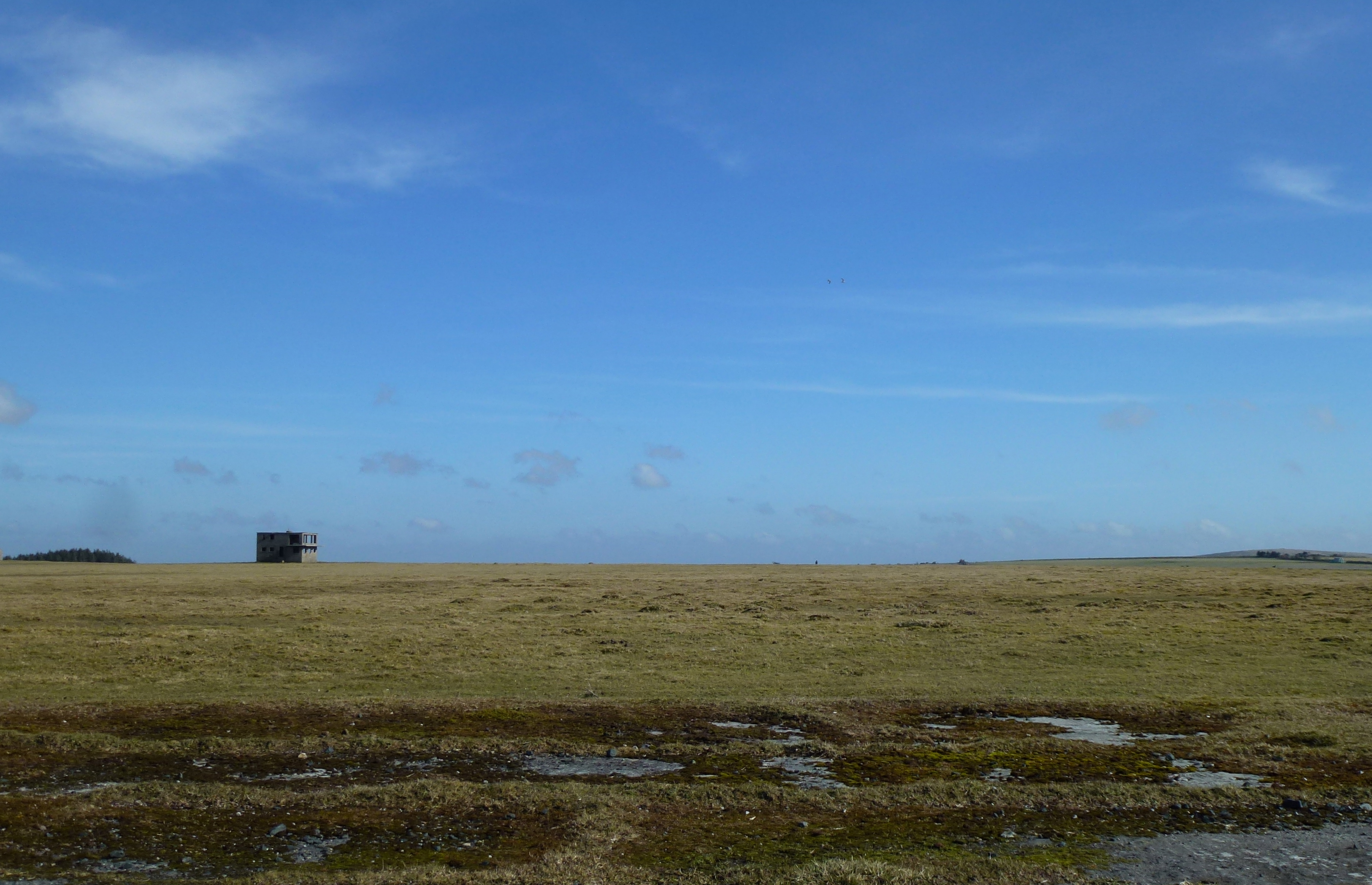
The silent runways still lie largely intact, as are the ruins of air-raid shelters. Not much else remains, except for the gaunt, block-like, decaying hulk of the old Control Tower which remains as witness to the events of the past.

The Tower seems to stand vigil in sad solitude; waiting to welcome home the ghosts of aircrew who never returned.P1030151There is a tangible presence around the place which is hard to define, it pulls me back frequently, but I can never stay for long…

Per Ardua ad Astra.

Dookes

A New Day and The Brown Willy Effect!

I don’t quite know what it is, but these days I find myself trying to put the brakes on the ever crazy speed that we try to live life in the “Western World.”

This morning was a good example. As I set out on my twenty-mile commute, sans Harley I’m afraid, across Bodmin Moor the sun was just beginning to claw itself above the hills, kissing the landscape with its golden light.

Time to pull over and take in the moment, the office can wait for a few minutes!

Colliford Lake glints like a shard of liquid silver in the half-light.20150217_073916

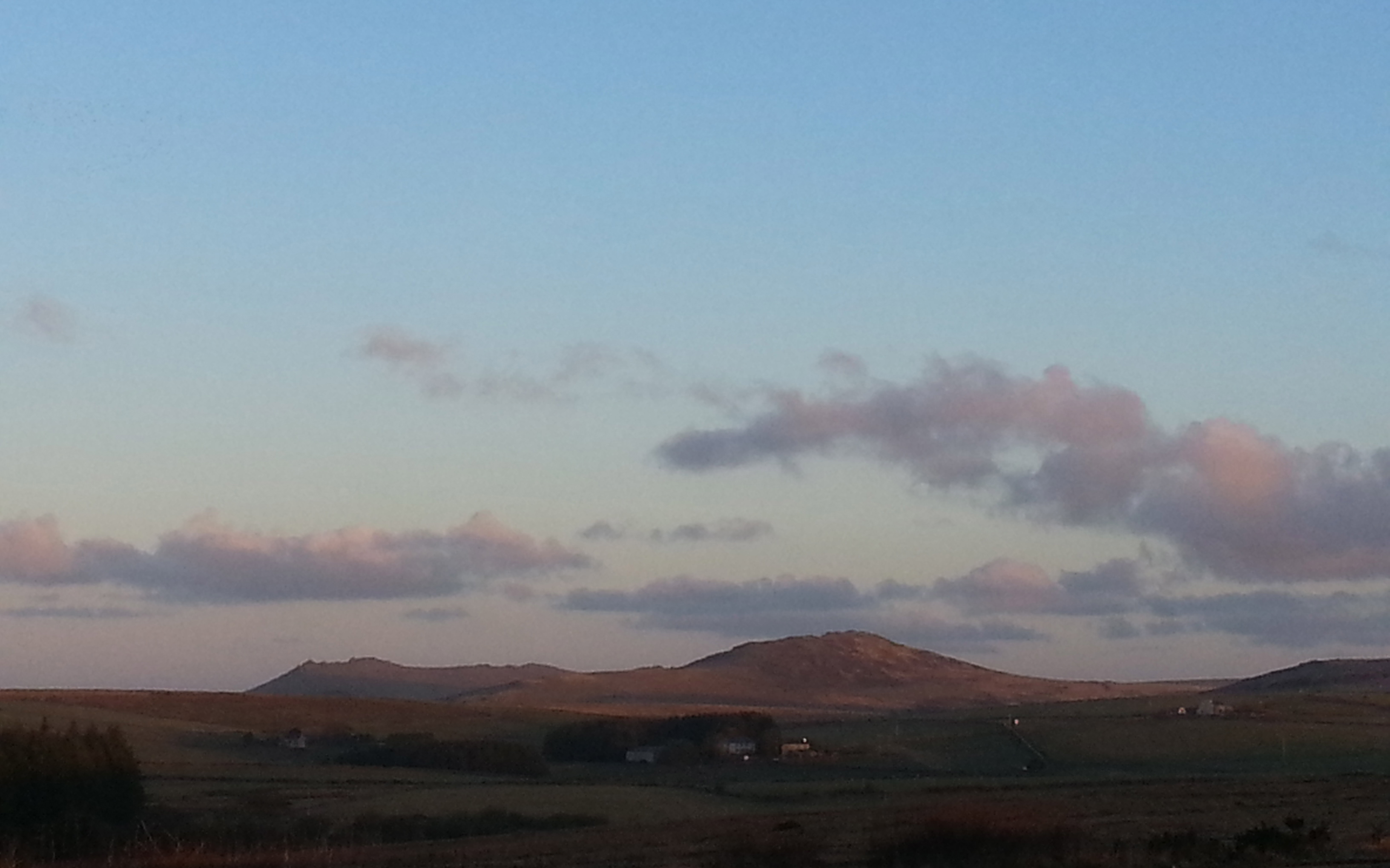
Looking North, Rough Tor on the left and Brown Willy to the right, the highest points in Cornwall.20150217_074008Notice how the cloud is being pushed out of shape by the air moving over the hills? This is a meteorological phenomena know as “The Brown Willy Effect.” In simple terms it occurs when warm moist air from the Atlantic Ocean blows over the hills of Bodmin Moor and is lifted by the altitude of the surrounding topography; this causes the moisture to condense and brings more rain to Cornwall than other parts of England… and that’s saying something! Nice to capture it in a photo without it raining!

Then it was time to move on, after one more deep breath of the fresh moorland air.

Catch you soon.

Dookes

“I’ve looked at clouds from both sides now…”

The Coast

Today, in the South West corner of the UK, it has been absolutely heavenly. Some people call these early spring days the “False Spring,” as we all know that the winter hasn’t really gone just yet…but its nearly gone!

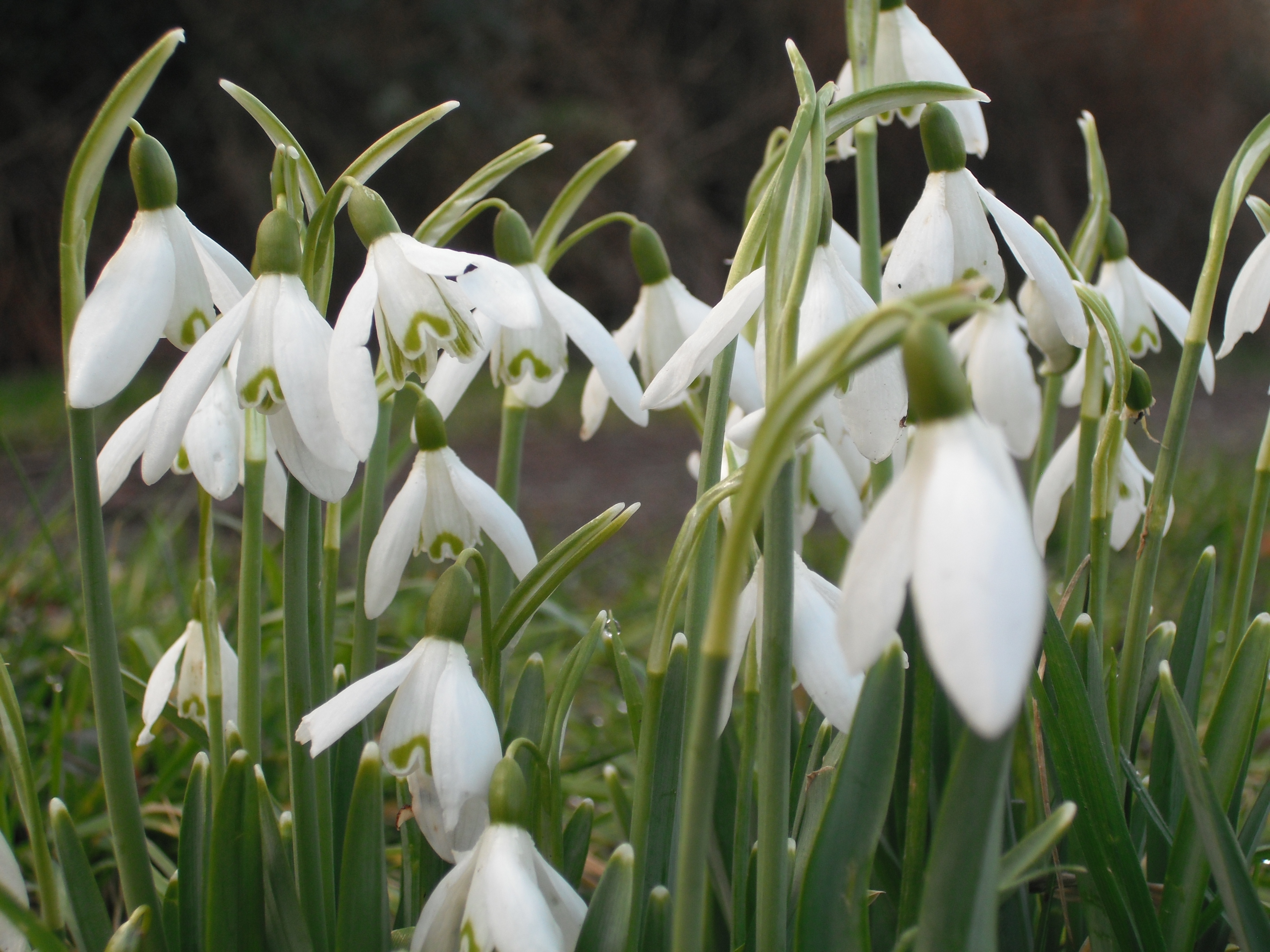
At Dookes H.Q. those wonderful little harbingers of Spring, the snowdrops, Galanthus Nivalis, have thrust themselves up through the cold ground to brighten our days with their happy flowers. If you flatten yourself to the ground they have a delightful scent as well!DSCF3779
So with all this optimism around it seemed a tad silly not to get out on two wheels and drink in the loveliness!

As part of my recently completed Blogging 201 course, I have undertaken to publish a monthly theme post. Living where we do, in a County that is virtually surrounded by the sea, it seems to me that using “The Coast” as the theme is a pretty good idea? What do you good people think of that?

It’s also a pretty good excuse to hunt out those special seaside foods, Dookes ain’t daft you know!

Last month I posted some photographs of the rugged North Cornish Coast, so today by way of a contrast, I thought I’d take you on a trip to the South East corner of Cornwall.

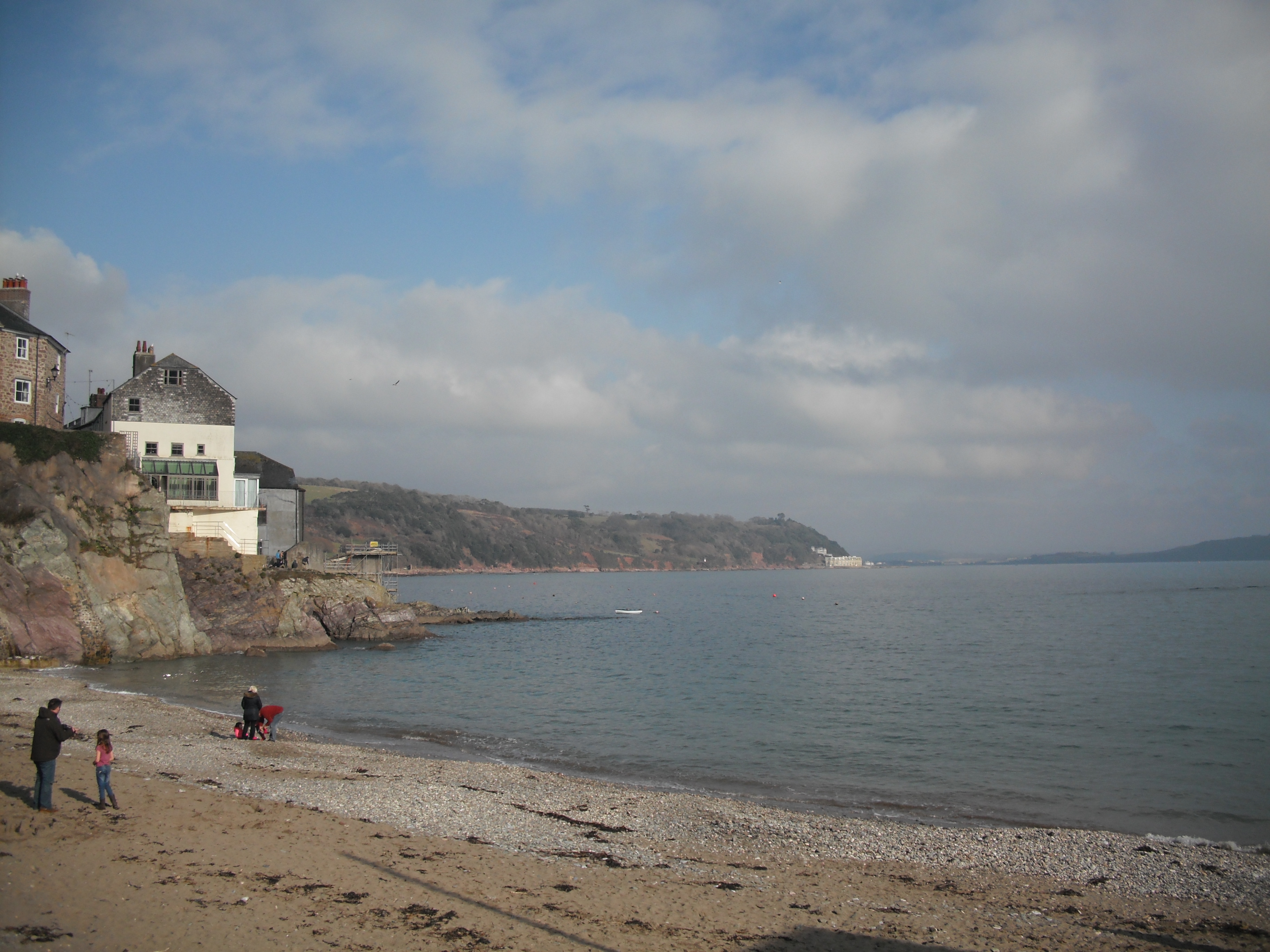
This is the small beach at Cawsand Bay, it faces East out across Plymouth Sound. I’ve been past it many times on ships leaving for France and Spain, but this was the first time I have actually visited. Quite delightful, but not a surfing hotspot!DSCF3754

After chilling for a while on the beach wall, Harley and I headed South and picked up the old Military Road which high above the sea gives stunning views from Rame Head across Whitsand Bay. It was one of those days when the sea and sky merge together in a gentle fuzziness without a clearly defined horizon. Not exact misty and not really clear either, but gentle and embracing nonetheless.DSCF3774

The sea lay glassy and still, with barely a breath of wind rippling the surface. It’s benign beauty concealing the fate of many ships and men who lie here in salty graves beneath the cold surface. These are dangerous waters.

Two specific losses spring to mind. In January 1914, Submarine A7 sank here with the loss of all her crew and the American liberty ship SS James Eagan Layne went down in March 1945 after being torpedoed by a German submarine. In more recent times the former HMS Scylla was purposely sunk, to create an artificial reef and diving site.

Rame Head and Polhawn Cove. Excuse two into the sun shots, but I kinda like them!DSCF3762

The Military Road was built in the mid Nineteenth Century to link coastal defence forts that were built to protect the coast and the important naval city of Plymouth. Today, only Tregantle Fort is still in military use and is regularly used for live firing with small arms; the big coastal guns have long gone. The views from the road are invigorating, with or without a Harley Davidson!DSCF3769

Even though it is only mid-february, you can see the yellow gorse flowers of the gorse breaking out and filling the air with its heady coconut aroma. We are about 360 feet above the sea here.DSCF3764
I do believe that Harley was glad to get out as well, she purred along, well OK, Growled Along, eating up the miles with ease. My chassis feels a little more tired this evening! I’m definitely not riding fit at the moment, fortunately the answer to that is more riding…
Life can be tough!

I don’t quite know how, but I managed to fail on the food front, probably because I was far to busy enjoying myself in the sunshine on two wheels! So, dear reader, I’ll endeavour to rectify that on our next Coastal Odyssey!

Until next time.

Dookes

“I’m gonna head down to the coast, where nothin’ ever seems to matter…”

An Uncle’s Pride

It’s been difficult this last week in the wider Dookes family.

My Sister in law’s mother, Sally, passed away after a long and sometimes painful illness.

Today was her funeral.

The service was the normal affair for our part of the world, nothing extravagant, but full of love, remembrance and gratitude for the life of Sally.

During the service the eulogy was beautifully and courageously given by my niece Kerenza and a poem read with determined passion by nephew Christopher.

My eyes filled with tears and my heart bubbled with emotion, not for Sally who had a full and happy 79 years, but with pride and admiration for those two fine young people publicly expressing their love for their departed Grandmother.

The two children I knew had grown up; there stood adults, ready to carry the flame onwards.

I came away knowing that in one part of the world, the future was in good hands.
DSC_0426

Just Blowin’ Away Some Cobwebs

OK, I know… I’ve been whingeing on for a bit about how I haven’t been out on my beloved Harley for ages, so I guess the first thing to say is, “Sorry about that!”

Whilst it seems like for ever to me, it’s actually only been eight weeks; such is the depth of withdrawal symptoms that I have been suffering!

Well, the good news is that the enforced riding break got busted last Saturday!

The day dawned bright and clear, we had rain in the early part of the night which nicely washed the salt off the road, so all looked fair for a quick breath of fresh air on two wheels. Apart from a quick return blast along the A30 between Launceston and Bodmin, something else a bit more interesting was also called for. Harley was running as smooth as ever and like me, seemed pleased to be out again. So lets head north-west for about 16 miles and find the delightful coastal village of Crackington Haven.

I hold a special affection for the place and its beautiful beach.

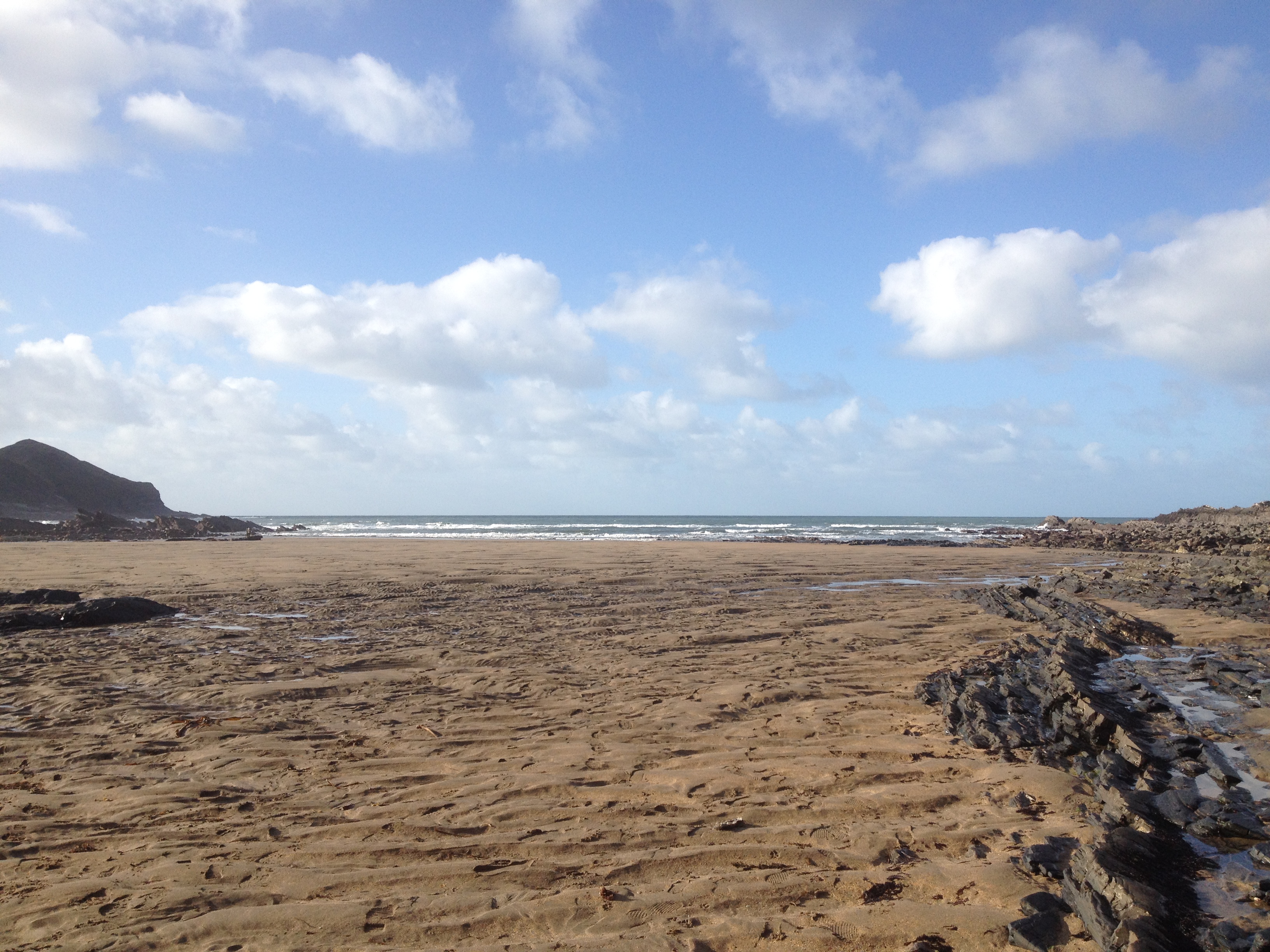
Many, many, years ago a young Dookes once spent a wonderful holiday there, playing the crashing surf and hunting in rock pools for crabs and shrimps. Today not much has changed, though over forty years have passed! The beach is still a mix of glorious sand bounded by rocky outcrops, with some of the highest sea cliffs in Britain.

IMG_0490

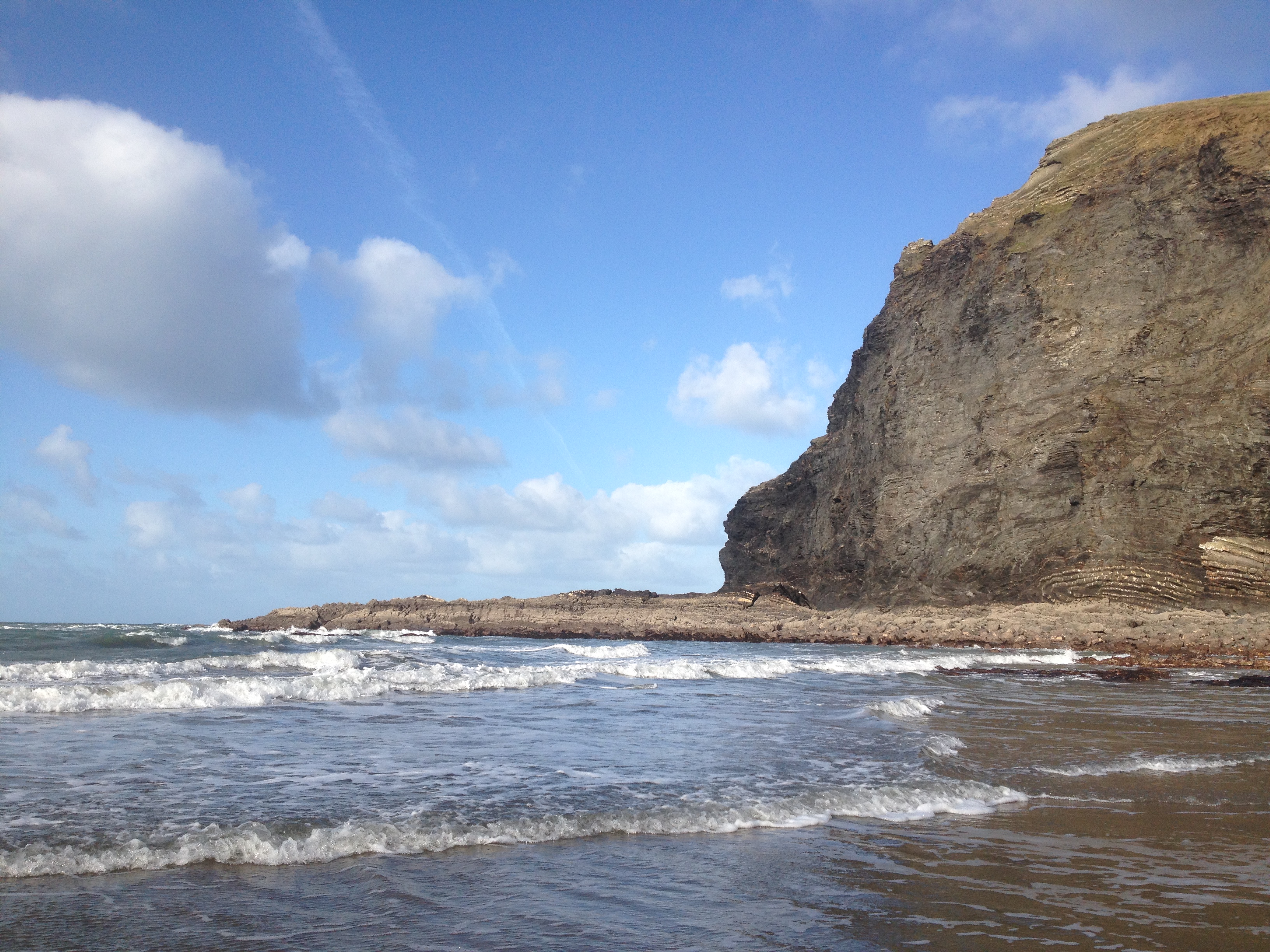
Crackington is, in addition to being a super holiday location and when the tide is right an absolutely brilliant surf beach, amongst the most interesting geological locations along the North Cornwall Coast.

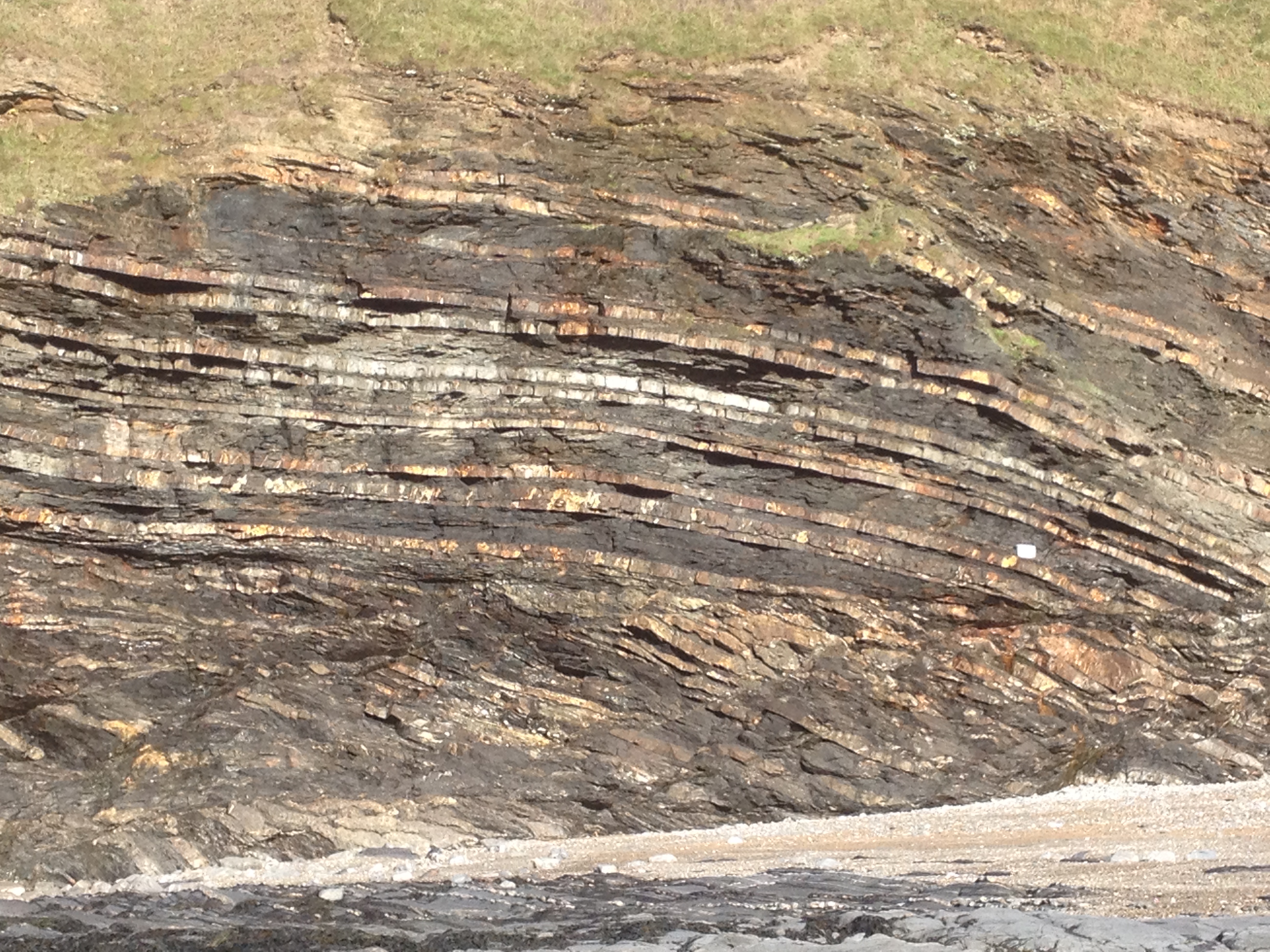
The rocks here date from the Upper Carboniferous period and are around 325 million years old. They originally started as mud and clay deposited in a relatively deep delta basin, which at that time lay roughly on the Earth’s Equator. These stones have moved around a bit! Over time the movement of the earth’s crust has compressed the mud into hard shales, sandstones and slates. In places the twisted and folded rocks show fantastic patterns in the cliffs.

IMG_0483
Such is the geological importance of these rocks that they have been named the “Crackington Formation” and although they have been studied for well over 100 years, they are still yielding new fossils and data. Not bad for 325 million year old mud!IMG_0496

The air was clean and gin clear, sometimes it can be easy to forget that we are blessed with such vivid light in our corner of the world, but Saturday certainly gave me a gentle reminder. Standing there on the beach, soaking up the view and atmosphere, I got a real sense of being at one with the world.

IMG_0493

Riding home, the air temperature was beginning to fall; 6 C/43 F, boy was I glad of my heated gloves and jacket liner!

Harley and I rolled back into my workshop after a fifty mile long smile; Mrs Dookes greeted us, “Good ride?”

“Yeah, great thanks… just been blown’ away some cobwebs!”

I’m back in black.

Catch you all later,

Dookes