Land of History

There are occasions when, as I ride around the Cornish countryside, I am frequently in awe of the rich history that is cradled in this small part of the world.

In recent posts I have travelled back to the times of legend and the Bronze Age. Let’s “shoot” forward a few years, drop in on the times of Henry the Eighth then fast forward to the Twentieth Century and do that all in one place and what a place it is! This is Pendennis Castle.

Perched atop a rocky headland that juts out into the open sea close to the historic town of Falmouth on Cornwall’s southern coast, the imposing fortress of Pendennis protects the sheltered mouth of the River Fal and the deep water anchorage of Carrick Roads. Over 400 years ago work began on this great fortification by order of King Henry VIII; by the 1540’s the elegant gun tower was built followed in 1600 by the ramparts which today still define the perimeter of the site.
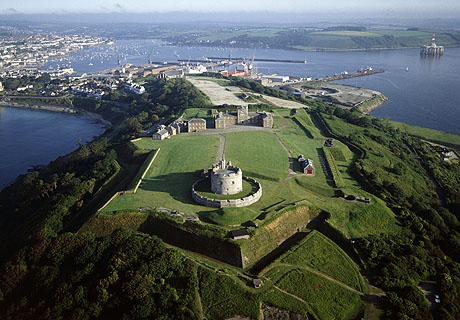
PENDENNIS CASTLE Aerial view of the castle looking North West

Aerial view of the castle looking North West


The castle played an active role in the nation’s defence until the 1950’s, since then Pendennis has been treasured and conserved as a site of great historical importance. It is open to the public all year round, (weekends only during the winter) and should be on the “to do” list of any visit to Cornwall.

A couple of weeks ago I was lucky to be invited to visit by the staff of English Heritage, who are the custodians of the castle. Passing through the massive gatehouse on my new Ultra Limited was a thrilling and privileged experience, I must confess to wonder if this was the first time a Harley Davidson has entered the castle in its long history?
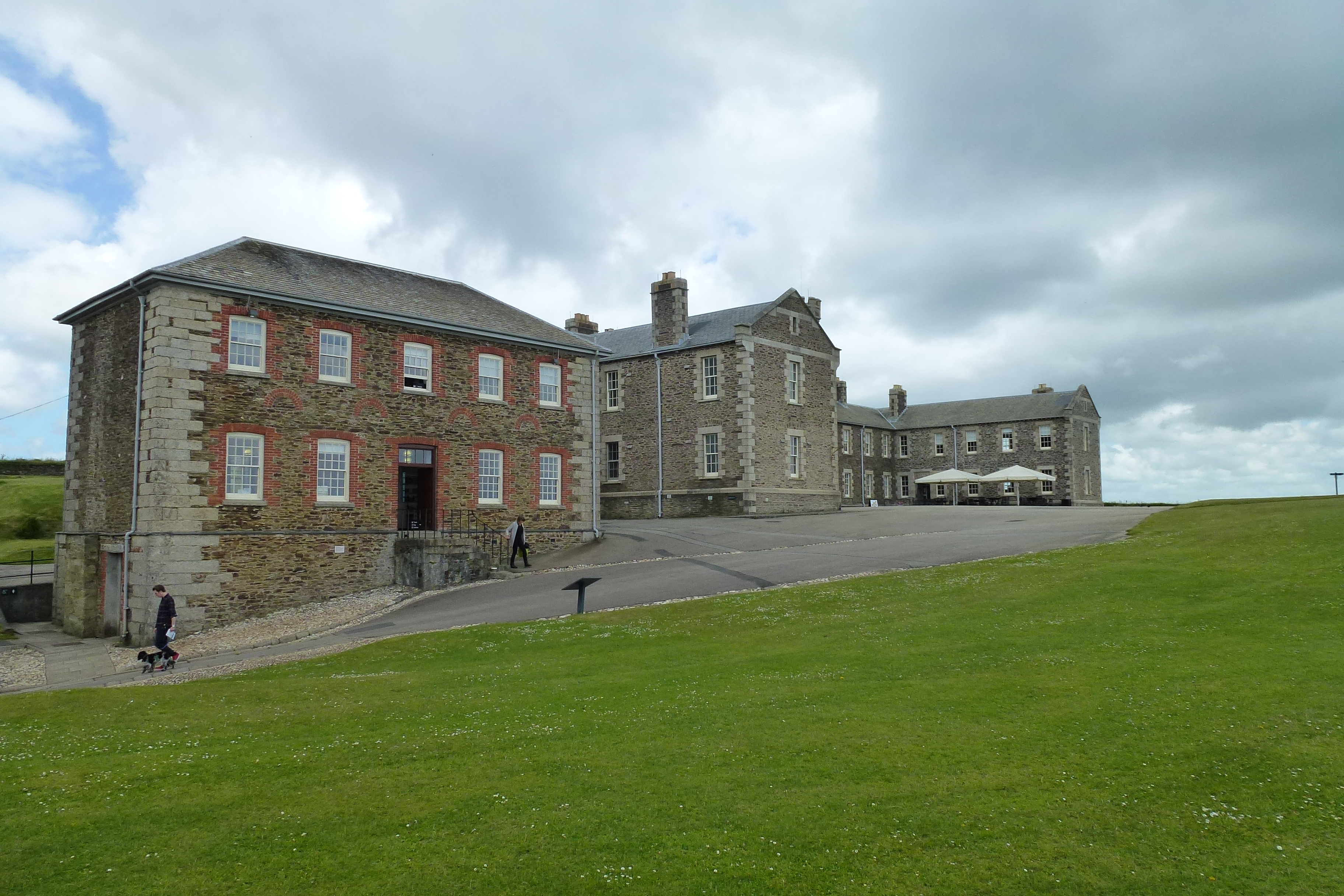
Royal Garrison Artillery barracks.

Royal Garrison Artillery barracks.


The first imposing building that greets visitors dates from 1902, it was the regimental headquarters and barrack block of the 105th Regiment Royal Garrison Artillery. The building is fronted by a parade ground where it is easy to almost hear the historical echoes of soldiers marching and the gravel crunching under their boots. The barracks today houses various displays showing facets of life in the British Army throughout he ages, at present there is a super exhibition to mark the centenary of World War One and is well worth a look.

Central to the inner bastion is Henry VIII’s keep, or gun tower.Pendennis_CastleBegun in 1539, this was built as a response to the then threat of invasion by French and Spanish forces. It has four sections: a guardhouse, a fore building, a central round tower and a surrounding gun platform known as a “Chemise.” Not only is it one of the finest examples of one of the first purpose-built Gun Forts, but it also has one of the last drawbridge and portcullis installed in a castle other than as a decoration.

You see the most fascinating thing about this place is that it is not a castle from the days of knights on horseback and bow and arrows, no, Pendennis has always been about guns, very big guns! Everywhere around the place you will find artillery pieces from the various ages of the castle’s history and most impressive of all, a lot of them are still in working order and are regularly fired; much to the excitement of any children visiting, this one included!

Today, the main reason that I was visiting Pendennis Castle was to watch the firing of the Noon-Day Gun. This is a tradition that was only resurrected only last year. Pendennis has long marked the accurate passage of time; for many years a time ball was dropped at 1pm every day so that ships could set their clocks, so vital for accurate navigation. This in turn led to the firing of a gun at noon and later still to the use of a siren.

The Pendennis Time Ball

The Pendennis Time Ball

Today the Castle staff use the historic artillery pieces to mark the passage of time, during my visit the chosen gun was one of two Quick Firing 25 pounder British field guns that date from World War Two and were still in service until the early 1960’s. It was the first time that I had ever been up close and personal with such a weapon, despite descending from two artillery serving Grandfathers! There must be some artillery in my genes though, as I was handed the firing pistol and asked to cock it, without hesitation I did just that and I’d honestly never even seen one before, strange!

The firing pistol.

The firing pistol.

Anyway, we all got excited as the gun was loaded with it’s blank round and waited for the signal to fire. Then wait a minute, we can’t fire because there are a couple of dog walkers beneath the ramparts. . . Henry VIII never had this trouble! The we got the “all clear” and boom, the gun was fired! The photo really doesn’t do it justice, but it was a good bang!

The Noon Gun Fires!

The Noon Gun Fires!

Then all that was left was to unload and clear the breach ready for tomorrow.

Smokin'!

Smokin’!

The collection of artillery pieces also includes an American 155mm “Long Tom” field gun, one of only four on display outside the USA and the only one that works.P1030908

Towards the Southern perimeter of Pendennis Castle can be found more recent defences. Known as Half Moon Battery because of its distinctive shape, this emplacement was first constructed in 1793. Over the years it was repeatedly rebuilt and modernised, from 1911 six-inch calibre naval guns have been in place. The guns were replaced twice during the Second World War the first time because they were worn out and the second occasion improved versions were fitted with greater range and power. The last time that these guns were fired in anger was in 1944 when Nazi surface vessels were engaged. The latter guns could fire a 100 pound shell to a range of 12 miles and were radar directed.

6" Mark 24  gun in Half Moon Battery

6″ Mark 24 gun in Half Moon Battery

Above Half Moon lies a low concrete building sunk into the rampart, this is the Battery Observation Post which controlled the two guns and provided accurate target information to the gunners. It has been restored to its wartime appearance and even houses an optical depression position finder, an early sort of computer for plotting the course and range of a target which was surprisingly accurate.
Inside the Observation Post, depression position finder in the centre.

Inside the Observation Post, depression position finder in the centre.


Beneath the battery are the powder and shell magazines; superbly preserved these chambers are open to visitors as part of informative guided tours, they include audio recordings of the guns in action together with the experience of being under attack from an air-raid and very interesting they are too, I’d certainly recommend tagging along if you ever visit Pendennis.
The powder magazine, bagged charges for the six-inch guns to the left.

The powder magazine, bagged charges for the six inch guns to the left.


Leaving the subterranean chambers behind I enjoyed a stroll around the ramparts and on the eastern side spent some time at Nine-Gun Battery. Overlooking Carrick Roads, the deep water anchorage, this dates from 1730 and is armed with nine classic muzzle-loading cannons from the late 18th and early 19th Centuries, Captain Jack Sparrow and his mates would certainly recognise these guns!
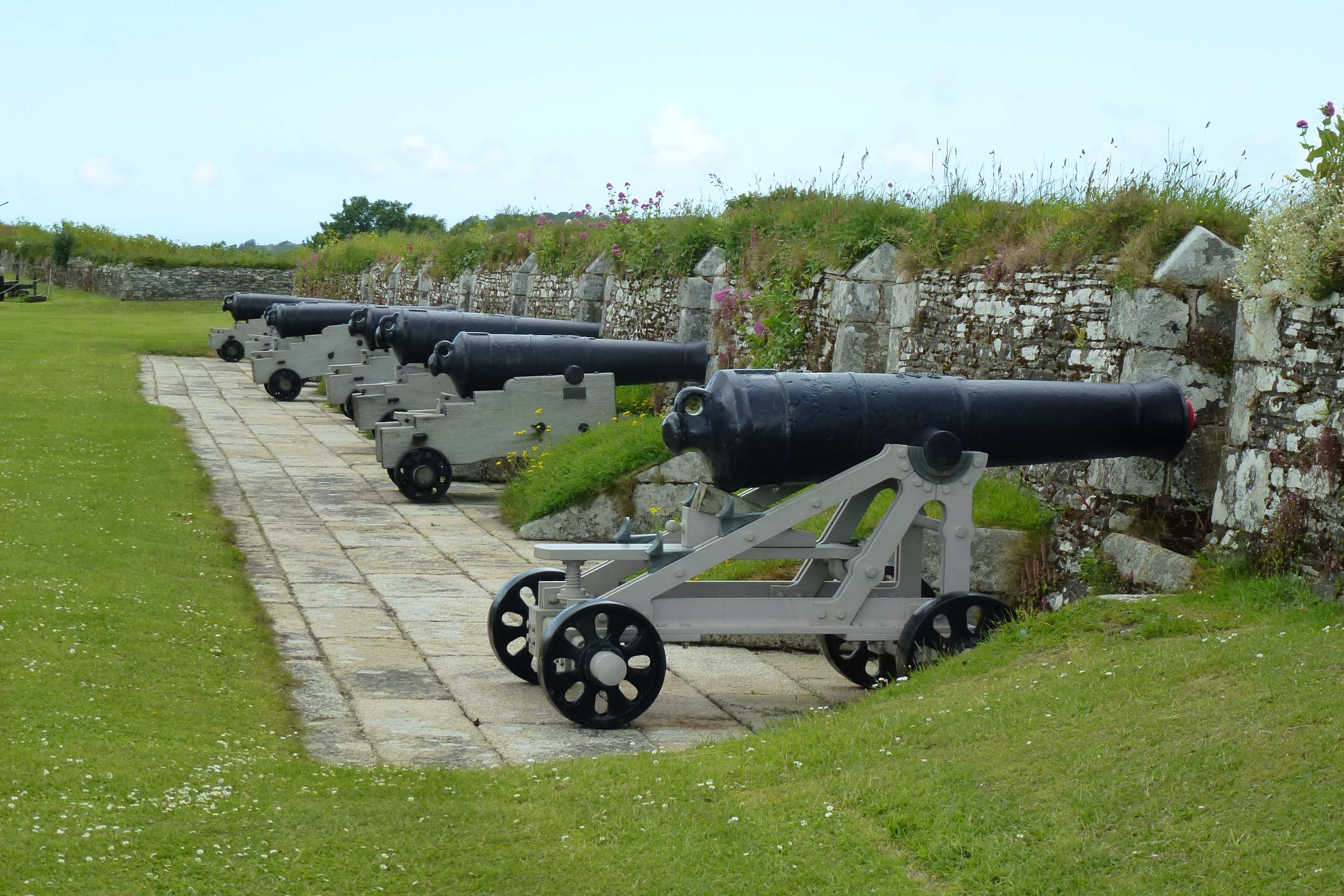
Nine-Gun Battery.
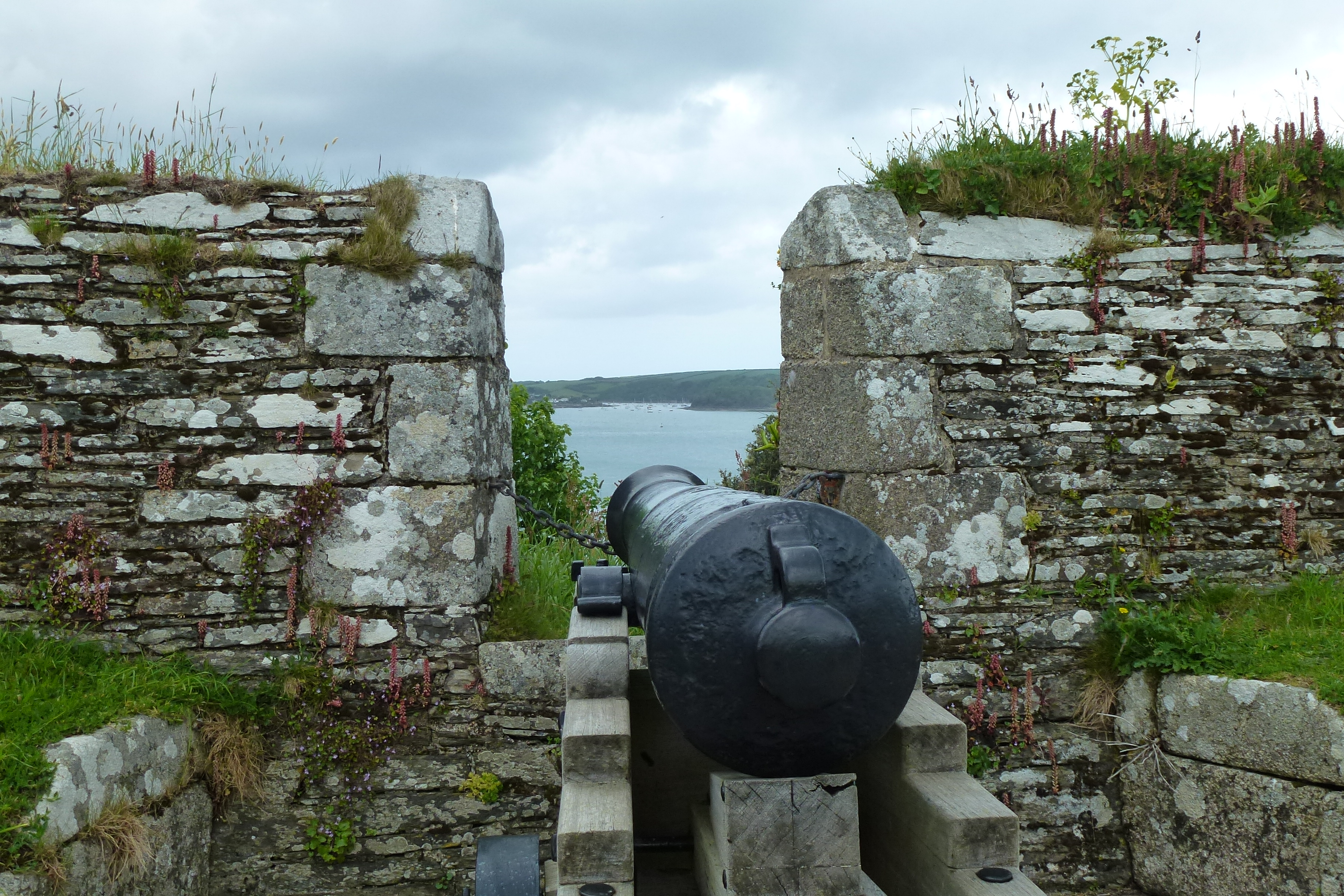
Nine-Gun Battery.

I see no pirates!

I see no pirates!


That reminds me! Pendennis Castle holds various events throughout the year to interest visitors of all ages. Pirates will next be attacking on Tuesday and Wednesday 28th and 29th July, whilst Medieval Jousting is held every Tuesday and Wednesday in August, for more details click here.

All that then remained was a visit to the rather excellent tea room for a spot of light lunch then hit the road again.

With particular thanks to Kirsty and Kate of English Heritage for facilitating my visit.

“Do you ever see in your dreams all the castles in the sky?”

Catch you soon.

Dookes

PS It was OK for me to handle the firing pistol, I hold a firearms licence.

Sorry that some of the photos are a bit dark, but I hope you get the drift.
Does my gun look big in this?
Land of Mystery

Lovely early summer days have arrived here in Cornwall and for me the best way to enjoy them is from the saddle of one of my beloved Harley Davidson motorbikes!

On my last post I took you to the times of Arthurian Legend, this time lets go back further in time. . . a lot further back.

High on the South Eastern edge of Bodmin Moor is the small and incredibly named village of Minions, yes honestly that’s the name of the place! Here can be found evidence of human habitation that stretches back to the Neolithic Period, at least 2500BC, or to put it another way, thats over four and a half thousand years ago! Around the parish can be found burial mounds, standing stones, ditch-ways and a host of other mysterious works.

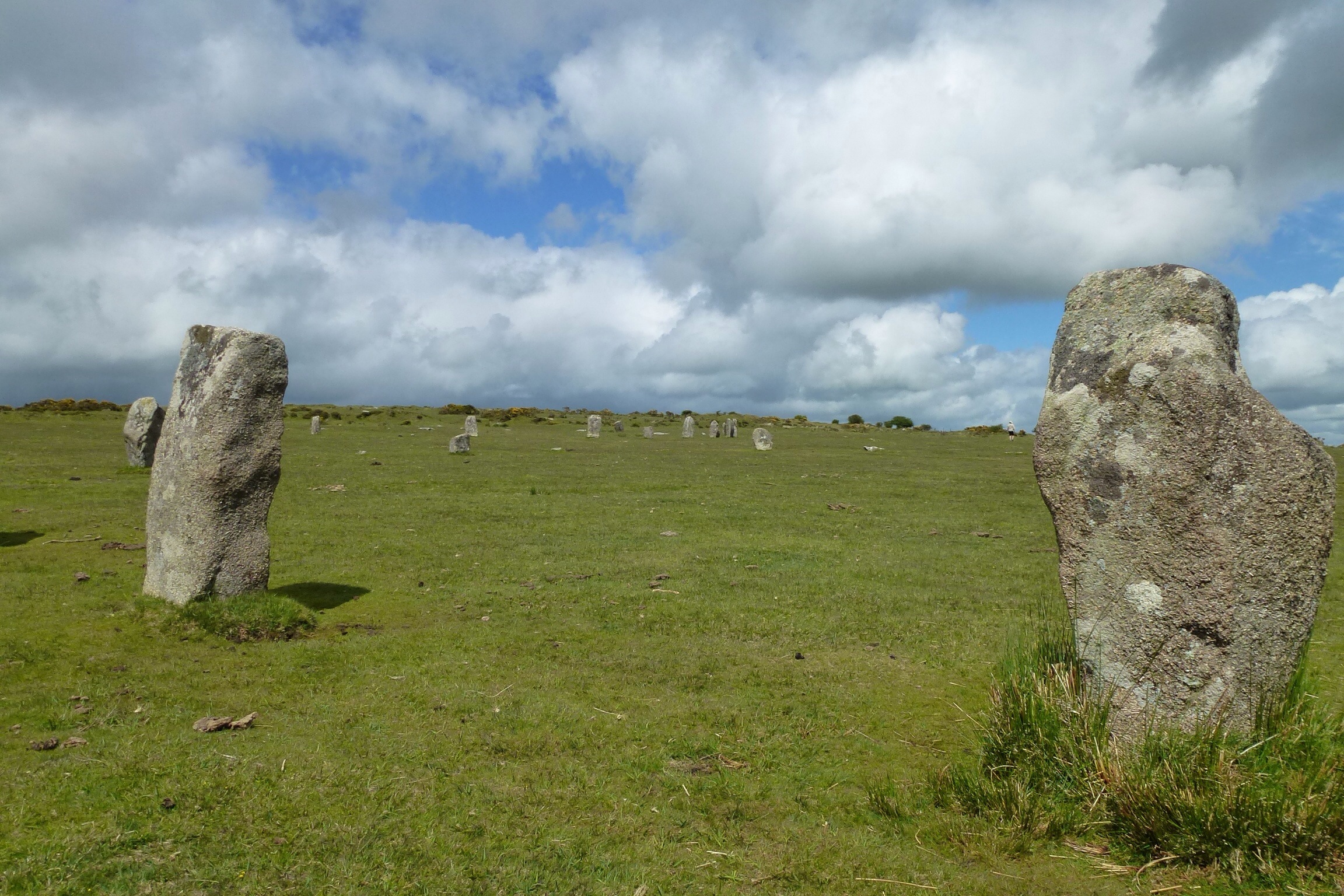
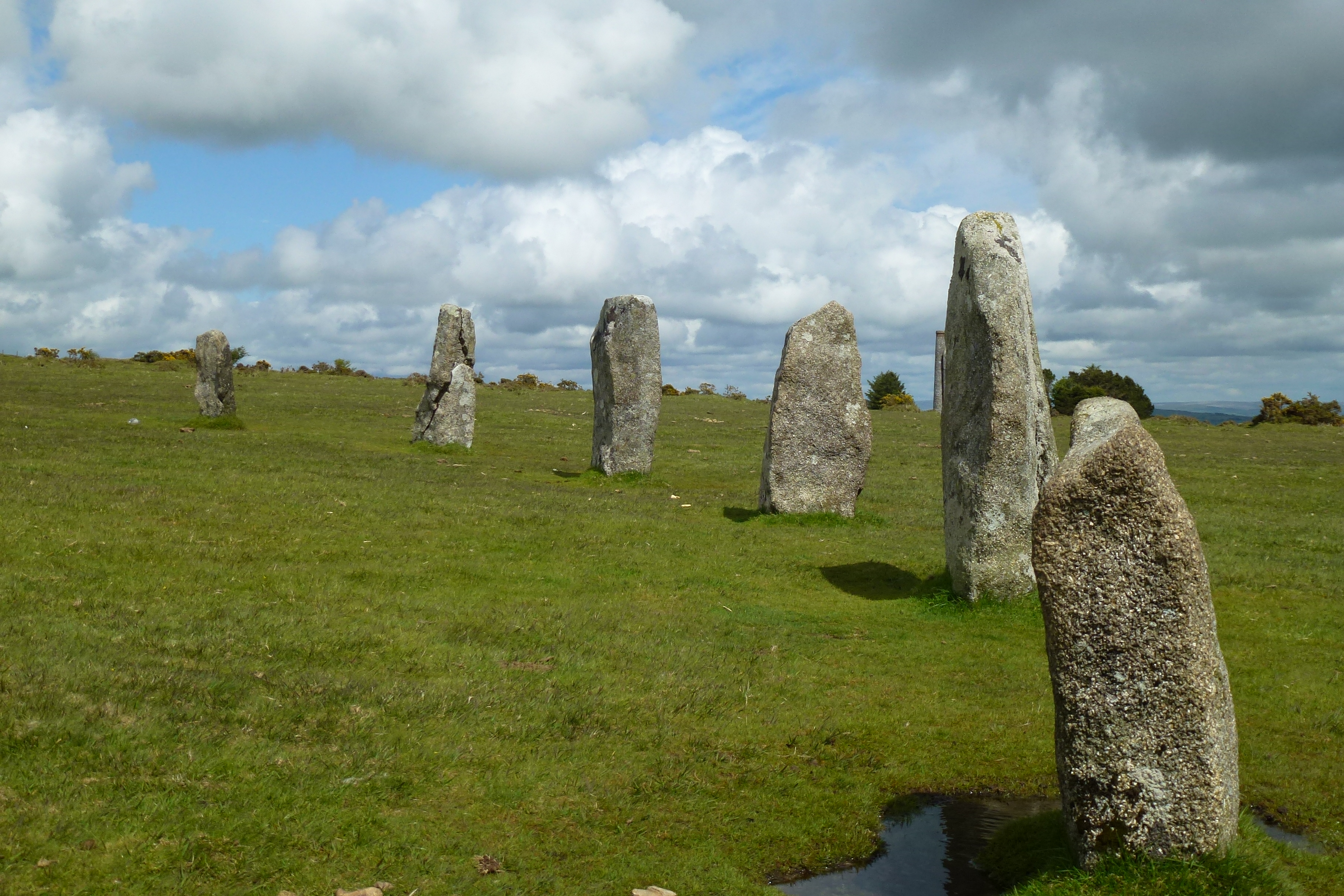
Most impressive of all can be found on the Western edge of the village where three intriguing stone circles laid in a straight line lie. These are known as “The Hurlers,” or in the local Cornish language, “An Hurlysi.” They are probably the best example of ceremonial circles in South West England and folklore has it that they are the petrified remains of men punished for playing Cornish Hurling on a Sunday.P1030830

The three large circles are aligned on an axis running NNE to SSW. The largest circle is the centre one and measures just over 41 metres in diameter, with its flanking neighbours both just over 30 metres across. Just off to the West are two separate stones known as “The Pipers,” possibly they were playing for the Hurlers when they were set in stone! The whole site is big! 


Now don’t go expecting another Stonehenge, the more famous site on Salibury Plain, the Hurlers are nowhere near as grand, but to the Ancient people in this part of the world, probably just as important.

It is fair to say that what they represent is, today, a mystery. Some scholars have suggested that the layout of the stones concurs with stella alignment particularly linked to the stars Vega and Arcturus, or at least where that combination would have appeared in antiquity. Others have linked the layout to the stars in the constellation of Orion, specifically the “Belt,” though as recent archaeology has revealed that there once was a fourth circle I guess that kicks that theory into touch! 

 The stones that remain show clear signs of being crafted and hammered smooth. Originally there were 28 in the centre circle but now only 14 survive, whilst the North circle has 15 out of 30 remaining.

As a place to visit it is certainly worth the effort, particularly on a nice clear day and if industrial archaeology also floats your boat, there are countless reminders of Cornwall’s tin and copper mining heritage to be seen as well. More on that in a future post. I couldn’t resist a bit of monochrome either! 

 About half a mile South of the Hurlers is another fascinating relic of ancient times. This is “Long Tom” also known as “The Long Stone,” an ancient Menhir that possibly pre-dates even the Hurlers. Again the original reason why this 2.8 metre tall stone has been placed here is lost in the mists of time. The most fascinating thing about Long Tom is that at some time the rather phallic stone has been “Christianised,” a simple Celtic Cross has been roughly carved in the head. I found it quite hard to define in a photograph, but trust me, there is a cross there.  


 Now here’s an interesting thing, if you take Long Tom as the starting point a line can be drawn right along the axis of The Hurlers and it leads to an ancient burial mound known as Rillaton Barrow. Local legend says that that Rillaton is haunted by the spirit of a Druid Priest, who offers travellers a drink from an undrainable cup. During archaeological excavations back in 1837 a variety of finds were unearthed. Human remains, obviously, but also “grave goods” including a bronze dagger, beads, pottery and a wonderful gold cup. Now known as The Rillaton Cup this beautiful, 90mm high, relic of an ancient time can be seen in the British Museum, London; could this be the cup of the Druid Priest? 

 Pondering the past and happy to be a Druid, I eased Harley into gear and nodded a distant salute to the Priest as I rode away; luckily I wasn’t thirsty!

“Forget about the cheque we’ll get hell to pay, have a drink on me!

Catch you soon.

Dookes
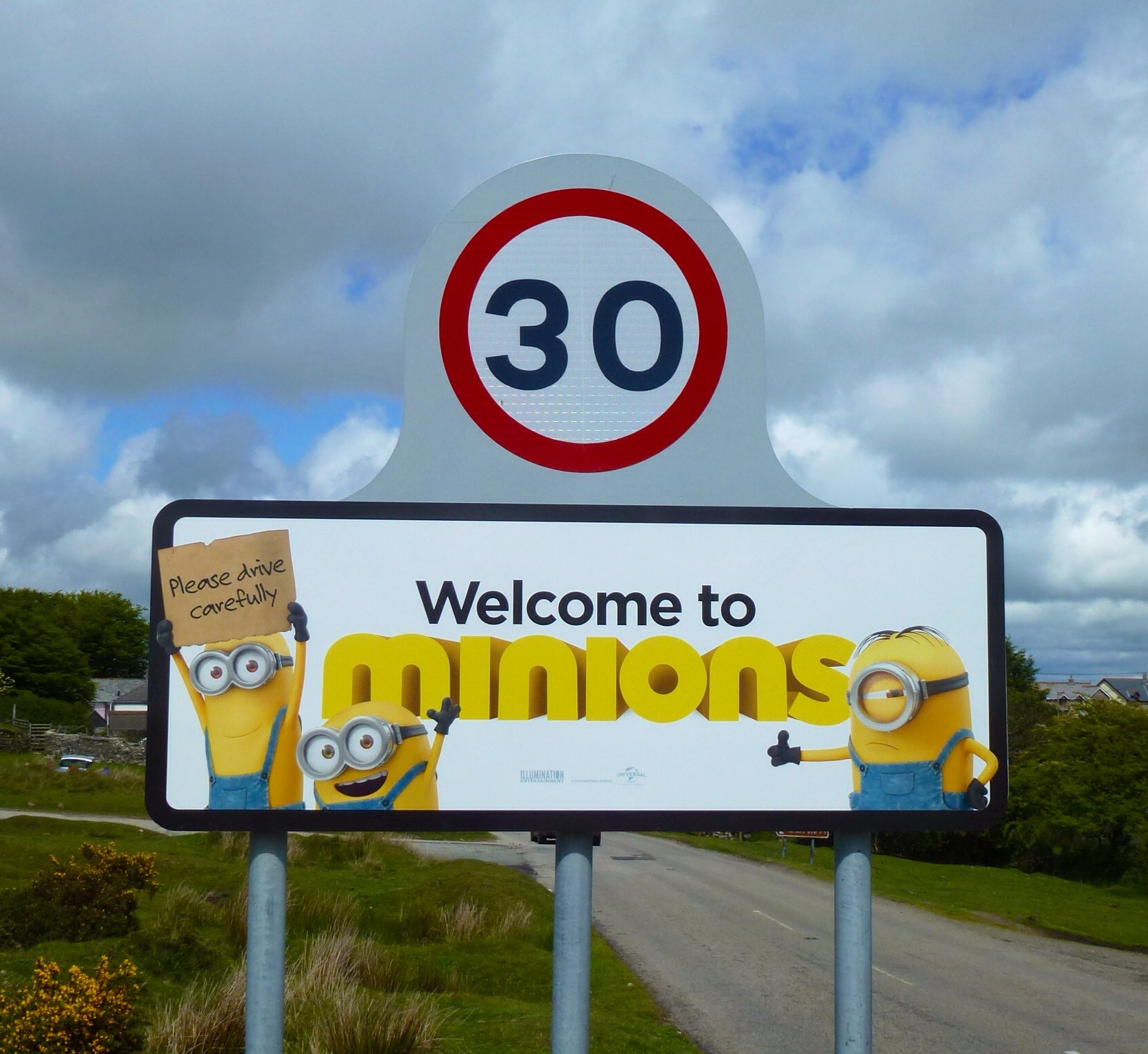
Oh yes, I nearly forgot. Someone in the village of Minions has a sense of humour and I fully approve!  


Land Of Legends

The County of Cornwall, home of Dookes H.Q., nestles at the extreme South West Corner of the United Kingdom and juts out into the Atlantic Ocean.

The name “Cornwall” is believed by some to come from the Anglo-Saxon “Corn-Wallis,” meaning Land of the Welsh. This stems from the time when invading Saxons pushed the indigenous Celts out of England into what we now know as Wales, Scotland, Cornwall and Ireland. In the old Cornish language, the County is known as “Kernow,” though strictly speaking Cornwall is not a County, it’s really a Duchy, but that’s for another day! Confused? Welcome to the club!

Cornwall is also known as “The Land of The Saints.” It has an incredibly high number of saints associated with it, over fifty to my knowledge. There are numerous villages and places named after various of them; St Neot, St Minver and St Teath are just three that spring to mind.

All that aside, Cornwall is arguably most famously associated with King Arthur, the legendary King of the Britons.

The big trouble with Arthur though, is that the real man and the legend have become totally separated. It’s not just Hollywood films to blame for that either, the Welsh cleric Geoffrey of Monmouth was “bigging up” Arthur way back in the 12th Century!

There are two main sites in Cornwall that are indelibly linked with the Arthurian Legends. The dramatic, yet forbidding Tintagel Castle and the remote, hauntingly beautiful, Dozmary Pool.

Tintagel is reputedly the place where Arthur was conceived, though some people also believe it to be the site of his famous court of Camelot. The truth, not surprisingly, is a little different! Located on the peninsula of Tintagel Island and standing high above the Atlantic surf, there is evidence of habitation going back to the Dark Ages, well before the Romano-British period over 2000 years ago. It is believed that the regional Kings of Dumnonia may have built a summer residence here as well.

The real Castle that we know today, however, dates from the 13th Century when Richard Duke of Cornwall began construction and it is the romantic ruins of this castle that people from all over the world are drawn to visit.

Tintagel Castle ruins.

Tintagel Castle ruins.

Leaving the legend for one moment, the place is stunning and no wonder that it attracts hundreds of thousands of visitorsP1020885. . . who I must admit mostly come to look for King Arthur!
Barras Head.

Barras Head.

Looking due north from Tintagel Castle is Barras Head a strangely shaped headland that some say is a slumbering dragon, have a look at the photograph and you might be able to see what they mean.

The other place I mentioned is Dozmary Pool. P1030794

Situated high up on Bodmin Moor, this is one of the few natural inland bodies of fresh water in Cornwall. Way back in 1951 it was designated as a Site of Special Scientific Interest for its biology, ecology and wildlife. Evidence of human activity around the lake stretches back to prehistoric times, that’s over ten thousand years ago. More than 2,500 pieces of worked flint have been found including many implements, tools and arrow heads. Interestingly the nearest source of flint to Dozmary is nearly twenty miles away whilst some examples appear to have originated over one hundred miles further east. Clearly our ancestors were not afraid of a good walk!

According to legend Dozmary Pool is where Arthur rowed out to the Lady of the Lake to receive the sword Excalibur. The Pool is also where Sir Bedivere returned the sword, as Arthur lay dying.

Legend says that the sword was received by a female hand, Tennyson wrote;
“Clothed in white samite, mystic, wonderful, that caught him by the hilt and brandished him three times, and drew him under in the mere.”

On a sunny day it is certainly very pleasant, but when the mists roll across the moor it’s waters take on a forbidding leaden hue and it is best left alone with its ghosts. Could this really be Avalon?

Of course there is another Legend seen around these parts too. . .

An American Legend!

An American Legend!

Another day I’ll tell you about more Cornish Legends, like Knockers, Spriggans and the Beast of Bodmin Moor; gotta dash, gotta ride!

“. . . and your destination, you don’t know it, Avalon.”

Catch you soon.

Dookes

Triumph and Contrast

Photography 101. Final Assignment: Triumph and Contrast.

I really had to scratch my head with this one.

I thought of getting back to the motorcycle theme and grabbing a shot of a Triumph Bonneville, but that would have been too corny!

Until today all of my photos for the course have been fresh and newly shot just for Photography 101. I had hoped to go for a full house, but today something kept drawing me back to a couple of shots from previous road trips and on a purely personal level both scream out “Triumph” to me.

The first is the summit marker on Col du Galibier, in the French Alps.

When I was young, my friends and I avidly followed the great cycle race that is the Tour de France. There was no television coverage of Le Tour in the UK back then. We had to get our race updates from the sports pages of daily newspapers, which didn’t always carry much up to date information at that! Our idols were the great Eddy Merckx, Bernard Hinault and Joop Zoetemelk and many other too.

Amongst the magical places on Le Tour that we learnt about were the great Cols of the Pyrenees and the Alps; it certainly did our school geography no harm at all! Greatest, most famous and certainly legendary above the rest was the magical Col du Galibier.

I dreamed of cresting that climb on two wheels, emulating my heroes and just standing where they had passed.

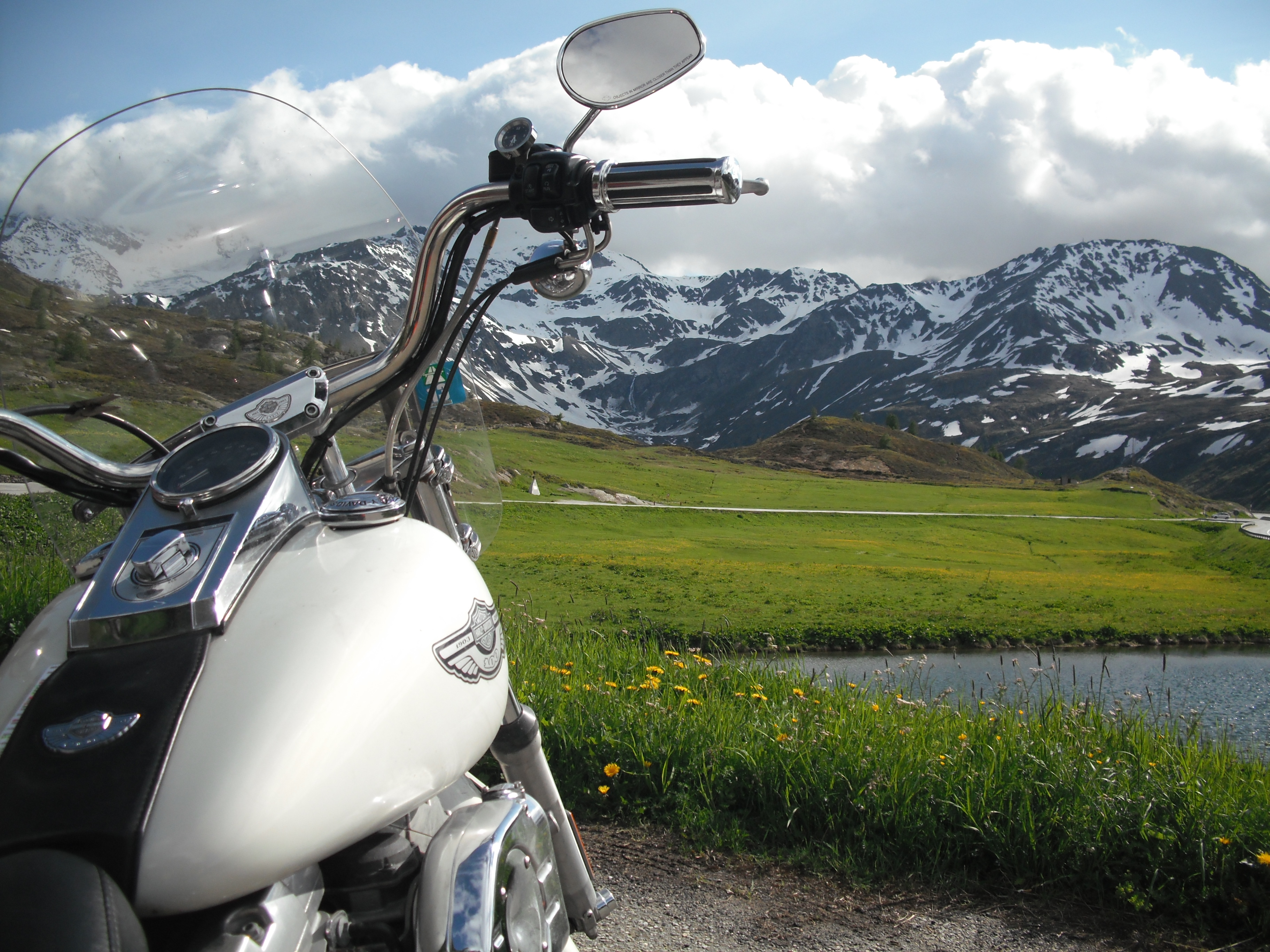
Many years later I was able to do just that, OK I did cheat a bit because my two wheels by then had acquired a great big Harley Davidson engine between them… but I did go there on two wheels!

I’ve been back many times since, each time is special, each time my eyes fill with emotion and each time I give thanks that I’ve been able to return to my special spiritual place; it’s my enduring “Triumph!”

Col du Galibier

Col du Galibier, colourful contrasts.


My second “Triumph” is a shot of my beloved Softail sitting by the beach at Carantec in Brittany, France. Again this is another special spot. It’s the place that I go to at the end of every big Continental Europe road trip, somewhere just to collect my thoughts and memories before getting onto the ship back to the UK and home.

So here is Harley loaded with my travel bags and carrying an honest patina of road grime accrued over a few thousand miles of riding.

I can hear in my own mind the gentle metallic music of her engine ticking as she cools down contentedly, knowing that she has Triumphed in bringing us both back safely again.

Carentec beach.

Carantec Beach.


Oh did I tell you before that I love that bike?

Thank you sincerely to everyone who has been riding with me on the Photography 101 course. I really appreciate your feedback and honest comments and would love you to ride some more with me.

“The river flows, it flows to the sea.
Wherever it goes that’s where I want to be.”

Dookes

Sometimes You Just Gotta Ride!

There are days when I begin to hanker for being out on two wheels, but in the back of my mind I know that the list of jobs that need attention at Dookes H.Q. over-rides my selfish whims.

Today started just like that and when you consider that I spent most of yesterday watching the incredible climax of this year’s Six Nations Rugby Competition…the chances of getting out on Harley looked remote!

Even worse, the weather was sublime.

Then again, you have to remember that I am married to a rather remarkable lady.

You see, Mrs Dookes has the ability to recognise the “Harley hankering” symptoms and also knows what a pain in the backside I can be when the condition strikes! I spent this morning finishing a small project for the house out in my Man-Cave, the workshop. Whilst I began to ponder “what next” over a cup of tea, Mrs D suggested it was time for me to go for a ride… I told you she is amazing!

It didn’t take long before Harley and I were out on the road.

I didn’t fancy tearing about, better to take your time and enjoy the day in a mellow way. We set off North East and soon crossed over the county boundary into Devon.

For those of you who do not hail from these shores, the County of Devon is one of the most quintessential of all English Counties; the scenery is gentle on the eye, “chocolate box” thatched cottages abound and the roads meander the contours in sweeping curves and bends…just right for a motorbike!

We passed through small villages with delightful names; St Giles on The Heath, Chapmans Well, Clawton.

At Holsworthy we stopped and explored part of the long closed railway, the old viaduct standing silent testament to the thousands of trains that once passed here.

Holsworthy Viaduct

Holsworthy Viaduct


From Holsworthy we turned West and crossed back into Cornwall near the source of the River Tamar, which for most of its course forms the boundary between the two counties.

Soon we had that tantalising first glimpse of the sea, the dark line of horizon where sky meets water. Whenever I experience that view, living in Cornwall it happens a lot, I still get a surge of excitement like a small child on a seaside holiday!

OK, looks like we are going to the seaside again… I really can’t help it!

The evocative poem “Sea Fever” by John Masefield, started running through my mind;

“I must go down to the seas again, to the lonely sea and the sky,
And all I ask is a tall ship and a star to steer her by.”

I love that poem.

We paused at Widemouth Bay; that’s pronounced “Widdmuth.” Standing on the cliff above the bay the spring sunshine, yes we have now passed the Equinox, bathed the scene. Shallow rollers lazily rippled in from the Atlantic, not big enough to surf today, but easy on the soul and uplifting to world-weary eyes.

Low Tide at Widemouth Bay

Low Tide at Widemouth Bay


Heading for home, I mused that last time I rode Harley I was returning from scattering a friend’s ashes, today was altogether brighter and much more cheerful. The sentries of bright yellow daffodils that line the lanes here at this time of year certainly contributed to the cheerful mood.

Arriving back at Dookes HQ, I shared the last of Lili’s wonderful Bikers Cake with Mrs D; then set to giving the grass its first cut of the year.

Yes, sometimes you just gotta ride!

“Oh, I’m a travelin’ man”

Catch you all soon.

Dookes

Todays ride is dedicated to David.

“Big”… or Did You Say…?

Photography 101. Todays assignment: Big.

There I was munching on my breakfast this morning, when up pops todays assignment email.

“Lets go big,” extols Cheri from the WordPress.com Team and there in the middle of the email is a wonderful picture of the pyramids at Giza!.

Now how on earth is a geezer, Giza/Geezer, like me expected to match up to that?!?!?

Oh boy indigestion was coming on worrying this one through.

Today I have been helping out at a Countryside and Farm Education Event; teaching literally hundreds of seven to ten-year olds all about where their food comes from. Good fun, if a tad tiring. Then walking around I had an idea, cos those tractors are BIG!

Putting the camera on the ground, I got this shot.

It's certainly Big!

It’s certainly Big!

Or did you say…

Pig?

Pig?


Only kidding!!
Dookes

Saying Goodbye To David

One way or other, last year ended on a bit of a low note. I lost a number of old friends in a relatively short space of time and it all seemed a bit dark for a while.

Today we made our final farewell to David, a friend and colleague from the days when I earned my living running railways. Sadly, he was one of the losses of 2014.

David had instructed his family that he wished his ashes to be laid in a beautiful woodland setting alongside the South Devon Railway, a heritage steam railway that he loved and helped to rescue from scrapping way back in the 1970’s.

It was with mixed feelings this morning that I fired up Harley in delightful spring sunshine and headed for Buckfastleigh, the headquarters of the railway.

The trip took us across some of South West England’s most rugged and beautiful landscape, Dartmoor. Despite the wonderful day, I was not really in the mood to stop and take photos, so please forgive me and I hope you understand. I was aware of the loveliness, but felt a bit grim about what was to come.

On arriving at the railway I met up with David’s family and other friends. We all boarded the special train and it was unanimously agreed that David’s ashes should make the trip on the locomotive, he would have loved that!

Soon the train arrived at the designated spot adjacent to the lovely River Dart and after a short committal ceremony, the ashes were interred. As we climbed back aboard the train, the locomotive sounded a shrill sad whistle and we started our return journey, I instinctively waved good-bye to my late friend.

Back at Buckfastleigh, we swapped stories and anecdotes and generally enjoyed sharing our memories over a late lunch; whilst not forgetting to watch the public service train depart, this was a railway occasion after all!

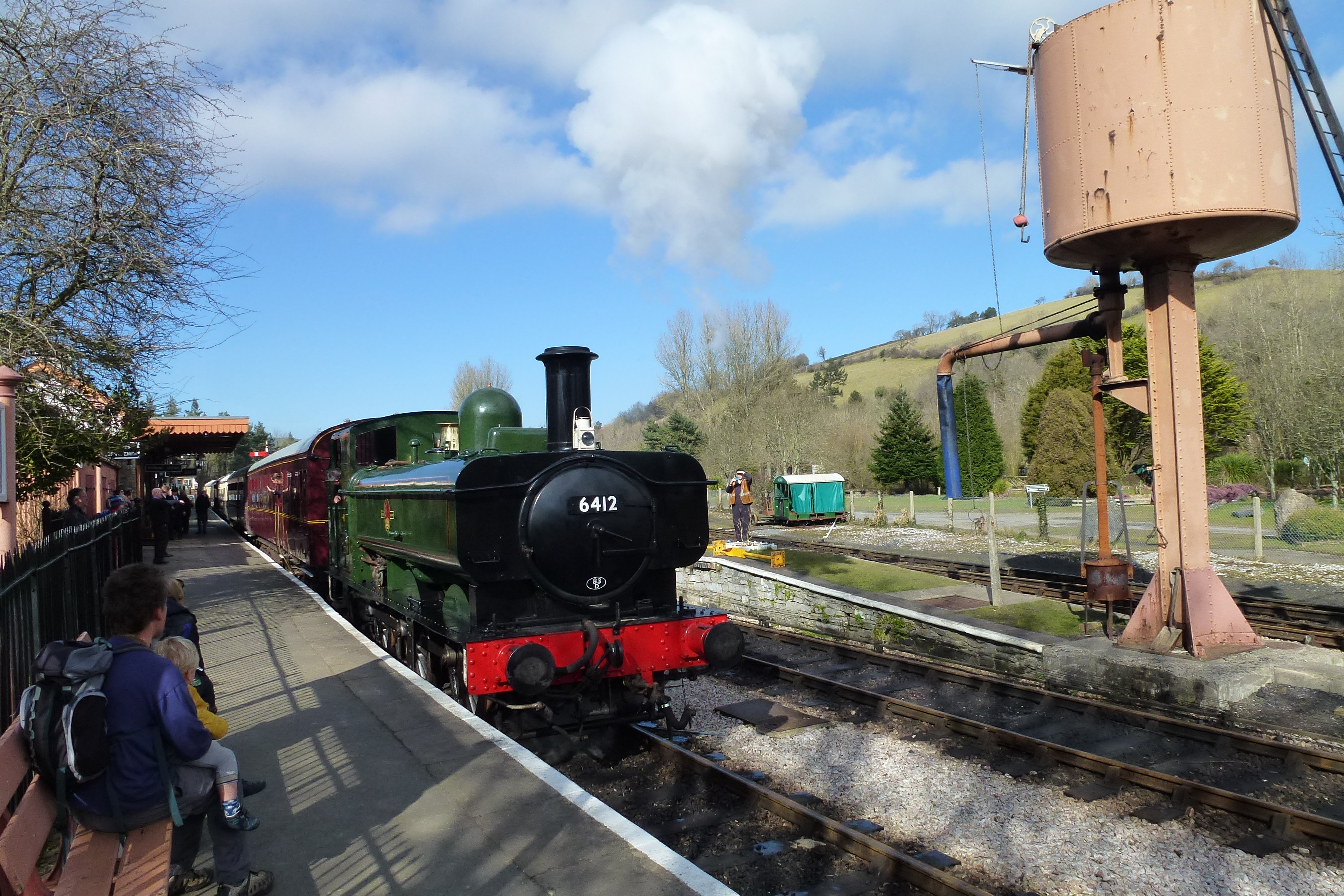
GWR Pannier Tank 6412, built 1934 at Buckfastleigh.

GWR Pannier Tank 6412, built Swindon 1934, at Buckfastleigh.

Where the hard work is done!

Where the hard work is done!


Departure and on the left the next generation learns about steam engines!

Departure and on the left the next generation learns about steam engines!


In due course we made our farewells and as I threw my leg over Harley I sat and remembered one of David’s favourite sayings when a job had gone perfectly:
“Don’t you just love it when a plan comes together?”

I do indeed my friend, I do indeed.

Dookes

Saint David’s Day

Hello everyone from a beautifully sunny Cornwall, UK.

Let me be the first to wish you all a very Hapus Dydd Dewi Sant, Happy Saint David’s Day!

I’ve blogged before about this day and it’s significance to all of us who are Welsh or have Welsh ancestry, if you would like to know more about it please click here to go to my previous post.

The National Flower of Wales is the delightful and cheery daffodil which brightens the hedgerows at this time of year. I picked some from the garden at Dookes H.Q. to grace our breakfast table and before I took them inside grabbed a couple of photos to share. I hope you like them as much as I do. My late Grandmother always said that when you take daffodils into a house, then you take sunshine into that house; I think she got that pretty much spot on!P1030030

Of course I also had to put up St David’s own flag as well!P1030045

A friend of mine once cheerily told me that there are three types of people in the world:
Those who are Welsh,
Those who would love to be Welsh,
And those that have no ambition at all!

Have a great day! 🙂

Gwlad, gwlad, pleidiol wyf i’m gwlad.

Hwyl Fawr!
Dookes

Oh, I nearly forgot.
Well done to the Welsh Rugby Team for winning in Paris yesterday evening! Good stuff boys!

The Story of the Healthy Fruitcake-Cake Anglais, Recipe for a Biker on the Road …

… and how this orange and rum spelt cake was born and named.  Make yourself comfortable now for the tale of a sociable and rather cheerful biker called Dookes.

One day he was on his Harley Davidson happily vrooming along the winding roads with the wind blowing against his face, … when his stomach started to rumble.

DSCF5887

Dookes on the road with Harley

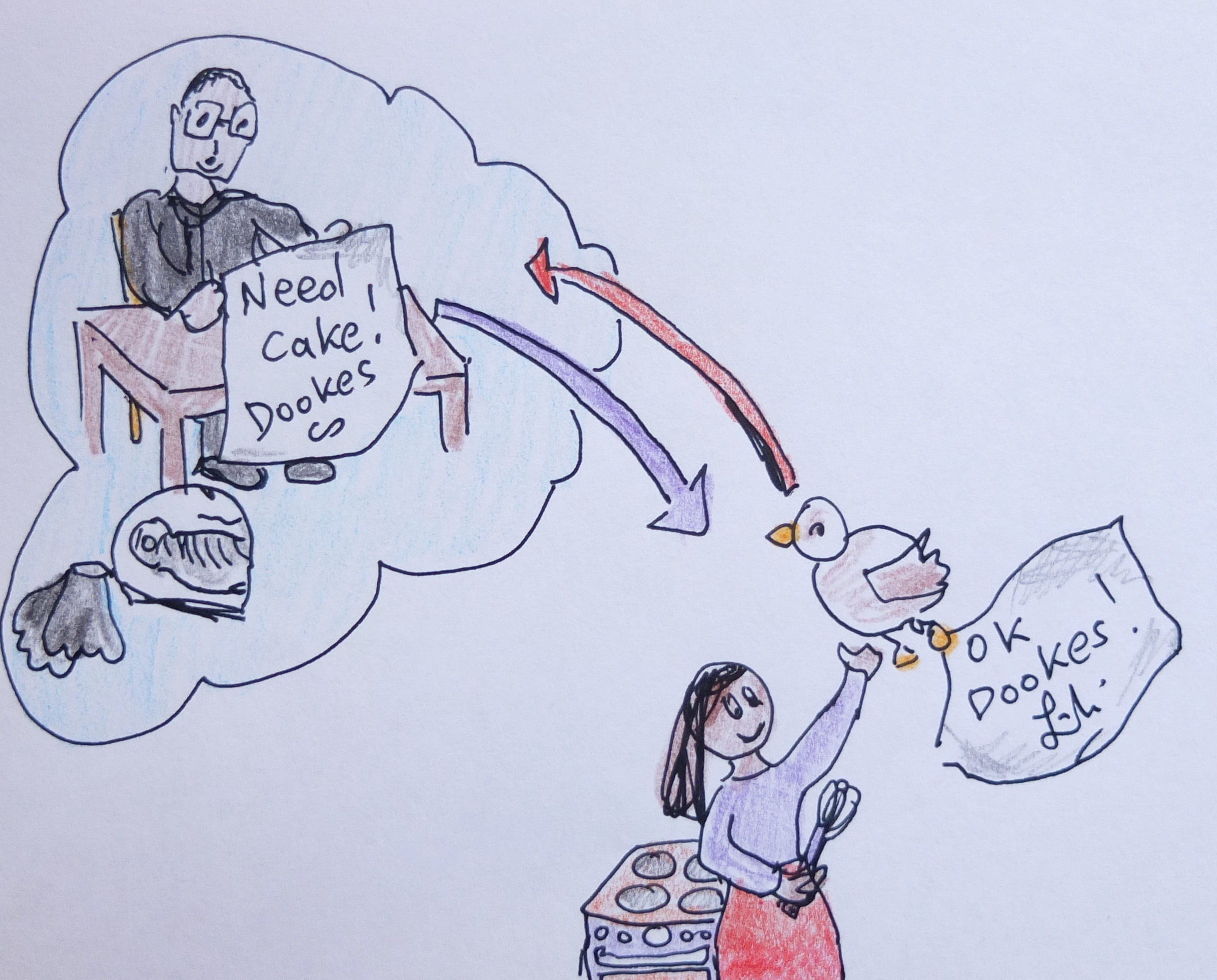
DSCF2410‘What a beautiful view!’ thought Dookes, ‘but what I wouldn’t give for a piece of cake!’  This wish floated about his thoughts as he rode swiftly along the road so when night fell and he arrived home he knew he simply had to write a very important and urgent cloud message.

A cake-loving woman was pottering in the kitchen when she unexpectedly received this cloud message from a far-away place.  Her friend was URGENTLY requesting a cake recipe for his biking travels.  Well, not very very urgently but he would need to pack a healthy and solid (no, not brick-like) energy-giving cake for the long arduous adventures that soon lay ahead of him.

‘Now you might be busy and Mrs Dookes could easily bake for me’, wrote the biker tentatively.  ‘Are you certain you wish to make this cake?’

The woman felt somewhat confused.  Had news of her cake obsession, which lili’s cakes followers and her mum were so sadly aware of, not reached distant cloud lands?  Wild horses (or motorbikes) wouldn’t stop her!  She sent the virtual pigeon off: ‘I’d love to’ she replied.
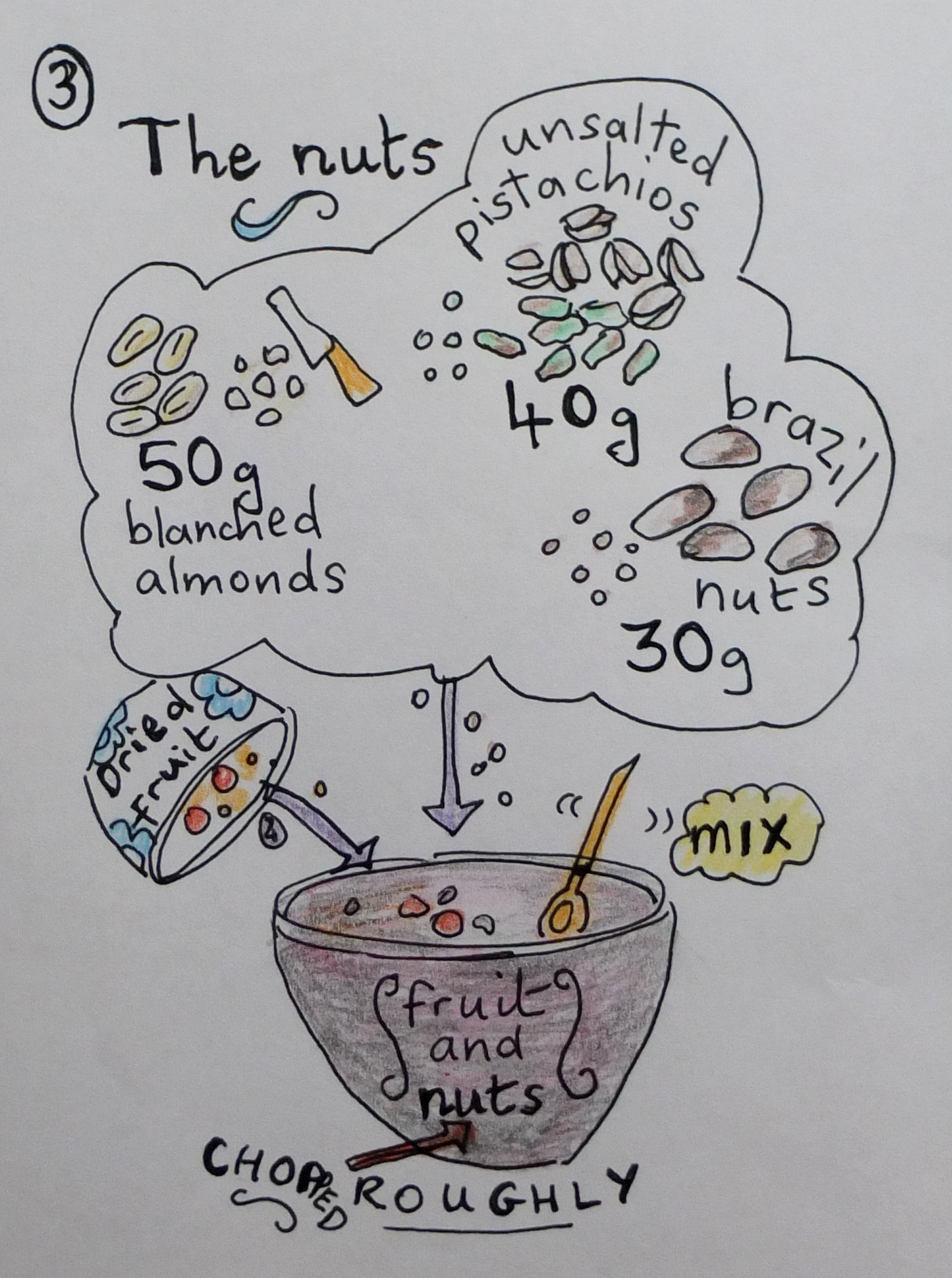
DSCF5991Hmmm, but which cake?  The woman thought long and hard (a few hours at least).  Some of her cakes were delicious but too delicate for a road trip.  Finally, she decided to combine the light-crumbed cake anglais with a traditional fruitcake, filled with extra amounts of nourishing nuts and dried fruit.  It would be soaked in orange juice and rum, and made with honey, unrefined brown sugar and spelt flour, all good for you of course!  You could use plain flour, but the two friends had long ago agreed spelt flour was a lovely tasty and healthy substitute.
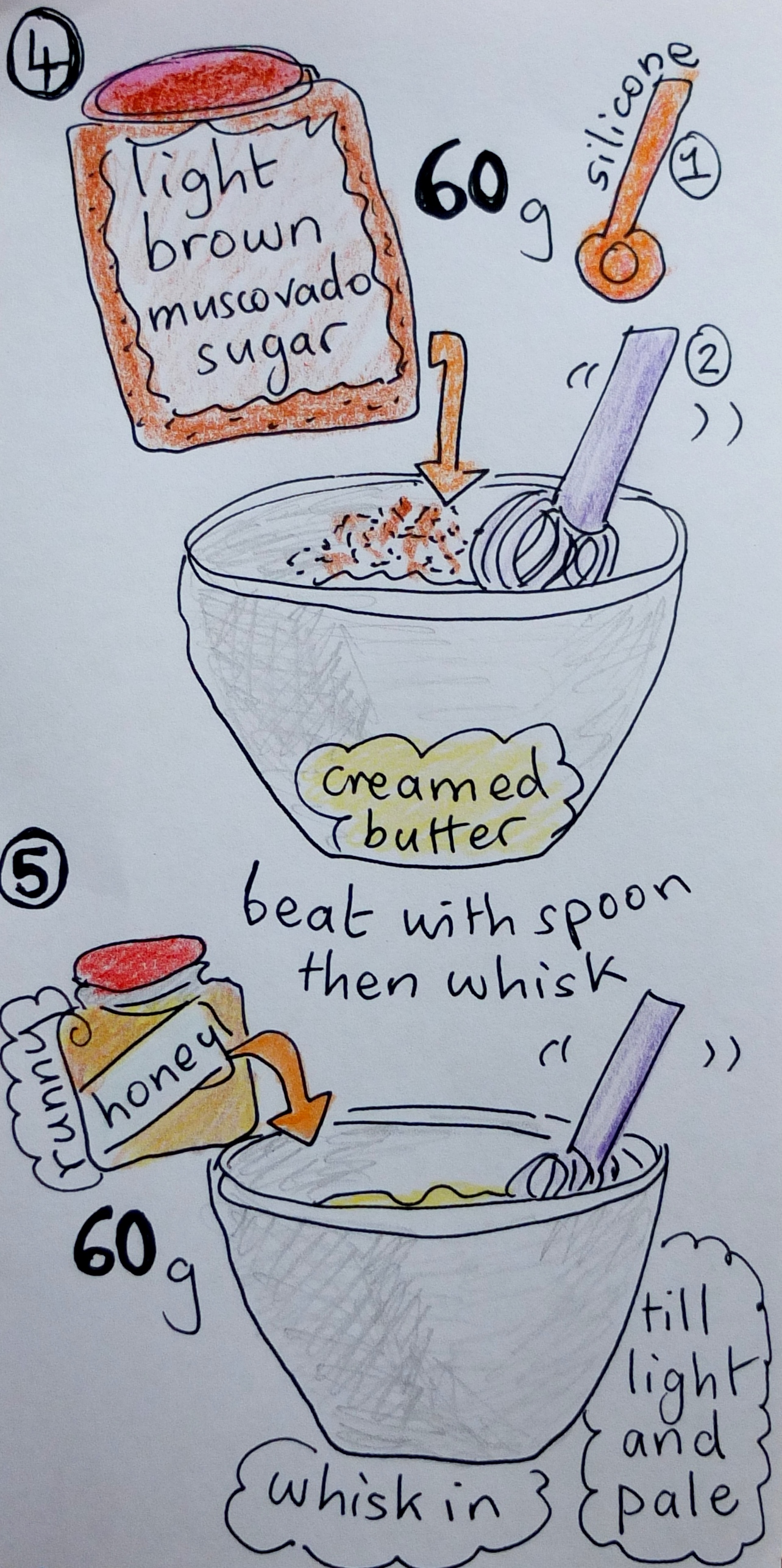
So the far away biker gladly gave the cake plan the thumbs up and the ‘ealthy orange and rum fruitcake-cake anglais was born.  It was a bit of a mongrel and no-one could decide what it was exactly so it was given a hyphenated double-barrelled name and became a posh cake!  Tada!  An extra special recipe to share with sweet readers, healthy cake-lovers in the clouds and fellow bikers like Dooke’s Harley brothers who roam distant lands and might be feeling a bit peckish.

S0794157

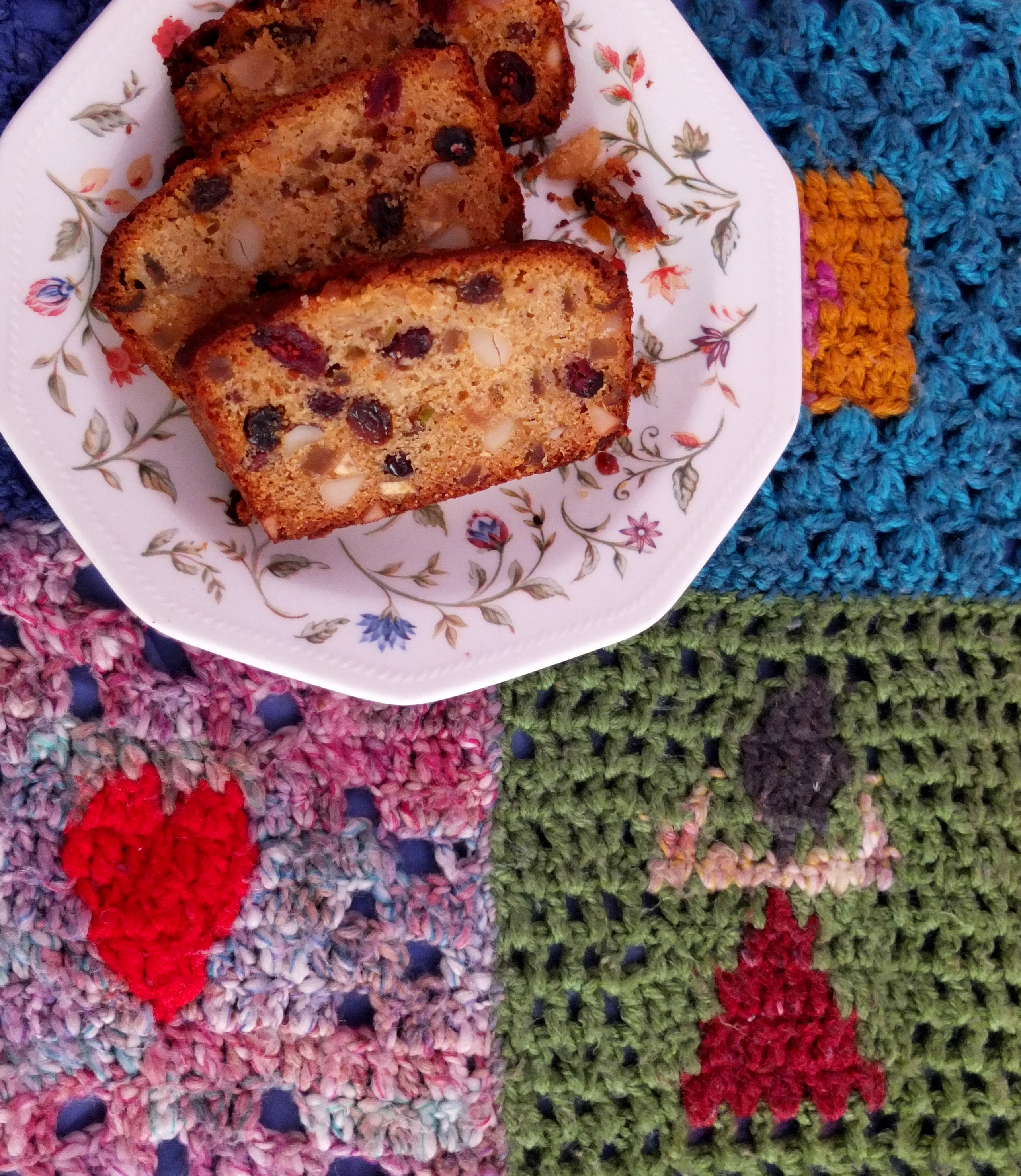
Healthy orange and rum fruitcake-cake anglais!

DSCF5316

Orange and rum spelt fruitcake-cake anglais!

Preparation (from 24 hours to 5 days ahead of making the cake!)

The woman happily chopped up an array of dried fruits into little pieces (except the glacé cherries, which she just halved) and thought of how they would soon glisten in rum with a delightful whiff of alcohol (pheooouw!).  She’d told her friends they could soak them overnight in only orange juice, but she herself liked rum and thought Dookes might too.

DSCF5692S0514099A few days later…

Now, the cake-loving woman was sure there was something she was supposed to be doing.  Her memory wasn’t quite what it used to be.  Oh yes, make the cake!  Doh…

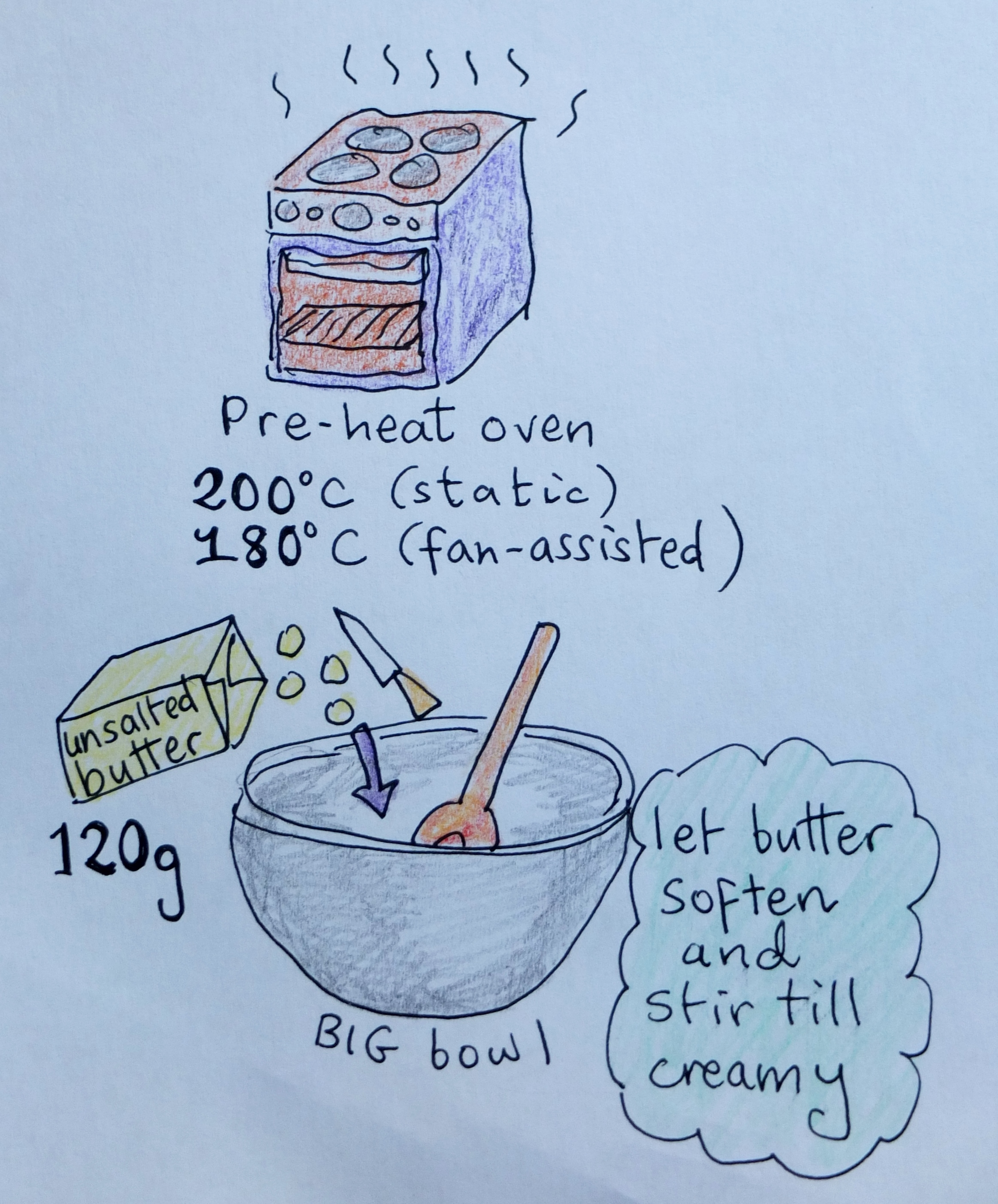
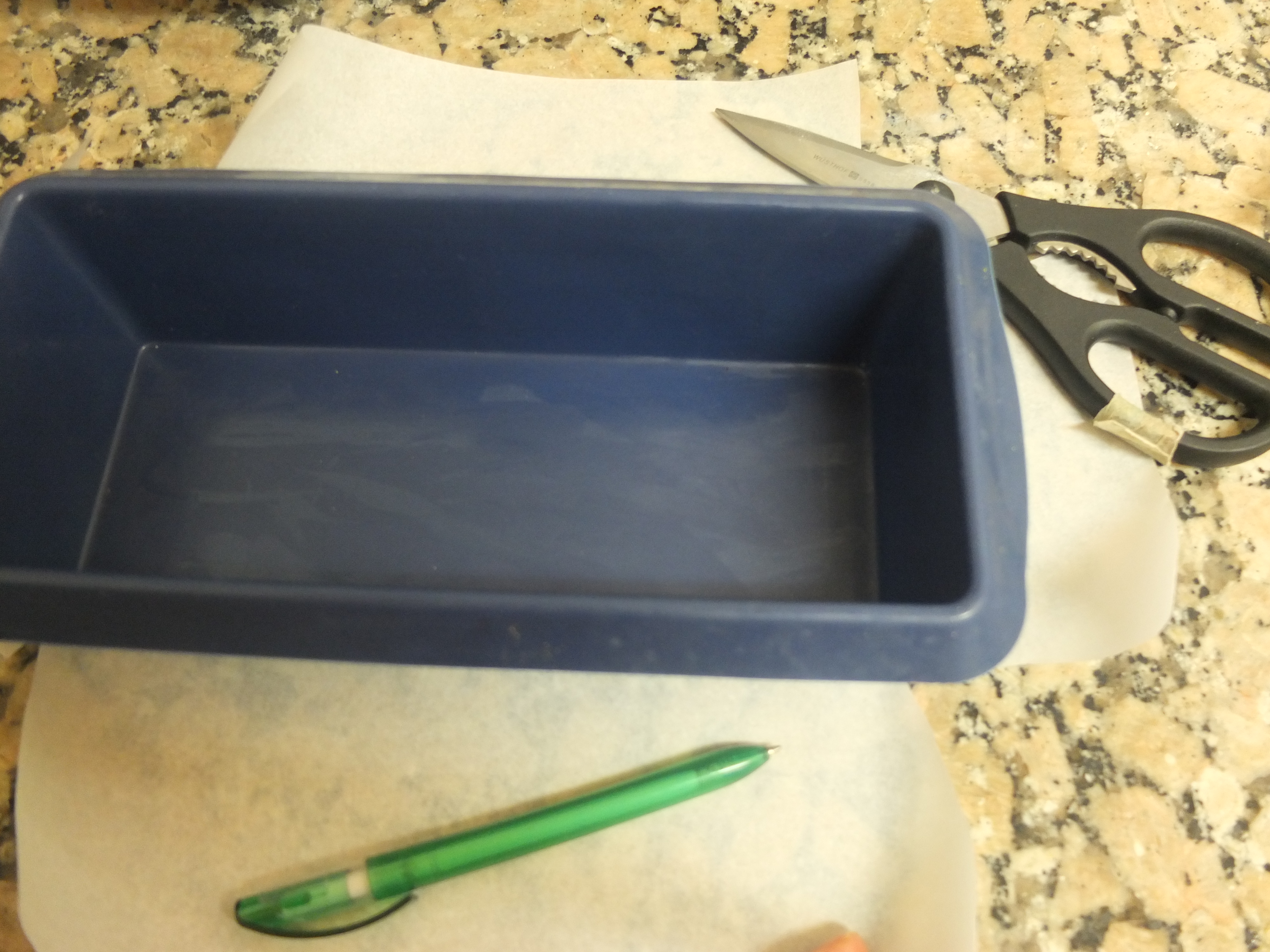
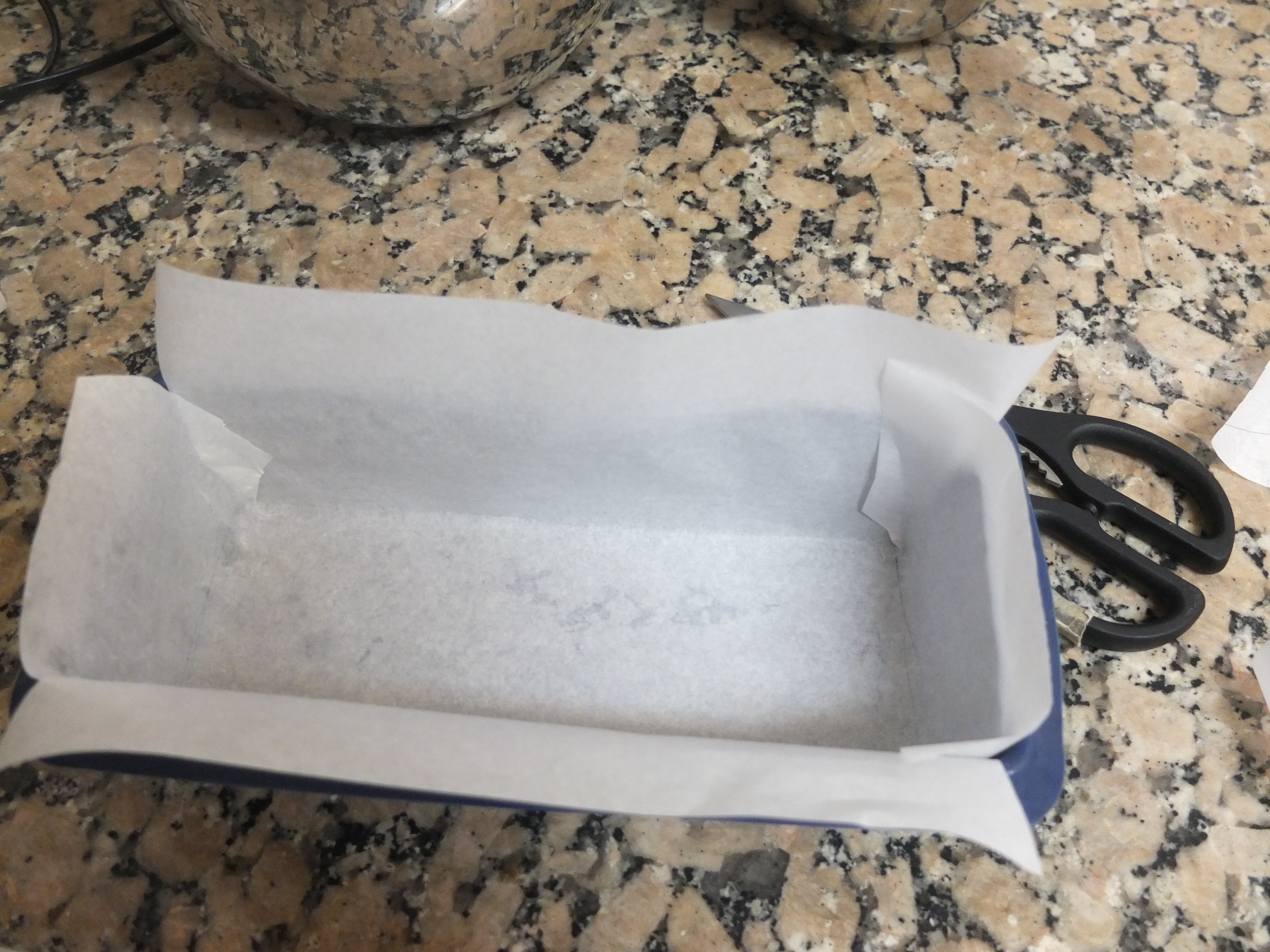
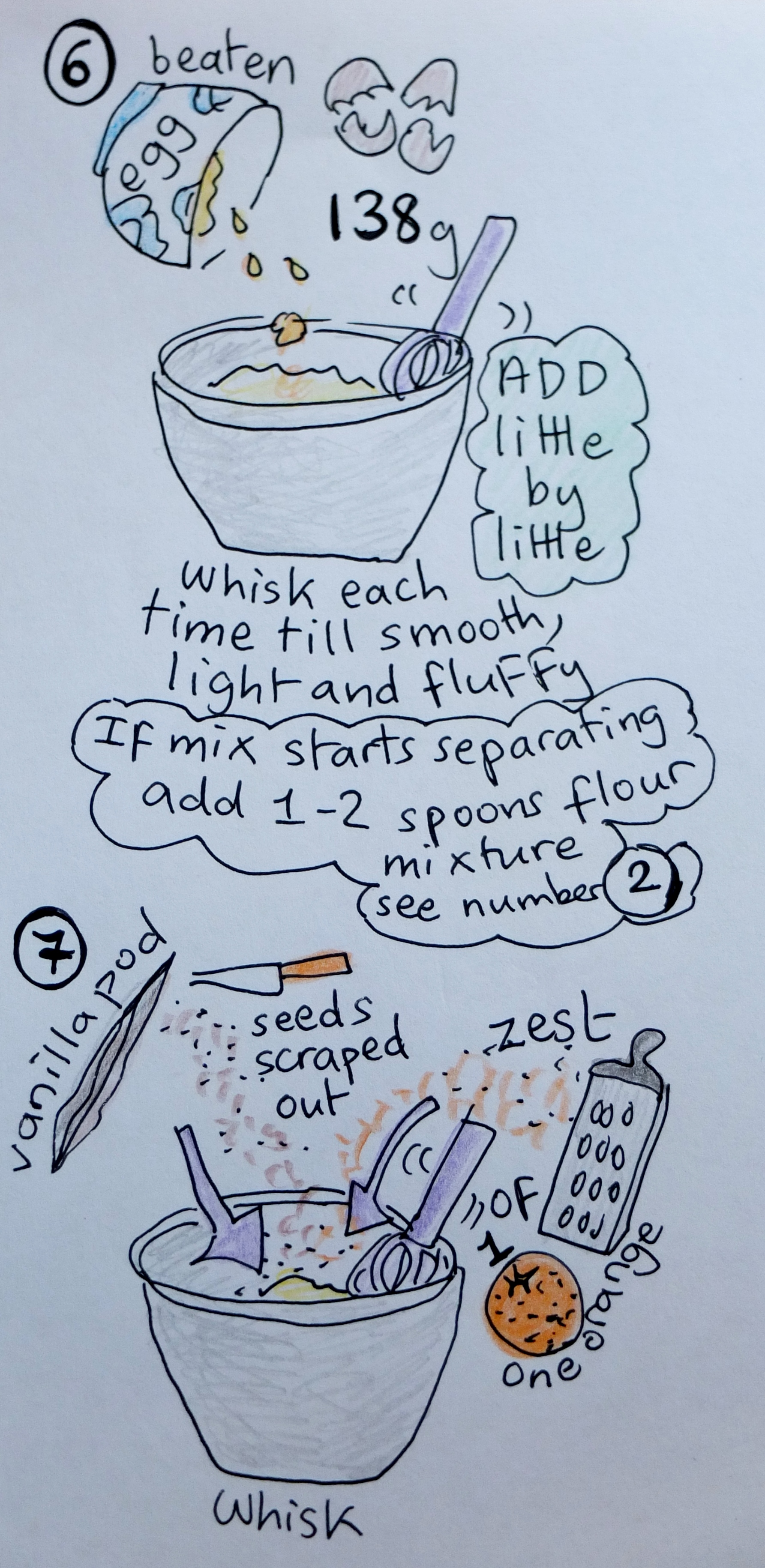
First she pre-heated the oven, lined the loaf tin (metal or silicone) with greaseproof baking paper (making sure it was 2cm higher than the mould, all around) and allowed the butter to soften, before creaming:

DSCF5933S0631426S0641427She started preparing the other ingredients as she hummed merrily along to the tune of All about that cake (psst … have a listen, it’s a great cake song!)

DSCF5932DSCF5974DSCF5970DSCF6008Then she rolled her sleeves up to do some serious beating and whisking.

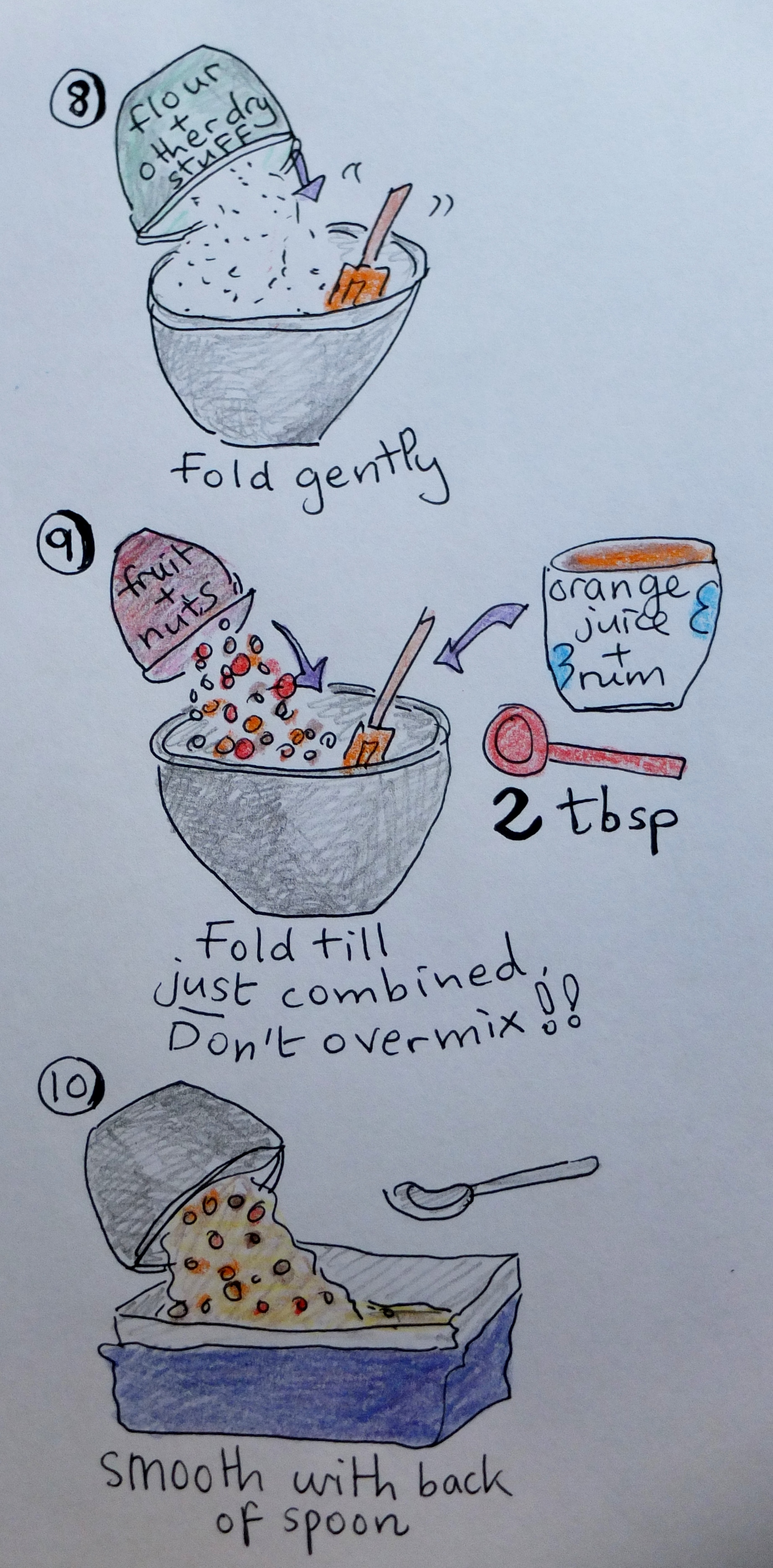
DSCF6005DSCF5949Finally, it was time for some gentle folding.

DSCF5953And off the cake went into the oven. 

After 5 minutes the cake-loving woman lowered the heat to 180°C (static, non-convection oven) or 160°C (fan-assisted oven) and let the cake bake between 1 hour to 1 hour 15 minutes.  She made sure she didn’t open the oven door for the first hour.  The cake was finally ready when an inserted skewer came out clean and the cake sprang back a little when pressed lightly with her finger.

The woman left the cake in the tin to cool for 20 to 30 minutes then made holes all over the cake with a skewer.  Using a tablespoon she carefully poured the remaining orange juice and rum liquid over the cake.  She let the cake cool then took it out of the tin, and tried a piece because she could wait no longer! (Note:  this cake actually keeps for up to a week or more, wrapped in greaseproof baking paper then again in foil or an airtight tin).

So the cake-loving woman settled down to munch her piece of cake then sent Dookes a new cloud message to let him know his cake was ready.  And out at the rock, she shared it with her climbing friends who always enjoyed eating healthily and so eagerly tucked into this spelt cake. They loved it and weeks later were still reminiscing about the luscious fruit, the hint of rum and overall tastiness of the fruitcake-cake anglais. 600_434344888One enjoyed his slice so much he took it climbing with him!

600_434299059So the cake-loving woman could easily imagine Dookes going on his next road trip through the mountains with Harley, having a break and a piece of his cake.

DSCF5955But then that’s another story, and one that Dookes will have to tell you himself as his biking dreams and adventures continue…

So sweet readers, where would you take your piece of orange and rum cake?  Hiking, shopping, on a picnic, to do sports or just to the living room for a nice cosy tea at home?

DSCF5368

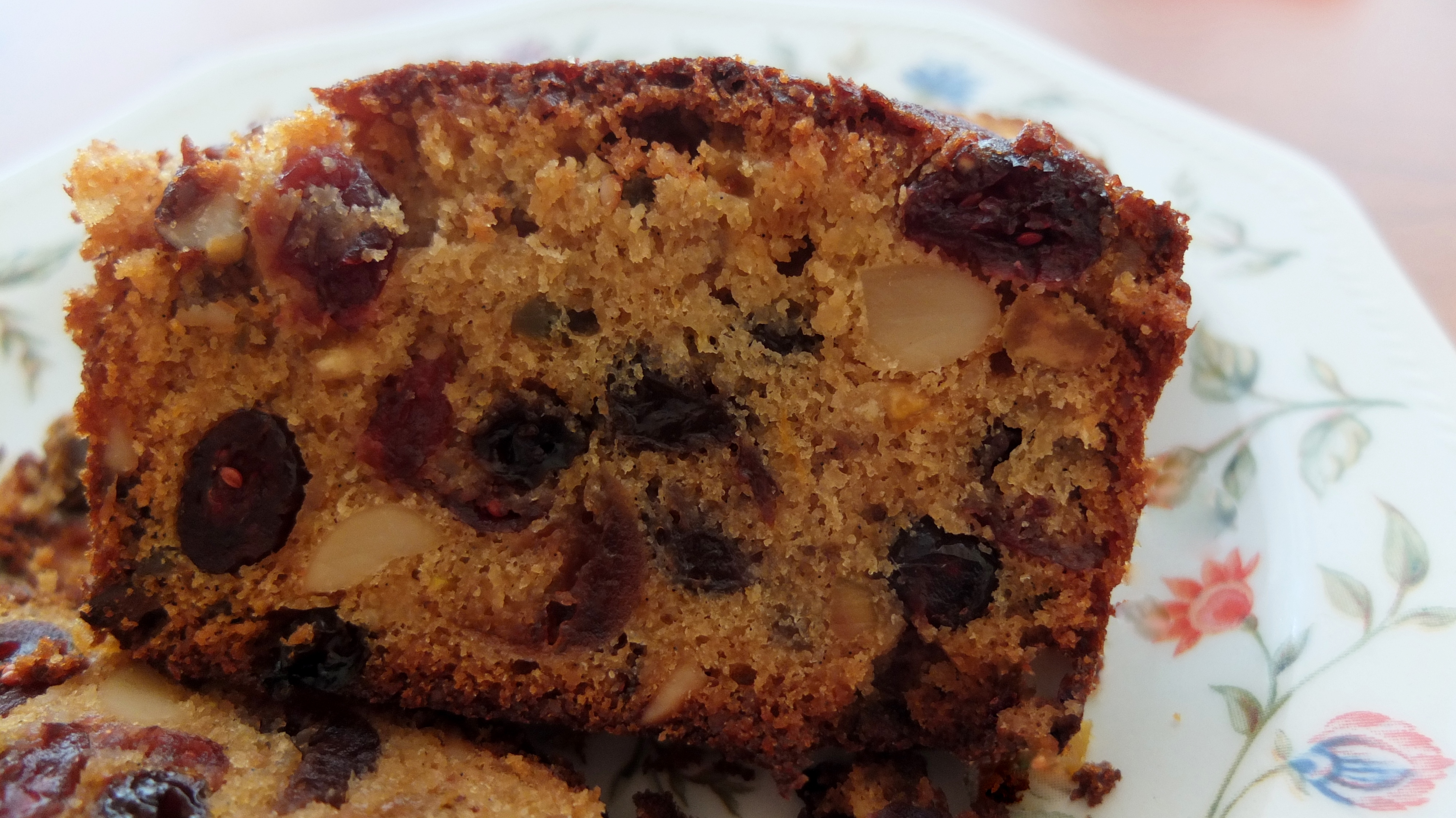
Healthy spelt orange and rum fruitcake-cake anglais

DSCF5318

Healthy spelt orange and rum fruitcake-cake anglais

Now I’ll just thank Dookes for inviting me to write on his blog.  An honour and a pleasure.  Some of you might wonder about a biker and a baker teaming up for their first Guest Posting Experiment.  We met on an online blogging course and one day we’ll probably do what they recommend:  guest post in our own special fields on blogs similar to our own.

But this Guest Post is what’s great about the Land of Blog: expanding your horizons, going beyond your own walls to discover new things and make friends from every walk of life and corner of the world.  I’ve enjoyed my time in another land here where Dookes lives, as I’m sure everyone has and if you’re new have a look around.  I know Dookes will welcome you anytime at his blog and you’re also invited to come on over for a piece of cake back at my place, at lili’s cakes! 

So bye for now sweet and diverse readers!  Happy reading, biking, baking, blogging or eating! 🙂

And cheers Dookes, speak soon!  Hope you enjoy your cake.  Let me know how you like it and where it goes with you on your travels! 🙂