Sea Fever and Steam Trains

I don’t think I get the dreaded writer’s block, but sometimes I feel that I have so much to say I don’t really know where to begin, call it muddled thoughts if you like!

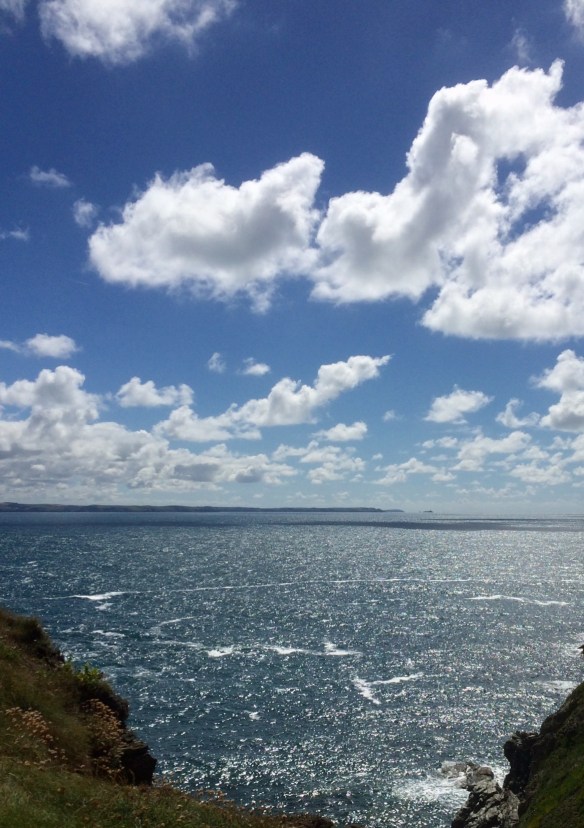
The Dookes life is remaining busy, perhaps sometimes I should just say “no” when I get asked to do things, but hey busy is good cos you’re a log time in your wooden box! As a result though “thinking time” is a rare commodity just at the moment. I was like that today and really needed some space to think; what better than a spell sitting on a Cornish clifftop overlooking the Ocean?

There’s something about the sea that clears the old Dookes head. It’s a combination of the smells, the sound of the waves, the motion of the water and … well, just about everything! It’s a real tonic for the senses.

It wasn’t the sunniest of mornings, but the air was clear and sharp with the tang of sea salt. A hundred feet below me the lazy waves of the approaching high tide sighed as they lapped at was left of the small sheltered beach.
The famous poem “Sea Fever” by John Masefield came to mind. It’s one of those lovely pieces of literature that over the years have inspired me and if I’m honest been a comfort at times too.

I believe that the power of good literature in any language is a wonderful thing. For me it doesn’t have to be a long monologue from Shakespeare, it can be something quite brief, but it has to hit that nerve that causes an emotional response.

You see, I told you that the sea clears my mind and a free mind is able to wander…

Last week I had the pleasure of a very enjoyable motorbike ride with my leukaemia battling mate G. Great fun and brilliant to be out with my friend again. G is hanging in there, his aggressive treatment continues, but when he’s good he does OK and riding motorbikes is one of the best treatments he can have. For my part, seeing him comfortably flicking his Yamaha through the bends as I followed on ‘Harls’ lifted my spirits too. There have been dark days in hospital for G over the last months and to get out and ride together again was fantastic!

We took a long looping ride from the historic city of Exeter, Northwards tracing the valley of the River Exe towards its source high on Exmoor. Swinging West and passing through Barnstaple, Torrington and Holsworthy we certainly covered the miles, well over 250 in fact!

Northern Exmoor

Northern Exmoor

On the high Northern edge of Exmoor we stopped at the delightfully named Woody Bay station where the resurrecting narrow gauge Lynton and Barnstaple Railway can be found. As its name suggests, the railway once stretched from the port of Barnstaple across a meandering route to the small town of Lynton, a distance of 19 miles. The single track line opened in 1898, but by 1923 ownership passed to the Southern Railway who operated mainline trains and were not really in the business of rural narrow gauge railways. In 1935 the L&B was closed after a scandalously short operating life of just 37 years.

Woody Bay Station

Woody Bay Station

Interestingly, this beloved narrow gauge railway has gained more fame and interest in the time since it’s closure than it ever achieved when open. Today a group of dedicated enthusiasts have begun to rebuild the line and Woody Bay station is the main centre of activity. Brightly painted green steam locomotives are once again chugging along part of the old route, with plans afoot for further extension back towards Barnstaple. I can’t wait!

Living Steam on the L&B.

Living Steam on the L&B.

When the line closed a wreath was found on the buffer stops at Barnstaple with the message, “Perchance it is not dead, but sleepeth.” imageIt looks to me like it is now very much awake again!

Funny thing the sea, just like a motorcycle it takes you to such wonderful places……image
….and then the sun came out!

Catch you soon.

Dookes

Sea Fever
I must go down to the seas again, to the lonely sea and the sky,
And all I ask is a tall ship and a star to steer her by;
And the wheel’s kick and the wind’s song and the white sail’s shaking,
And a grey mist on the sea’s face, and a grey dawn breaking.

I must go down to the seas again, for the call of the running tide
Is a wild call and a clear call that may not be denied;
And all I ask is a windy day with the white clouds flying,
And the flung spray and the blown spume, and the sea-gulls crying.

I must go down to the seas again, to the vagrant gypsy life,
To the gull’s way and the whale’s way where the wind’s like a whetted knife;
And all I ask is a merry yarn from a laughing fellow-rover,
And quiet sleep and a sweet dream when the long trick’s over.
John Masefield. 1878-1967.
A Little Bit of History Repeating

When I’m off on my little motorcycle adventures, there’s nothing I love more than riding new roads. Actually, that’s what its all about, new roads, new vistas, new places and new people.

There are times though when I retrace my steps. Sometimes it’s because of necessity because there is no other practical route and other times it’s just because I want to.

Now I’m not talking not those grand places that call me back, like for example Col du Galibier in the French Alps. No, I mean those back roads that just need to be ridden at a leisurely pace without a care in the world.

A few weeks back, as I trundled across Brittany heading for the ferry home, I had one of those moments. I wasn’t in a hurry and the D764 road to Pontivy just sort of called me to enjoy a steady trundle across the gentle Breton countryside.

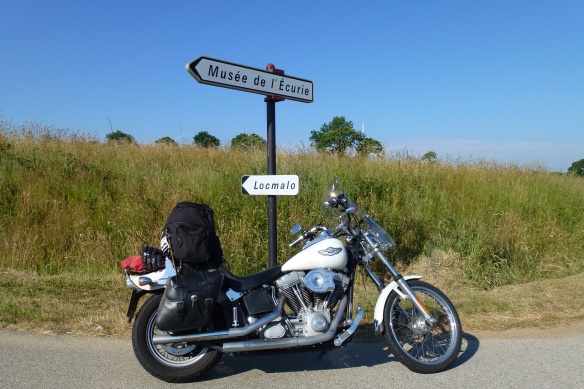
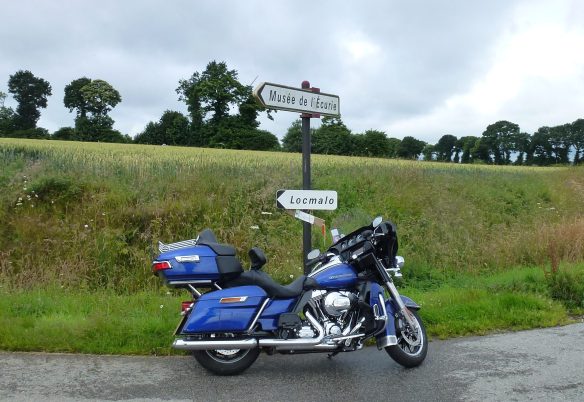
I couldn’t resist stopping to try to recreate a photo that I took of “Harls” a couple of years ago on the same road.
Heres the first picture:

Harls in Brittany 2014.

Harls in Brittany 2014.

And here we are with “Baby” in the same spot two years later!

Baby, Brittany 2016.

Baby in Brittany 2016.

Apart from the difference in the weather and the height of the crops in the field behind the bikes, I don’t think too much has changed.

“Harls” looks a bit dirtier than “Baby,” but that’s probably got a lot to do with her being a naked bike and all exposed to the elements, as I am when I’m riding her!

All I know is that it’s a privilege to be able to own, ride and enjoy two lovely machines such as these and take them to the many wonderful places that I do.

It’s what keeps me sane in this crazy world that we live in!

“Yes I’ve seen it before,
just little bits of history repeating.”

Catch you soon.

Dookes

Melting Again

I’m quite proud to be labelled as an “All Weather Rider.”

Now normally, to most people, this would indicate I am some kind of mad-man who enjoys riding in the rain! Well, not exactly thank you, like most sensible folk on two wheels I would really much prefer to ride in dry daylight, but when you do long distance road trips you sometimes have to contend with what nature throws at you.

Over the years, weather-wise, I think I’ve just about collected the set, ridden in everything that there is and yes had a few “Squeaky-Bum” moments along the way as well. Sometimes though, it’s the conditions that appear the most benign that can catch out the unwary and hot days are right up there!

The hottest temperature that I’m aware that I’ve ridden in was last year in Provence, South East France, when the mercury was nudging 40 degrees Celsius, that’s about 104 Fahrenheit. Add into the mix a whopping big V-Twin engine between the legs and you can appreciate that it was bloody hot! The biggest problem with days like that is fatigue, you quickly get tired in the heat which screws your reactions and clouds judgement. Dehydration can be a real issue too.

Now all of this is very predictable if you are riding in countries where high climatic temperatures are the norm. Here in the UK though, we don’t have a climate… we just have weather!

On Tuesday this week Mrs Dookes had a business meeting in Plymouth, that’s the famous sea port city about 25 miles from Dookes H.Q. and as her meeting would be over by lunchtime we decided to meet up for a bite to eat. All good so far.

I thought it would be nice to take “Baby” for a little ride around and enjoy some of the good weather. I set out and rode a nice sixty mile loop taking in the lovely A374, with its twisty bends from Trerulefoot to Torpoint, before taking the chain-ferry across to Plymouth.

Torpoint ferry, not high on the list of best looking ships!

Torpoint ferry, not high on the list of best looking ships!

What I didn’t realise was that whilst we were out the temperature would soar to 30 degrees Celsius and guess who put the wrong jacket on and took the wrong bike as Baby’s faring keeps all the passing breeze off me? Fortunately I took a change of shirt and a handy towel as by the time I arrived for our lunch date I was, frankly, dripping!

Our rendezvous was the old Royal William Yard in Stonehouse, a part of Plymouth that lies adjacent to Devonport Naval Base on the Hamoaze estuary.IMG_1681

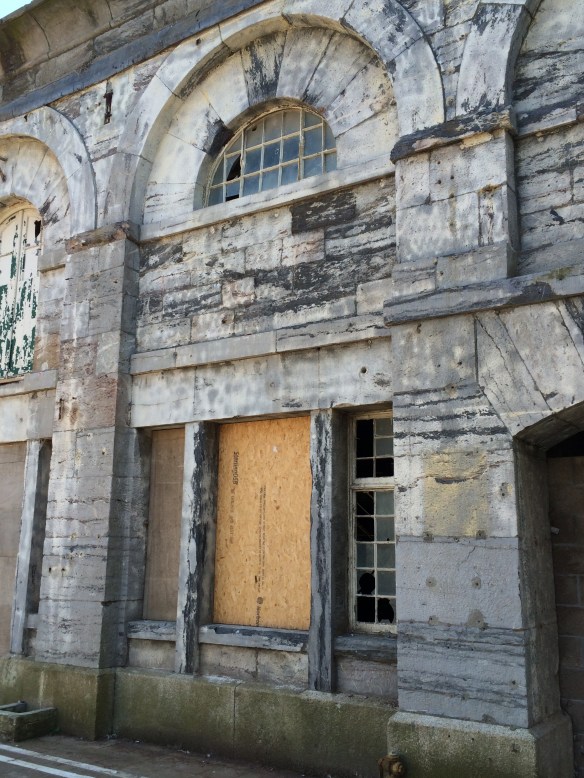
The yard was a major victualling depot for the Royal Navy from 1826 until 1992. It’s an amazing 16 acre site that is all historically protected and although now in private hands still very much retains it’s identity and heritage.

Once a store for beer, spirits and vinegar; now expensive apartments.

Once a store for beer, spirits and vinegar; now expensive apartments.

Urban re-development has converted many of the buildings into award-winning swanky apartments, boutiques, exhibition halls and restaurants. There are still odd corners that await the developers touch,IMG_1695 but largely most of the restoration is now complete. It is, however, one of the most impressive industrial monuments in the whole of the UK.

The scale of what this place did in its heyday is amazing. On site was a flour mill, bakery, slaughterhouse, butchery, brewery and cooperage, not to mention dozens of other smaller workshops and storehouses. Worthy of note is that the flour mill could produce 270,00 pounds/122,500kilos of flour every week, that’s an awful lot of bread and ships biscuits!

Part of the brewhouse, now a restaurant.

Part of the brewhouse, now a restaurant.

The impressive buildings were designed by the architect Sir John Rennie and are built of local limestone and granite. The whole site is also paved with similar stone cut to engineered precision, these are not common cobbles! image

Anyway, we had a super lunch with great views up the river towards CornwallIMG_1686…..then it was time to start-up Baby and cook a bit more!

Next day, it was ten degrees cooler and today it’s been raining!
Like I said, we just have weather!

Catch you soon.

Dookes

Lake Como – Flying on Water

Our trip to Bellagio on board MV Milano was relaxed and quite delightful.

Bellagio is one of those “must go to” places that everyone tells you about, my experience is that normally these places disappoint me and yep, you guessed, so did Bellagio!

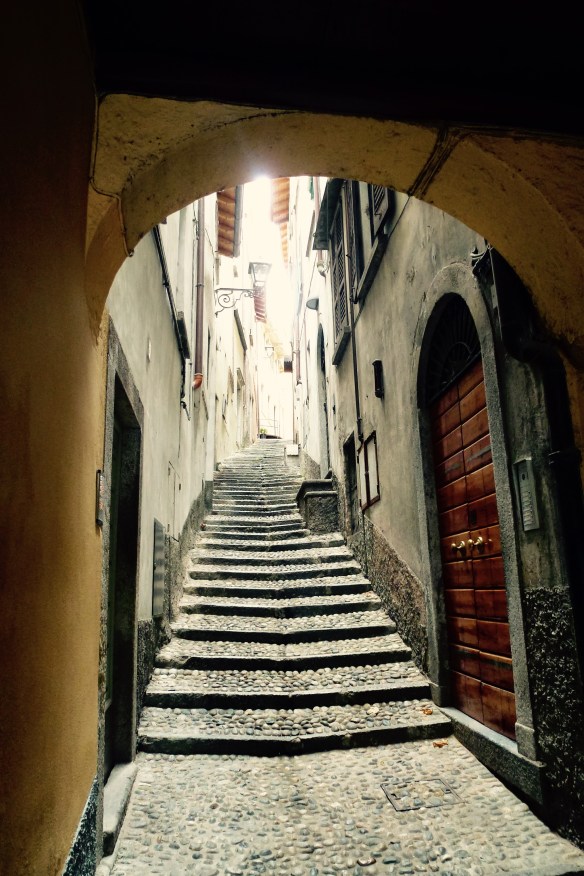
OK, it’s a nice enough little place, but like many “nice little places” it’s popularity proves its downfall. We found a nice restaurant for lunch and I did manage to find one little alley that wasn’t crammed with shops selling crap or heaving with people!image

Now, I’d been doing a bit of devious planning about our return trip. Where it had taken us two and a half hours to reach Bellagio, I’d figured that forty minutes would be better for the return journey!

You see, Lake Como is one of the few places outside the former Soviet Union where regular Hydrofoil services operate and as regular Blogonaughts know Dookes is rather partial to savouring different modes of transportation!

Years ago I rode the Jetfoil that used to operate between Dover and Oostende, but being an open sea service it was prone to cancellation due to adverse sea conditions. As Lake Como is a tad more sheltered, I was sure that our trip would be more assured!

Because Lake Como is so big, 46km/29 miles long, a high-speed service between the principal towns makes sense. For many years this has been provided by a fleet of Italian built hydrofoil fitted boats, which is pretty apt seeming as how an Italian virtually invented the hydrofoil!

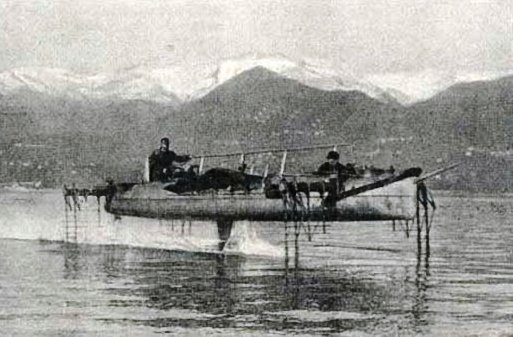
Enrico Forlanini born in Milan on 13 December 1848 was an Italian engineer well-known for tinkering around with various concepts and machines, I think I would have got on well with him! He started playing with hydrofoils in 1898 and by 1911 had a vessel that exceeded 40 mph on Lake Maggiore, just over the hill from Como.

40mph in 1911, on this!

40mph in 1911, on this!

Err, what’s a hydrofoil, Dookes?

Oops! Sorry, I should have explained earlier…

A hydrofoil is best described as the boat equivalent to an aircraft wing and just like the wing of an aircraft provides lift to the aeroplane to make it fly, the hydrofoil wing (which is like a big letter C under the hull of the boat) passing through the water lifts the hull of the boat out of the water. This means that drag is reduced, the vessel moves faster and best of all energy is saved making the whole thing more efficient. On the down-side, hydrofoils are very demanding when it comes to maintenance and that makes running them a very delicate balancing act that most accountants balk at; fortunately, engineers love them and at the end of the day, wonderfully, I’m not an accountant!

Those blasted accountants are unfortunately winning the battle, the ‘foils are gradually being replaced by high-speed catamarans, which though not quite as fast are lot cheaper to build and operate. Anyway, in the meantime, hydrofoils are just so sexy!

Sexy eh?

Sexy eh?

Oh yes, by the way my love affair with hydrofoils can be blamed on that secret agent James Bond 007! In the film “Thunderball,” one of the stars was the “Disco Volant,” a hydrofoil used by the villain Emilio Largo, which obviously was blown-up by Bond in the end!

Disco Volante in "Thunderball."

Disco Volante in “Thunderball.”

Anyway, there we were waiting on the pier at Bellagio for the return service to Como, our tickets for the high-speed service safe in my top pocket. Mrs Dookes is used to me at time like this, I get all excited and stressed up at the same time!

There was quite a crowd, this was a popular service and we probably were not going to be able to pick and choose where we sat, bummer! Once we got on-board, we ducked left and found two seats right at the front of the vessel on the port side (left to the land-lubbers) right ahead of the hydroplane. Excellent!

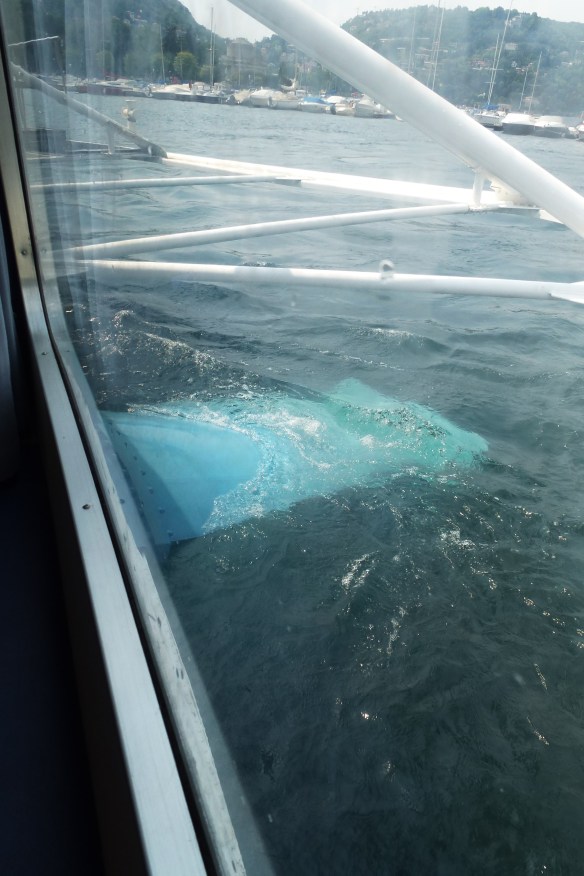
The hydrofoil the pale blue thing sticking out of the side of the boat.

The hydrofoil the pale blue thing sticking out of the side of the boat.

As we settled into our seats the vessel cast off and the two big 1,400 HP diesel engines propelled us towards the centre of the lake. Safely away from the landing stage the engines spooled up and the hydroplanes began to work, the spray around the windows dropped away as the hull climbed away from the water and we were literally flying above the lake! It’s a bit like being on an aeroplane as you speed down the runway and lift off the ground. I was as excited as anything, Mrs Dookes was less impressed. Boys stuff, I guess!

Looking out of the window at speed, we're flying on that hydrofoil!

Looking out of the window at speed, we’re flying on that hydrofoil!

We skimmed along the lake for around ten minutes before we made our one intermediate stop. Then the process of slowing is very like a water-skier who settles back into the water as speed declines, only in our case it was the hull that dropped back into the water to become a real boat again.

Cut the speed and now the hydrofoil drops the hull back into the water.

Cut the speed and now the hydrofoil drops the hull back into the water.

OK, I admit that the hydrofoil doesn’t have the charm of the more traditional ferries. I love them for what they are, a brilliant example of applied engineering that really does the job very well indeed.

Yes, that’s right it doesn’t take much to make Dookes happy; just a big noisy machine generally!

We sped back to the delightful city of Como with plenty of time to partake of some lovely Italian ice-cream and have a little pause before enjoying a super evening meal in a fantastic little no-nonsense restaurant, but that’s another story!

Catch you soon.

Dookes

Travelling in Time – The Lady of The Lake.

When we decided to visit Lago di Como I did some research about the ferry boats that travel on the lake. You can imagine my delight to discover that there is a paddle steamer, named “Concordia,” that has only recently been restored and which operates regular Sunday excursions from Como. Plans were put into place for a day of steam cruising!

Imagine my disappointment when I arrived in Como to find that the weekend’s excursion had been cancelled – bummer!

All was not lost though, Mrs D and I decided that on the Sunday we would take a trip to the famous village of Bellagio and probably grab some lunch. Looking at the ferry schedule, we had a couple of options, but arriving at Como ferry terminal all bets were off – a major change of plan came into play.

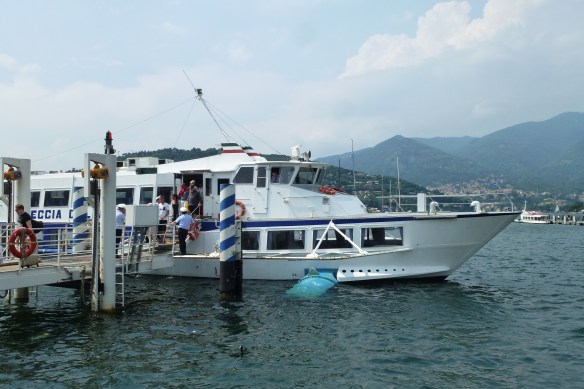
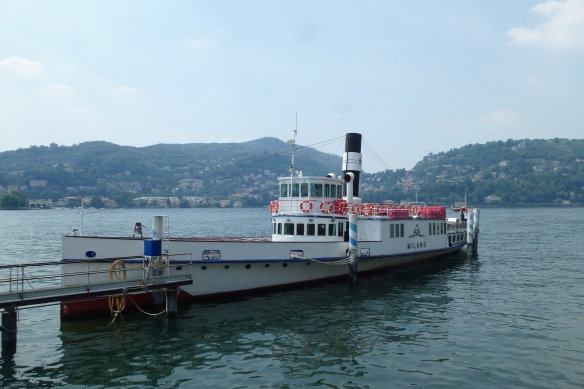
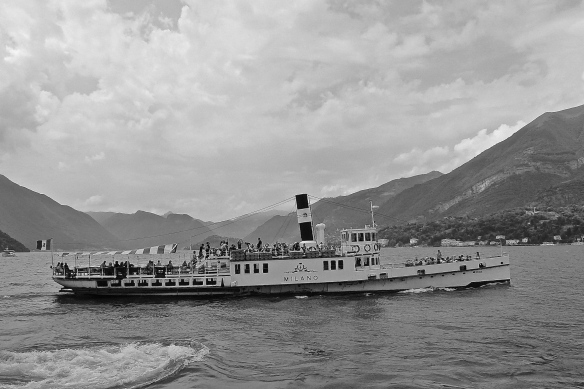
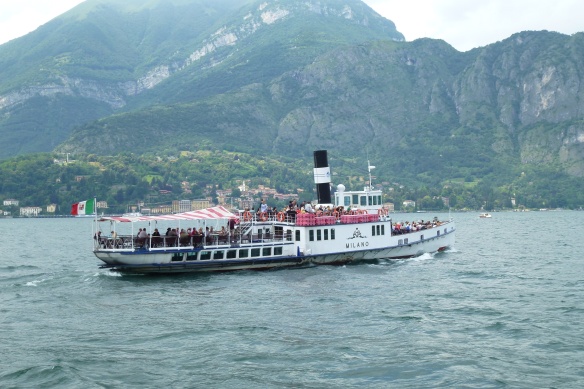
You see, moored against the jetty ready for a 10:00 hrs departure up the lake was the classic 1904 built “Milano.”P1070317

This delightful vessel has quite a history. She was built by N. Odero of Genoa, taken apart and moved to Lake Como where she was resembled and launched into the lake. As built she was a side paddle steamer of 43.2 metres length, but in 1926 she was converted to a diesel-powered motor vessel with screw propulsion and as such has served on the lake ever since.

To say that she is much-loved is a bit of an understatement, basically she is the flagship of the lake ferries and very much in the hearts of the lake side communities.

To see her tied up ready for the morning “end to end” service certainly got my heart racing and fortunately, just before I bought two tickets, Mrs Dookes said “yes!” To be honest, I think she was relieved that it wasn’t a steam-powered vessel, with all the soot, smoke and hot oil that can entail!

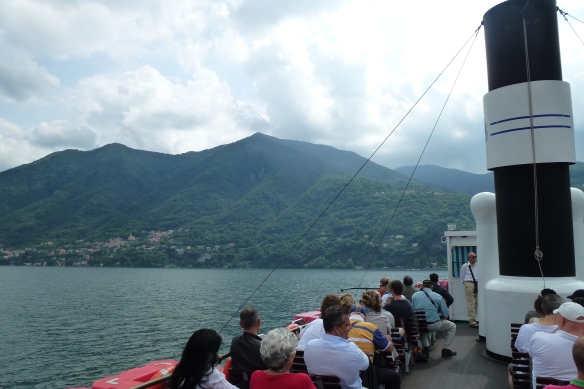
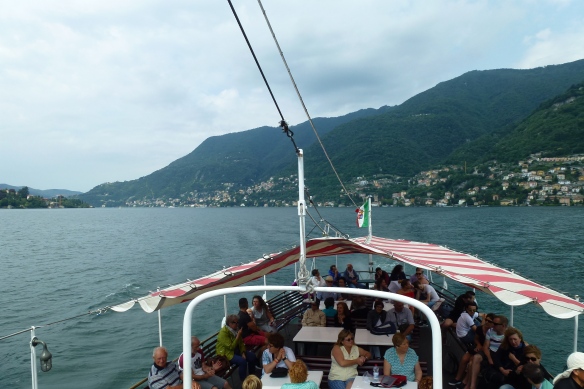
We grabbed a pair of seats on the forecastle deck and settled in for the ride. Two minutes later I was on my feet and off exploring; which was how it stayed for the two and a half hour cruise to Bellagio!

I loved every minute of it and to be fair, for different reasons, so did Mrs Dookes!

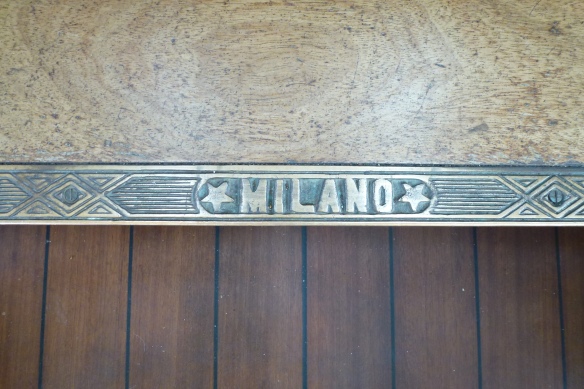
The old girl is obviously well loved and cared for by her crew, “Milano” that is, not Mrs D! Her beautiful wooden weather decks smelling delightfully of fresh teak oil, whilst brass work was well buffed and polished with the odd trace of brasso left here and there. All companionway steps still have the original cast gunmetal anti-slip plates that proudly proclaim the vessels name “Milano” and all of these have obviously been cared for too, a nice touch.P1070432

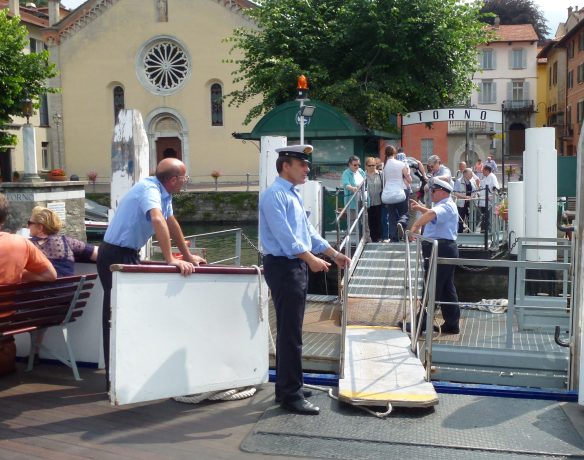
The crew themselves seemed a happy bunch and obviously loved their charge, their pride especially noticeable at the many stops that we made as we cross-crossed the lake heading north.P1070438

“Milano” rides the lake waters beautifully, her straight stem parting the water like a keenly sharp knife whilst her counter stern is pure class. Despite the cross winds and at times enthusiastic helm work she is a real lady, without any nasty rolling or pitching – not bad for over 100 years old and without any stabilisers.P1070442

She’s obviously a bit of a handful to manoeuvre when on-shore breezes pin her against the landing stage. “Milano” is not fitted with bow thrusters like modern vessels, but with teamwork from the mooring crew and skilful handling in the wheelhouse it’s not too much of a problem that a bit of time, patience and experience can’t deal with.P1070443

Oh, I forgot to mention, I fell totally in love with this old lady of the lake! The two and a half hours trip to Bellagio and lunch flew by and if it hadn’t been that she filled to passenger capacity at the last two stops I’d have stayed on board all day!

MV Milano, travelling through time.

MV Milano, travelling through time.

As we disembarked it was with more than a slight twinge in my heart that I watched my beloved “Milano” slip away north for the rest of her day’s work. Such a classy lady!P1070462

….and the trip back?
Well that’s another story!

Catch you soon.

Dookes

It’s just so Annoying!

There’s only one thing about a road trip that really annoys me.

Packing your bags everyday.

It’s only a little thing, but it bugs me every time I do it!

How come even when I diligently keep everything with the bag it came out of I always have a battle to make things fit in again?

Yeah, I know, the secret to motorcycle road trips is keeping it simple and baggage wise keeping it light. I keep the clothes to a minimum and do my laundry each night.

There are certain motorbike “essentials” that get packed at the bottom of the panniers; puncture repair kit, compressor, rain-suit, spare gloves, spare bulbs and tools. Then there are the modern essentials such as phone and battery chargers; oh and not forgetting my travel kettle and mug, a fella needs his tea you know! Well that lot fits into the two panniers and then my clothes bag goes in the top box.
image
It’s the blasted panniers that always misbehave though and seem to shrink every night!

How the hell am I supposed to take back meaningful amounts of good wine?

It’s enough to drive you to drink!

………Once the bike is safely put away!

Catch you soon.

Dookes

Back to Brittany

I’ve just been playing with the Via Michelin App to see what it made of the trip from Como to Brittany, where we are this evening. Interestingly, it nearly came up with the same route that I had, but mine was a bit more interesting and therefore longer!

Today we passed the 2000 mile mark on this little jaunt. Not bad when you consider that three days were spent in Como and on the day we rode Stelvio and Gavia it really wasn’t any mileage at all.

The journey today has been nice and relaxing, if you can ever say that about nearly three hundred miles on a motorbike! We kicked off with a nice little trundle of around twenty miles to warm up before we hit the Autoroute and then followed a spirited 130 miles dash to Angers. That blew the morning cobwebs away!

Baby was certainly on song cruising the Autoroute westwards and to add to my pleasure there was hardly any traffic at all. We stopped briefly for fuel in Bougueil; the town is rightly famous for delightful wines that are flavoursome yet light. Well, we had to grab a bottle whilst we were passing through, it was only polite!

I always look on Angers as a defining point on any journey through this part of France, heading West you enter the wide, wide, valley of the River Loire and coming East it’s the gateway to Brittany. I can almost spot exactly where the wide open wheat fields and vineyards end and the smaller Breton pastures bounded by hedges and old oak trees begin, it’s quite magical!

In France, Brittany is often referred to as “Little Britain,” such is the similarity to the Western parts of the U.K. No wonder I always feel so at home here. You can tell it’s a region influenced by the weather of the North Atlantic, slate roofs steeply sloped to throw off the sometimes copious rain!

I have Mrs Dookes to thank for introducing me to Brittany, as before we met I’d never been to this lovely part of “L’Hexagone.” Merci beaucoup mon amour, je t’aime!

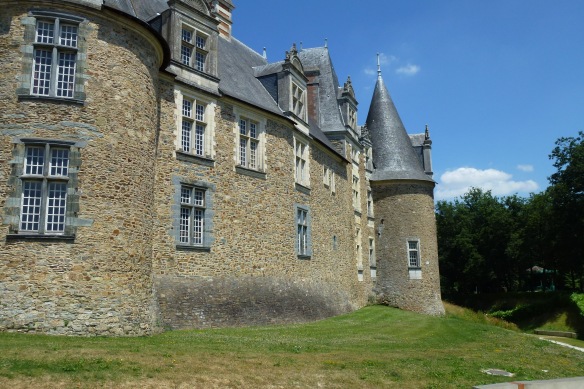
Tonight I’m staying with my friends Denis and Anne, at their delightful Château which nestles on the edge of an ancient wood, deep in the centre of the region. Baby is safely ensconced in the garage, Anne’s Mercedes was evicted to make room! Denis is his usual loud energetic self, laughing at the Euro 2016 football tournament and especially the English losing to Iceland – we both agree on that! He’s threatening to cook me “Carre de porcelet,” which I suppose translates as piglet chops….! Knowing him this is going to be good! Anne meanwhile rolls her eyes at the two of us, she’s seen the floor show before.

I’ll report on the food later.

Now back to the ride….

From Angers we went cross-country, first to the delightful town of Chateaubriant then I just headed West.

Le château, Châteaubriant.

Le château, Châteaubriant.

I know it sounds corny, but I do have an innate sense of direction and so I turned the SatNav off and just followed my internal compass. I find it quite relaxing as well, heading where the mood takes. It must’ve worked, we got here!

So here comes that familiar “end of trip” hollow feeling. It’s sort of a mix of elation that the plan came together and also the realisation that it’s nearly all over, until next time.

I usually fight it off by starting to think about “The Next One.” Therein lies a problem, as Mrs Dookes and I have a shedload of work to do over the coming months. . .
“The Next One” may lay some way off in the future.

Actually, to tell the truth, I have an idea.

Why don’t we go to……….

“Freedom is a dusty road heading to a highway.”

Catch you later.

Dookes

La Cœur de France, The Heart of France

It’s been a long hot hard ride today.

Baby and I kicked off from our overnight stop in a small village called Montaimont near La Chambre in the high Alps.

The view at breakfast I've known worse!

The view at breakfast- I’ve known worse!


After breakfast, our first hurdle was to negotiate the steep, narrow lane from the village back to the D213. With four very tight hairpins and a crumbling road surface I knew it was always going to be tricky, but we only had to resort to walking one bend so it wasn’t too bad. Once on the D213 we sailed through the remaining half-dozen “lacets” as my French friends call them and soon hit the Péage heading for Lyon.

As I was saying my goodbyes to the Alps, until next time, Baby seemed to come into her own. I swear that bike was trying to tell me something; something like, “OK, this is what I do, let’s go!”

So yes, in many ways it’s been an Autoroute cruising day and also one to watch the French geography unfold before us like a documentary film. First there was the Alps, then the young Rhône, the mighty Loire valley and the extinct volcanos of the Puy de Dôme. What better geography lesson could you ask for, how come it was never this good at school?

All the while that big bike of mine just got on with it. Mile after mile was munched up, whilst I enjoyed the comparatively luxurious ride that only a ‘Big-Twin’ Harley can give! Just over two hours after setting out we paused for a spot of lunch not long after Lyon, which was its usual chaotic mess! Grabbing fuel at Thiers, from a place I know just off the Autoroute and then back at it, we cruised into St Amand Montrond at about 15:30.

Time for a cup of coffee and then to head cross-country through the Cher valley to one of my favourite B&B’s near Vierzon.

I always like to spend the last hour of a riding day sort of chilling a bit, taking the back roads and letting the road come to me as we spool down after long fast miles. The scenery around here tends to be quite arable, large fields to barley, wheel or rape seed. The latter does get a bit tedious, it a member of the brassica family and for miles everything smells of cabbage!

I was feeling a bit bad about the River Cher and wanted to get a nice photo to disprove that’s it’s not all weedy and muddy, so we meandered around a bit looking for a suitable spot. Unfortunately everywhere was either weedy or muddy! So no shot I’m afraid!

You’ll just have to be content with this almost timeless picture of the evening train departing St Florent sur Cher. Timeless because there’s no-one there except the staff!

St Florent - The Frech Adlestrop.

St Florent – The French Adlestrop.


It’s a bit like the poem “Adlestrop” by Edward Thomas, except it’s the French version!

As I type, the crickets are chirping away outside my window and pigeons fly past heading to roost, their wigs clapping a farewell to the warm summer day.

Ce soir nous sommes au cœur de la France ce soir/We are in the heart of France tonight. Baby is safely shut away in the barn, content with 360 effortless miles under her belt. Yes, she’s a heavy old lump in the mountains, but a thoroughbred out on the open highway, which is what she’s really designed for and I can’t really ask more than that!

The sun is casting a red glow across the sky and silhouetting the old trees on the horizon. It’s not the Alps, but it sort of feels like home.

Heart of France sunset.

Heart of France sunset.

“Yes. I remember Adlestrop—
The name, because one afternoon
Of heat the express-train drew up there
Unwontedly. It was late June.

The steam hissed. Someone cleared his throat.
No one left and no one came
On the bare platform. What I saw
Was Adlestrop—only the name

And willows, willow-herb, and grass,
And meadowsweet, and haycocks dry,
No whit less still and lonely fair
Than the high cloudlets in the sky.

And for that minute a blackbird sang
Close by, and round him, mistier,
Farther and farther, all the birds
Of Oxfordshire and Gloucestershire.”

Edward Thomas
3 March 1878 – 9 April 1917 Killed in Acton Arras

Catch you soon.

Dookes

The Last Col

I had real mixed feelings as I guided Baby from Como this morning.

With Mrs Dookes flying out to be with me, I had to pause, draw breath, stop being self-centred and only thinking of motorbikes for a few days. I’ve got to admit that despite it being quite a difference from my normal road-trip ‘modus operandi,’ it worked superbly and the break from riding did help recharge the old Dookes batteries! On the other hand, I was just about ready to get rolling again by this morning, there’s only so many pastel shaded salmon coloured houses with tile roofs that I can cope with looking at!

There is just one funny thing though, after three days of not riding it came as a bit of a shock just how heavy Baby really is! I supposed I’d got so used to her massive bulk that I’d forgotten how bloody awkward she can be at slow speeds and on indifferent road surfaces, like stone cobbles! Thank you Como for reminding me of that!

Once we got on the open road I was able to relax a tad, if one can ever relax when riding on an Italian Autostrada! Now don’t get me wrong, the Italian motorways are not in my opinion inherently more dangerous than any other high-speed trunk road found throughout Western Europe, you just have to approach them a bit differently. For example, apart from lane one the other lanes have strict minimum speeds and frankly you be crazy to ignore that. What the Autostrada really does is make people use their mirrors properly, not lane hog and anticipate well in advance. True you will see bonkers things occasionally, but tell me a motorway anywhere where you don’t! The only unfortunate thing about the Autostradas is that the majority of them are toll roads and not cheap ones either, so whilst they undoubtably save time you pay for it!

Leaving Como we headed South, skirted Milan and struck out East to Turin where we took the A32 towards the French border.

By Susa and 130 miles of hot, hot, hot slog, I was ready for a change and turned off the Autostrada to find some altitude and cooler air. At 2083metres/6834feet Col du Mont Cenis seemed to fit the bill nicely, it’s just that I’d forgotten how much hard work it takes to get up there! The road isn’t technically very difficult, but I’ve always found that I can’t really get a rhythm going on it and today was no exception!

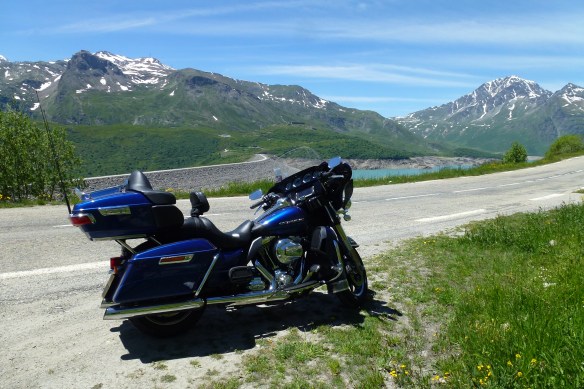
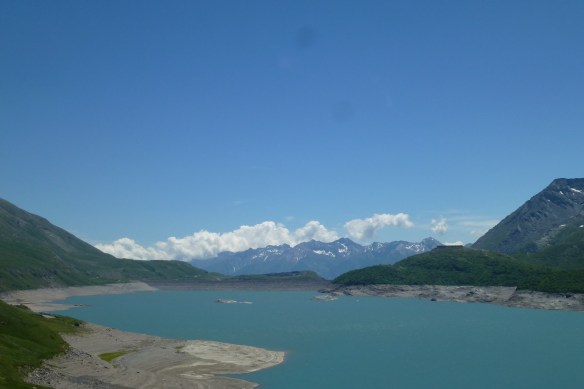
At the top of the climb is a lake, Lac du Mont Cenis, an artificial lake that supplies water to two hydroelectric stations. During last winter extensive maintenance was carried out on the dam and as yet the lake has still not reached anywhere near its normal level, which made for an interesting contrasts to previous visits.image

As I wasn’t in any particular hurry, I stopped for a most enjoyable lunch at a small restaurant that overlooks the lake. Talk about a meal with a view! image

The road from the Col drops down to Lanslebourg via a delightful ladder of five sweeping hairpin bends, which being nice and wide, were a joy to cruise round on Baby.

We plugged away down the L’Arc valley, whilst surrounded by impressive towering peaks it gets quite tedious the nearer you get to Modane and St Michel de Maurienne. There’s just too much squeezed into a very narrow valley, a major railway line, several freight yards, two main roads, a Péage, various quarries and factories not to mention the River L’Arc!

By La Chambre I was ready for a change.

There was one more big Col on the Dookes list, another classic from Le Tour de France that had been calling me for years; Col de la Madeleine. Despite Baby being such a handful on the narrow mountain roads I decided to go for it, remembering how I’d ridden last year on Col de Lombarde I knew the bike could do it!

From La Chambre to Madeleine the D213 road is 20km long and gains 1522meteres at an average gradient of 8%, that’s quite a climb, over a mile upwards. Oh yes, there’s twenty hairpins as well! At the top you are 2000metres above sea level, that’s 6562 feet.image

I’ve got to say that I enjoyed every single metre of that climb. I just let Baby find her own pace and gear, she’s not a sports or adventure bike, so no point in trying to ride her as such. She is big, long and heavy and as such you’ve got to approach the tight twisties with respect, do that and she’ll do the job! Just like today.image

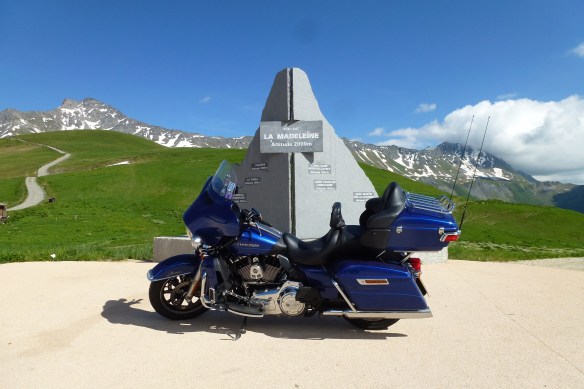
Arriving at the summit was incredible, I remembered that someone once described Madeleine as “beautiful, but heartbreaking.” imageI’m not sure about the heartbreak, definitely beautiful, but for me to was the culmination of a quest that began by a young boy who over forty years ago dreamed of visiting the great Tour de France Cols.image

As I stood admiring the lovely stone summit marker, a golden eagle called from high in the clear sky above me, it’s call echoing off the surrounding mountains.
image
I looked upwards to that majestic soaring bird.

If we dream to soar from what we are familiar, that is normal.
A few are lucky enough to fly with their dream.

. . . and now that last Col has been climbed, where else can the dream lead to?

Catch you soon.

Dookes

History Occurred Here

It probably comes through in my blog writings that I have a keen sense of history. Travelling around Europe it is not hard to pass through places that have seen through the centuries both tragedy and triumph.

Riding along the shores of Lake Como I was aware that I was going to be very near the place where a defining moment in European history had occurred.

In the Spring of 1945 the Second World War was drawing to a close in Europe. Italian Dictator Benito Mussolini had taken his country to war in 1940 forming the Axis with Nazi Germany, he met with complete military failure. By 1945, Mussolini had been reduced to the head of a German puppet state in the Northern part of Italy. He faced the ferocious Allied advance from the South and increasingly violent internal conflict with Italian Anti-Facist Partisans.

By April 1945, with the Allies breaking through the last German defenses in Northern Italy and a general uprising of the population taking hold in the cities, Mussolini’s position became untenable. On 25th April he fled Milan, where he had been based, and tried to escape to Switzerland.

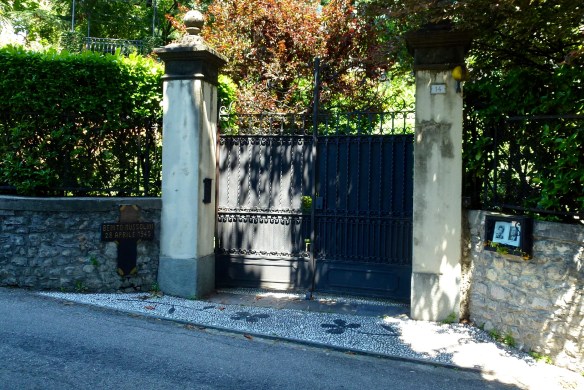
Two days later Mussolini and his mistress, Claretta Petacci were captured by local partisans near the village of Dongo on Lake Como. The next day, the pair were taken to the gateway of the Villa Belmont in the village of Giulino di Mezzegra and with a burst of sub-machine gun fire were summarily executed by the anti-fascists.

Gateway to Villa Belmont

Gateway to Villa Belmont

One version of events is that the execution was carried out by Walter Audisio, a communist partisan who used the pseudonym “Colonnello Valerio.” In more recent times, however, the circumstances of Mussolini’s death, and the identity of his killers, have been subject to continuing confusion, dispute and controversy in Italy.

The people of Italy are divided in their retrospective view of Mussolini. To some he remains a hero of their nation, while others revile him.

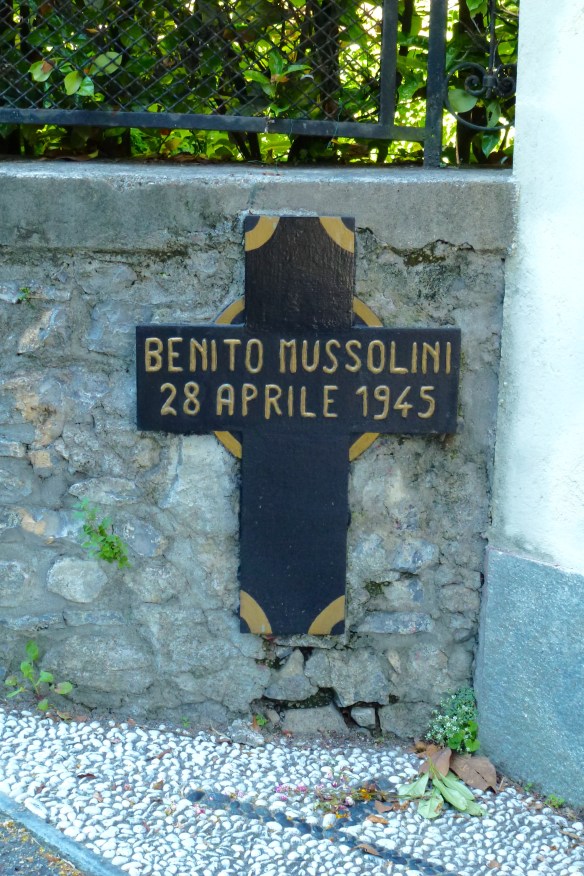
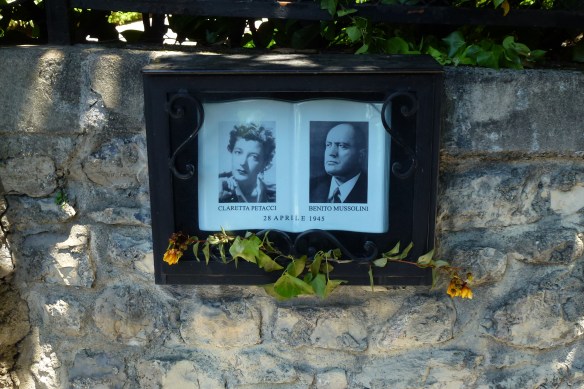
Today the location of Mussolini and Petacci’s execution is marked by a small black cross in the gateway to the villa in Mezzegra.image

As I was literally passing within 200metres, I felt that I should stop for a moment, not for any morbid fascination, but rather to witness the spot where history had occurred.

As you can see, it’s really very understated and a few flowers, now shrivelled have been left.image

It’s a bit strange really and frankly I don’t really know what to make of it, I came away feeling rather uneasy.

History did indeed occur here, that’s all I’m going to say.

Dookes