I Need a Shot of Salvation

I sit contemplating the keyboard, choosing the next key to tap in an effort to articulate my message.

After over two weeks of shorts and tee shirts todays cool breeze and low cloud are a bit of a shock, but the fleece and jeans are as needed as the urge hit the road again is pressing. Don’t get me wrong, it’s not spontaneous, but I can mark the calendar by the intervals that will pass before I have to hit the road.

Travel is something that seems to be part of my DNA, I’ve always done it and probably always will, I really don’t function too well without it. I used to work in the railway industry where transport and travel is the name of the game; in those days the mileage I clocked up was unbelievable, but I never grew tired of it. Maybe it’s the ever-changing vista or the feeling of motion that lifts me, I really can’t put my finger on it. All I know is that I like it, especially on a Harley! Strangely though car travel really does bore me silly, weird.

Anyway, the rather dull morning that I am looking out on is only a temporary downer . . . I’m hitting the road this evening and grabbing the overnight ferry to France. It’s gotta be time to give my new Baby Harley a really good work out.

Two cylinders of pleasure.

Two cylinders of pleasure.

We’ve been getting along just fine as we settle in together. She’s beginning to loosen up nicely and shake off some of the factory fresh stiffness, so lets stick another few thousand miles on the odometer and see what difference that makes!

Once we get off the ship tomorrow morning, we are going to head East. Rennes, Le Mans, and then Tours all look to be on the way; stick around and take a ride with me, you know you want to, let’s go looking for some adventure!

“I need a shot of salvation, baby, once in a while.”

Dookes

Land of History

There are occasions when, as I ride around the Cornish countryside, I am frequently in awe of the rich history that is cradled in this small part of the world.

In recent posts I have travelled back to the times of legend and the Bronze Age. Let’s “shoot” forward a few years, drop in on the times of Henry the Eighth then fast forward to the Twentieth Century and do that all in one place and what a place it is! This is Pendennis Castle.

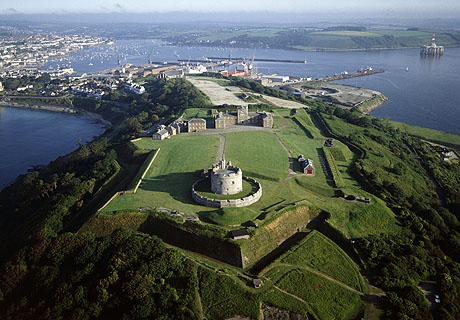
Perched atop a rocky headland that juts out into the open sea close to the historic town of Falmouth on Cornwall’s southern coast, the imposing fortress of Pendennis protects the sheltered mouth of the River Fal and the deep water anchorage of Carrick Roads. Over 400 years ago work began on this great fortification by order of King Henry VIII; by the 1540’s the elegant gun tower was built followed in 1600 by the ramparts which today still define the perimeter of the site.

PENDENNIS CASTLE Aerial view of the castle looking North West

Aerial view of the castle looking North West


The castle played an active role in the nation’s defence until the 1950’s, since then Pendennis has been treasured and conserved as a site of great historical importance. It is open to the public all year round, (weekends only during the winter) and should be on the “to do” list of any visit to Cornwall.

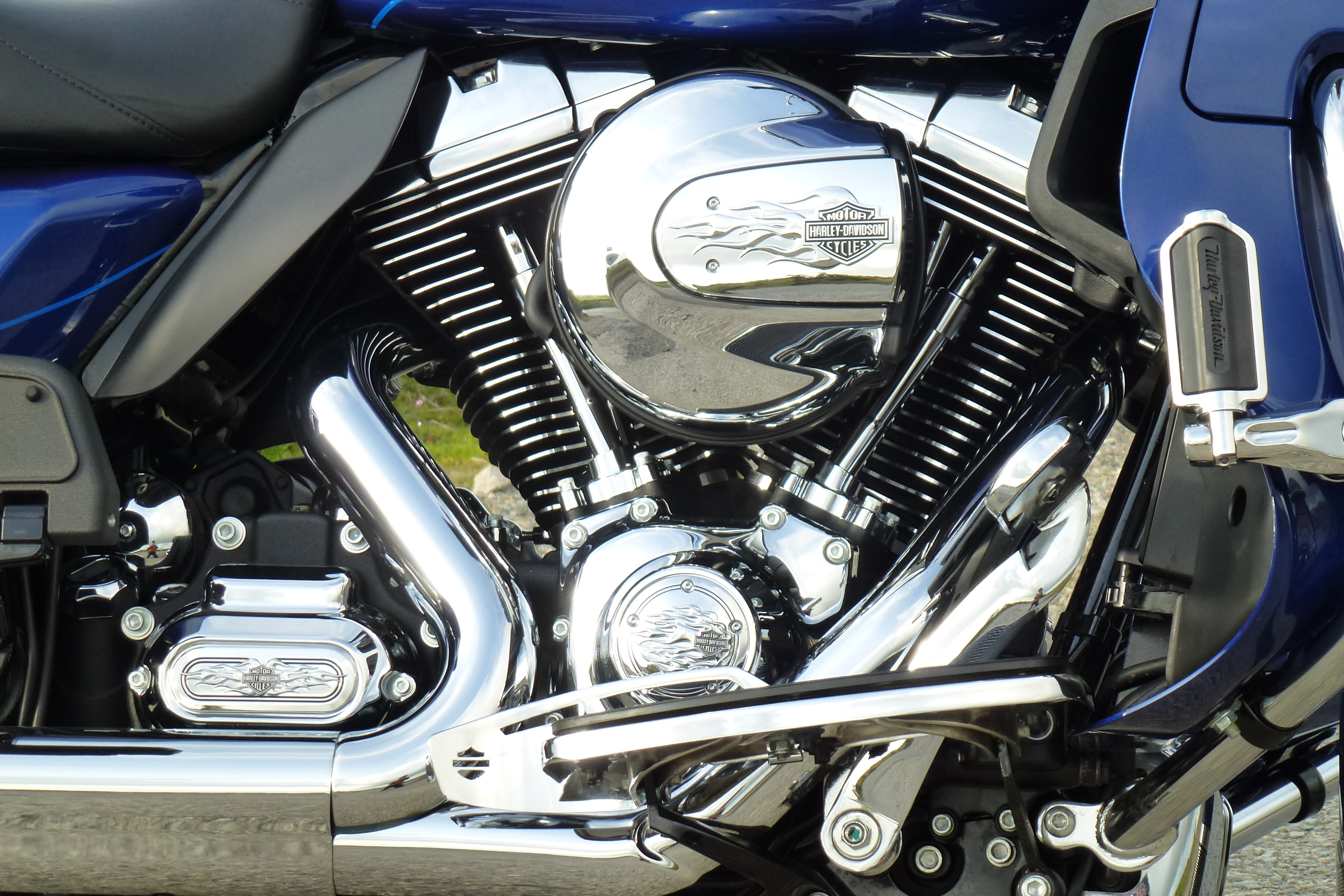
A couple of weeks ago I was lucky to be invited to visit by the staff of English Heritage, who are the custodians of the castle. Passing through the massive gatehouse on my new Ultra Limited was a thrilling and privileged experience, I must confess to wonder if this was the first time a Harley Davidson has entered the castle in its long history?

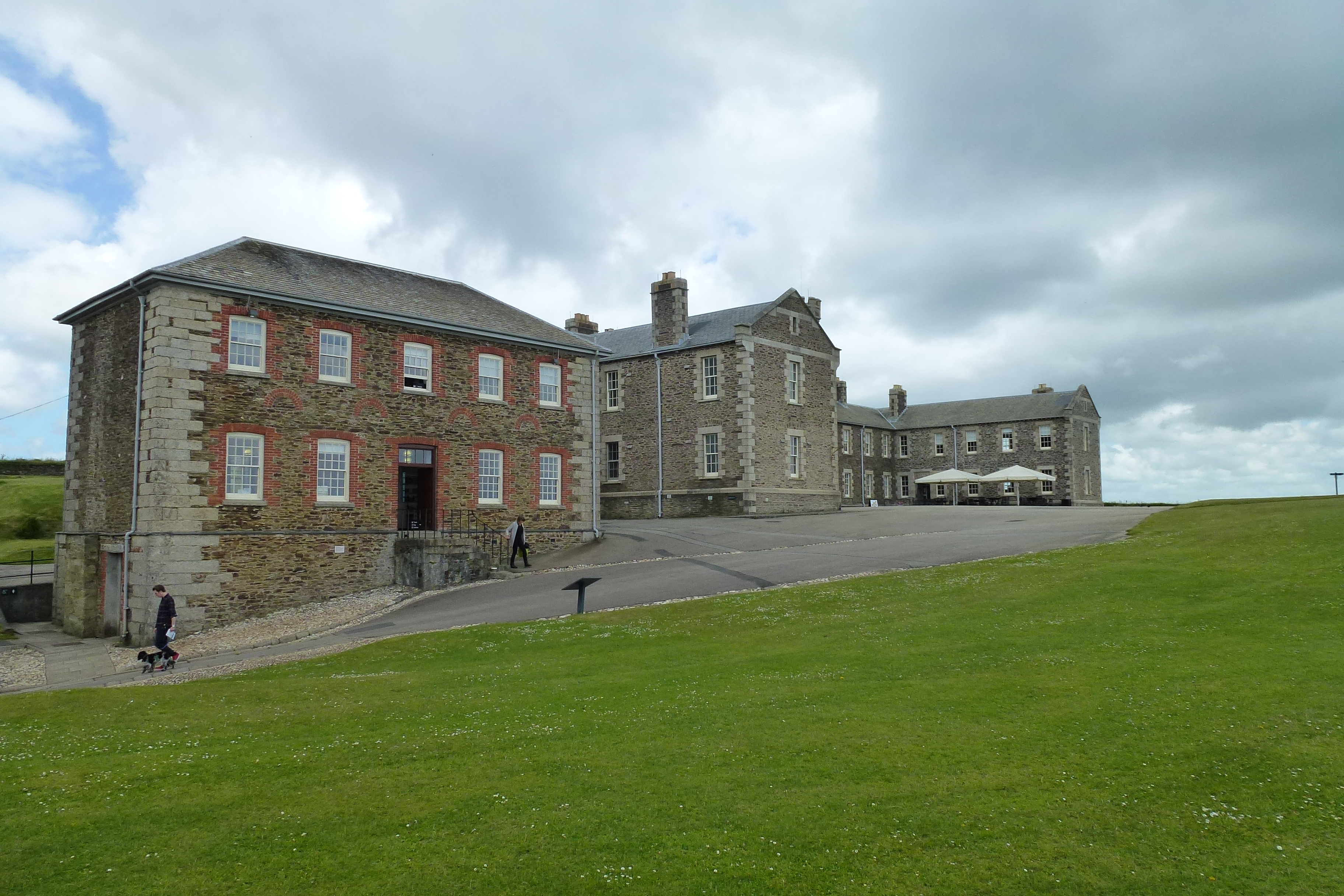
Royal Garrison Artillery barracks.

Royal Garrison Artillery barracks.


The first imposing building that greets visitors dates from 1902, it was the regimental headquarters and barrack block of the 105th Regiment Royal Garrison Artillery. The building is fronted by a parade ground where it is easy to almost hear the historical echoes of soldiers marching and the gravel crunching under their boots. The barracks today houses various displays showing facets of life in the British Army throughout he ages, at present there is a super exhibition to mark the centenary of World War One and is well worth a look.

Central to the inner bastion is Henry VIII’s keep, or gun tower.Pendennis_CastleBegun in 1539, this was built as a response to the then threat of invasion by French and Spanish forces. It has four sections: a guardhouse, a fore building, a central round tower and a surrounding gun platform known as a “Chemise.” Not only is it one of the finest examples of one of the first purpose-built Gun Forts, but it also has one of the last drawbridge and portcullis installed in a castle other than as a decoration.

You see the most fascinating thing about this place is that it is not a castle from the days of knights on horseback and bow and arrows, no, Pendennis has always been about guns, very big guns! Everywhere around the place you will find artillery pieces from the various ages of the castle’s history and most impressive of all, a lot of them are still in working order and are regularly fired; much to the excitement of any children visiting, this one included!

Today, the main reason that I was visiting Pendennis Castle was to watch the firing of the Noon-Day Gun. This is a tradition that was only resurrected only last year. Pendennis has long marked the accurate passage of time; for many years a time ball was dropped at 1pm every day so that ships could set their clocks, so vital for accurate navigation. This in turn led to the firing of a gun at noon and later still to the use of a siren.

The Pendennis Time Ball

The Pendennis Time Ball

Today the Castle staff use the historic artillery pieces to mark the passage of time, during my visit the chosen gun was one of two Quick Firing 25 pounder British field guns that date from World War Two and were still in service until the early 1960’s. It was the first time that I had ever been up close and personal with such a weapon, despite descending from two artillery serving Grandfathers! There must be some artillery in my genes though, as I was handed the firing pistol and asked to cock it, without hesitation I did just that and I’d honestly never even seen one before, strange!

The firing pistol.

The firing pistol.

Anyway, we all got excited as the gun was loaded with it’s blank round and waited for the signal to fire. Then wait a minute, we can’t fire because there are a couple of dog walkers beneath the ramparts. . . Henry VIII never had this trouble! The we got the “all clear” and boom, the gun was fired! The photo really doesn’t do it justice, but it was a good bang!

The Noon Gun Fires!

The Noon Gun Fires!

Then all that was left was to unload and clear the breach ready for tomorrow.

Smokin'!

Smokin’!

The collection of artillery pieces also includes an American 155mm “Long Tom” field gun, one of only four on display outside the USA and the only one that works.P1030908

Towards the Southern perimeter of Pendennis Castle can be found more recent defences. Known as Half Moon Battery because of its distinctive shape, this emplacement was first constructed in 1793. Over the years it was repeatedly rebuilt and modernised, from 1911 six-inch calibre naval guns have been in place. The guns were replaced twice during the Second World War the first time because they were worn out and the second occasion improved versions were fitted with greater range and power. The last time that these guns were fired in anger was in 1944 when Nazi surface vessels were engaged. The latter guns could fire a 100 pound shell to a range of 12 miles and were radar directed.

6" Mark 24  gun in Half Moon Battery

6″ Mark 24 gun in Half Moon Battery

Above Half Moon lies a low concrete building sunk into the rampart, this is the Battery Observation Post which controlled the two guns and provided accurate target information to the gunners. It has been restored to its wartime appearance and even houses an optical depression position finder, an early sort of computer for plotting the course and range of a target which was surprisingly accurate.
Inside the Observation Post, depression position finder in the centre.

Inside the Observation Post, depression position finder in the centre.


Beneath the battery are the powder and shell magazines; superbly preserved these chambers are open to visitors as part of informative guided tours, they include audio recordings of the guns in action together with the experience of being under attack from an air-raid and very interesting they are too, I’d certainly recommend tagging along if you ever visit Pendennis.
The powder magazine, bagged charges for the six-inch guns to the left.

The powder magazine, bagged charges for the six inch guns to the left.


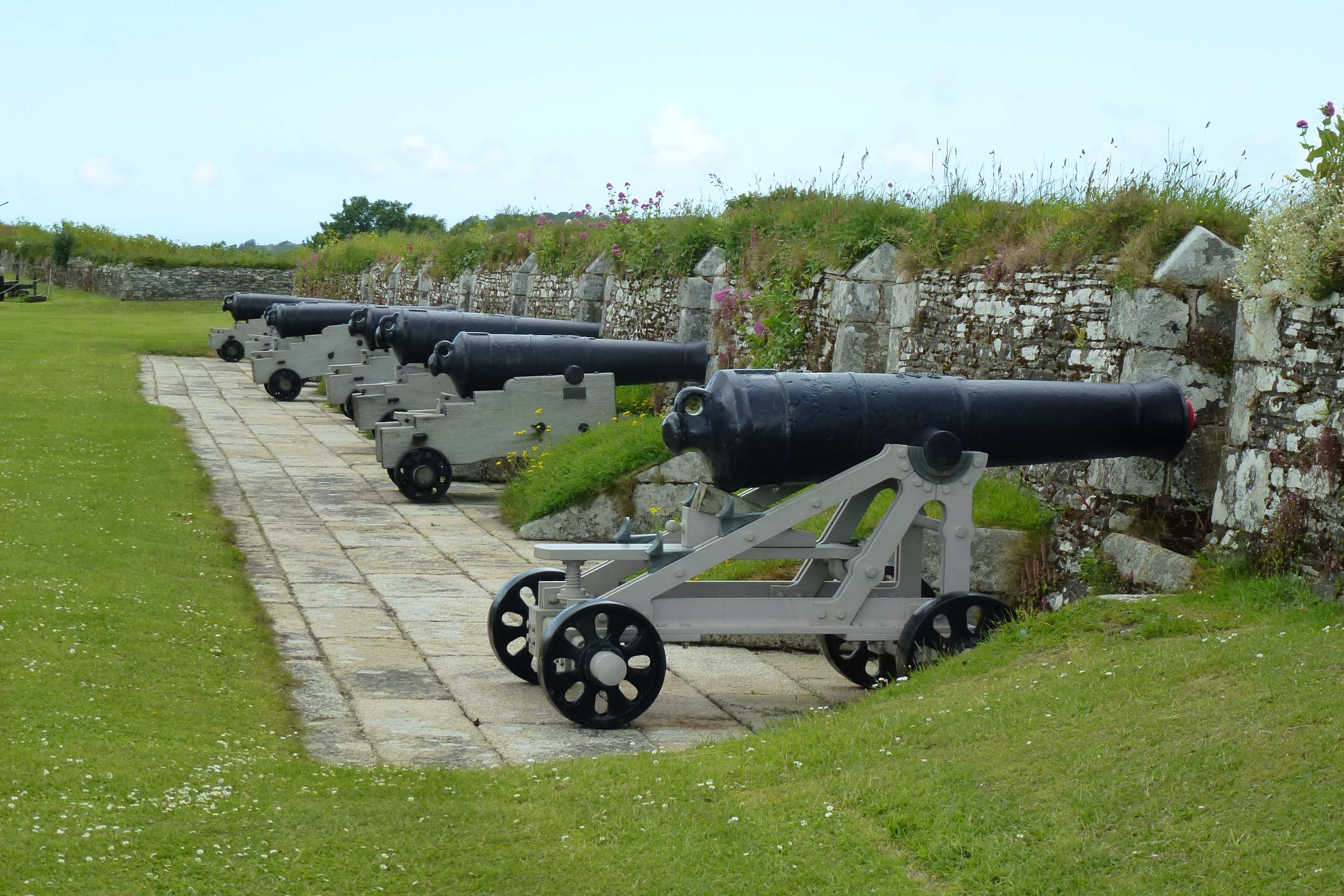
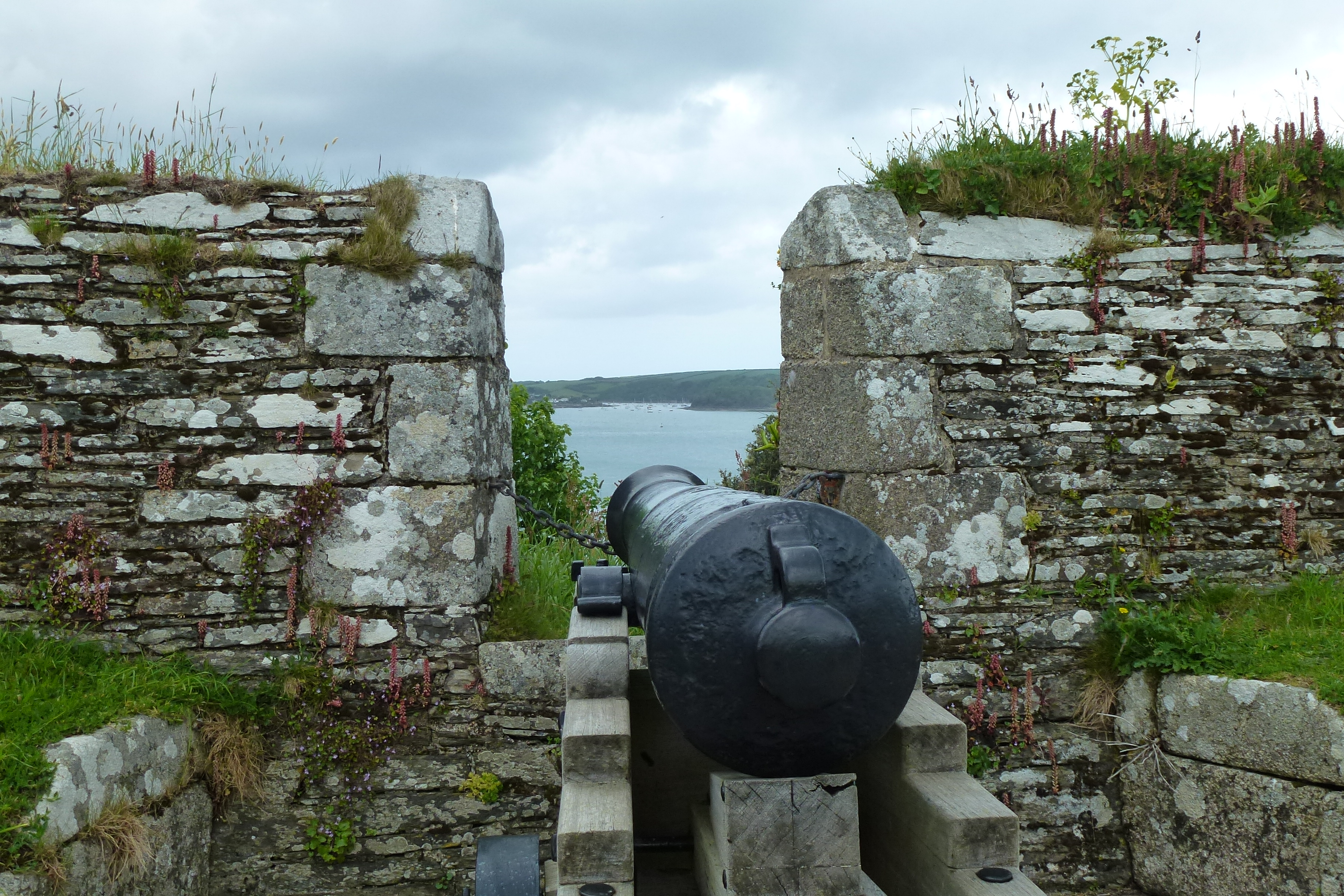
Leaving the subterranean chambers behind I enjoyed a stroll around the ramparts and on the eastern side spent some time at Nine-Gun Battery. Overlooking Carrick Roads, the deep water anchorage, this dates from 1730 and is armed with nine classic muzzle-loading cannons from the late 18th and early 19th Centuries, Captain Jack Sparrow and his mates would certainly recognise these guns!
Nine-Gun Battery.

Nine-Gun Battery.

I see no pirates!

I see no pirates!


That reminds me! Pendennis Castle holds various events throughout the year to interest visitors of all ages. Pirates will next be attacking on Tuesday and Wednesday 28th and 29th July, whilst Medieval Jousting is held every Tuesday and Wednesday in August, for more details click here.

All that then remained was a visit to the rather excellent tea room for a spot of light lunch then hit the road again.

With particular thanks to Kirsty and Kate of English Heritage for facilitating my visit.

“Do you ever see in your dreams all the castles in the sky?”

Catch you soon.

Dookes

PS It was OK for me to handle the firing pistol, I hold a firearms licence.

Sorry that some of the photos are a bit dark, but I hope you get the drift.
Does my gun look big in this?

Land of Mystery

Lovely early summer days have arrived here in Cornwall and for me the best way to enjoy them is from the saddle of one of my beloved Harley Davidson motorbikes!

On my last post I took you to the times of Arthurian Legend, this time lets go back further in time. . . a lot further back.

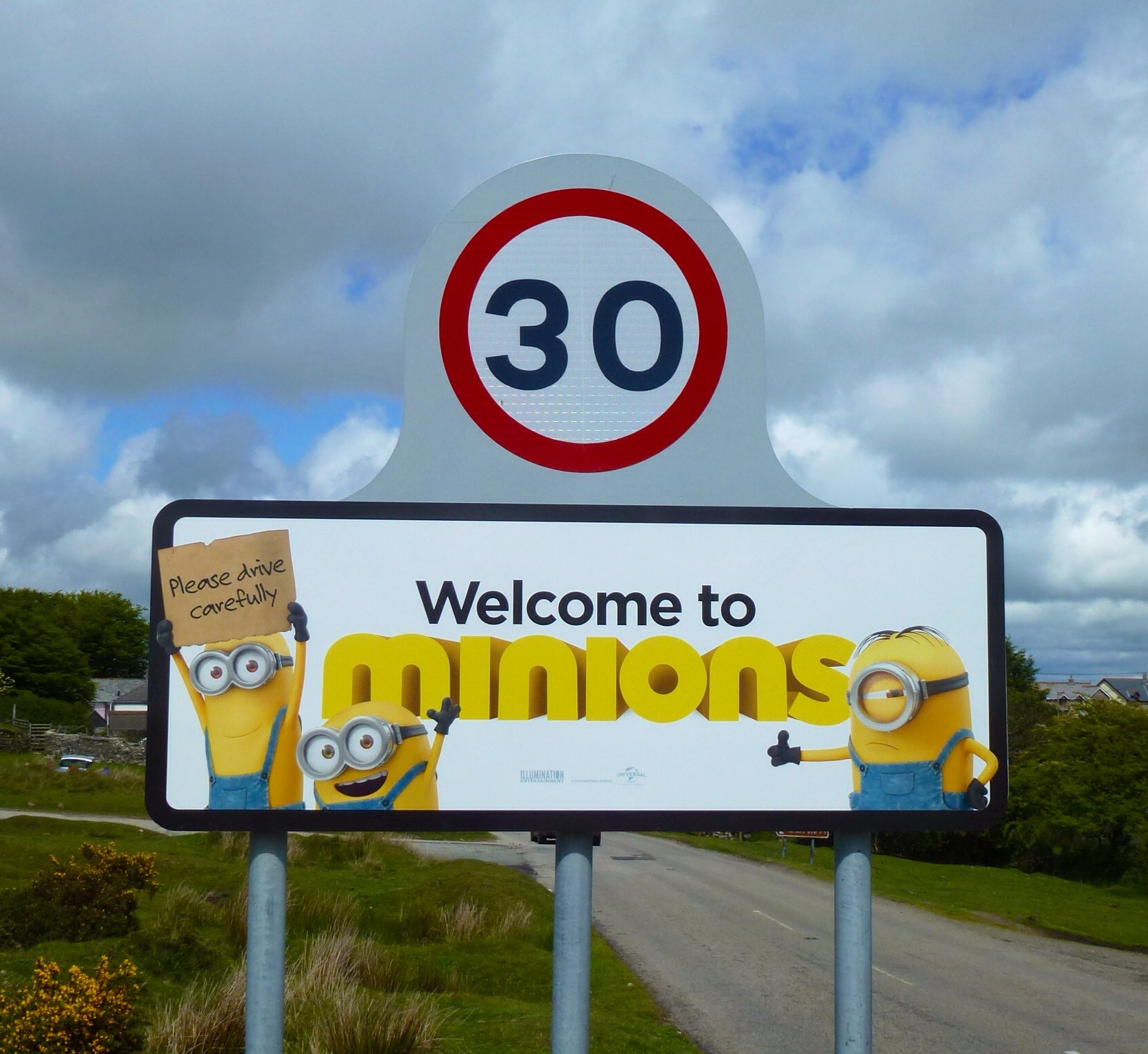
High on the South Eastern edge of Bodmin Moor is the small and incredibly named village of Minions, yes honestly that’s the name of the place! Here can be found evidence of human habitation that stretches back to the Neolithic Period, at least 2500BC, or to put it another way, thats over four and a half thousand years ago! Around the parish can be found burial mounds, standing stones, ditch-ways and a host of other mysterious works.

Most impressive of all can be found on the Western edge of the village where three intriguing stone circles laid in a straight line lie. These are known as “The Hurlers,” or in the local Cornish language, “An Hurlysi.” They are probably the best example of ceremonial circles in South West England and folklore has it that they are the petrified remains of men punished for playing Cornish Hurling on a Sunday.P1030830

The three large circles are aligned on an axis running NNE to SSW. The largest circle is the centre one and measures just over 41 metres in diameter, with its flanking neighbours both just over 30 metres across. Just off to the West are two separate stones known as “The Pipers,” possibly they were playing for the Hurlers when they were set in stone! The whole site is big! 


Now don’t go expecting another Stonehenge, the more famous site on Salibury Plain, the Hurlers are nowhere near as grand, but to the Ancient people in this part of the world, probably just as important.

It is fair to say that what they represent is, today, a mystery. Some scholars have suggested that the layout of the stones concurs with stella alignment particularly linked to the stars Vega and Arcturus, or at least where that combination would have appeared in antiquity. Others have linked the layout to the stars in the constellation of Orion, specifically the “Belt,” though as recent archaeology has revealed that there once was a fourth circle I guess that kicks that theory into touch! 

 The stones that remain show clear signs of being crafted and hammered smooth. Originally there were 28 in the centre circle but now only 14 survive, whilst the North circle has 15 out of 30 remaining.

As a place to visit it is certainly worth the effort, particularly on a nice clear day and if industrial archaeology also floats your boat, there are countless reminders of Cornwall’s tin and copper mining heritage to be seen as well. More on that in a future post. I couldn’t resist a bit of monochrome either! 

 About half a mile South of the Hurlers is another fascinating relic of ancient times. This is “Long Tom” also known as “The Long Stone,” an ancient Menhir that possibly pre-dates even the Hurlers. Again the original reason why this 2.8 metre tall stone has been placed here is lost in the mists of time. The most fascinating thing about Long Tom is that at some time the rather phallic stone has been “Christianised,” a simple Celtic Cross has been roughly carved in the head. I found it quite hard to define in a photograph, but trust me, there is a cross there.  


 Now here’s an interesting thing, if you take Long Tom as the starting point a line can be drawn right along the axis of The Hurlers and it leads to an ancient burial mound known as Rillaton Barrow. Local legend says that that Rillaton is haunted by the spirit of a Druid Priest, who offers travellers a drink from an undrainable cup. During archaeological excavations back in 1837 a variety of finds were unearthed. Human remains, obviously, but also “grave goods” including a bronze dagger, beads, pottery and a wonderful gold cup. Now known as The Rillaton Cup this beautiful, 90mm high, relic of an ancient time can be seen in the British Museum, London; could this be the cup of the Druid Priest? 

 Pondering the past and happy to be a Druid, I eased Harley into gear and nodded a distant salute to the Priest as I rode away; luckily I wasn’t thirsty!

“Forget about the cheque we’ll get hell to pay, have a drink on me!

Catch you soon.

Dookes
Oh yes, I nearly forgot. Someone in the village of Minions has a sense of humour and I fully approve!  


Land Of Legends

The County of Cornwall, home of Dookes H.Q., nestles at the extreme South West Corner of the United Kingdom and juts out into the Atlantic Ocean.

The name “Cornwall” is believed by some to come from the Anglo-Saxon “Corn-Wallis,” meaning Land of the Welsh. This stems from the time when invading Saxons pushed the indigenous Celts out of England into what we now know as Wales, Scotland, Cornwall and Ireland. In the old Cornish language, the County is known as “Kernow,” though strictly speaking Cornwall is not a County, it’s really a Duchy, but that’s for another day! Confused? Welcome to the club!

Cornwall is also known as “The Land of The Saints.” It has an incredibly high number of saints associated with it, over fifty to my knowledge. There are numerous villages and places named after various of them; St Neot, St Minver and St Teath are just three that spring to mind.

All that aside, Cornwall is arguably most famously associated with King Arthur, the legendary King of the Britons.

The big trouble with Arthur though, is that the real man and the legend have become totally separated. It’s not just Hollywood films to blame for that either, the Welsh cleric Geoffrey of Monmouth was “bigging up” Arthur way back in the 12th Century!

There are two main sites in Cornwall that are indelibly linked with the Arthurian Legends. The dramatic, yet forbidding Tintagel Castle and the remote, hauntingly beautiful, Dozmary Pool.

Tintagel is reputedly the place where Arthur was conceived, though some people also believe it to be the site of his famous court of Camelot. The truth, not surprisingly, is a little different! Located on the peninsula of Tintagel Island and standing high above the Atlantic surf, there is evidence of habitation going back to the Dark Ages, well before the Romano-British period over 2000 years ago. It is believed that the regional Kings of Dumnonia may have built a summer residence here as well.

The real Castle that we know today, however, dates from the 13th Century when Richard Duke of Cornwall began construction and it is the romantic ruins of this castle that people from all over the world are drawn to visit.

Tintagel Castle ruins.

Tintagel Castle ruins.

Leaving the legend for one moment, the place is stunning and no wonder that it attracts hundreds of thousands of visitorsP1020885. . . who I must admit mostly come to look for King Arthur!
Barras Head.

Barras Head.

Looking due north from Tintagel Castle is Barras Head a strangely shaped headland that some say is a slumbering dragon, have a look at the photograph and you might be able to see what they mean.

The other place I mentioned is Dozmary Pool. P1030794

Situated high up on Bodmin Moor, this is one of the few natural inland bodies of fresh water in Cornwall. Way back in 1951 it was designated as a Site of Special Scientific Interest for its biology, ecology and wildlife. Evidence of human activity around the lake stretches back to prehistoric times, that’s over ten thousand years ago. More than 2,500 pieces of worked flint have been found including many implements, tools and arrow heads. Interestingly the nearest source of flint to Dozmary is nearly twenty miles away whilst some examples appear to have originated over one hundred miles further east. Clearly our ancestors were not afraid of a good walk!

According to legend Dozmary Pool is where Arthur rowed out to the Lady of the Lake to receive the sword Excalibur. The Pool is also where Sir Bedivere returned the sword, as Arthur lay dying.

Legend says that the sword was received by a female hand, Tennyson wrote;
“Clothed in white samite, mystic, wonderful, that caught him by the hilt and brandished him three times, and drew him under in the mere.”

On a sunny day it is certainly very pleasant, but when the mists roll across the moor it’s waters take on a forbidding leaden hue and it is best left alone with its ghosts. Could this really be Avalon?

Of course there is another Legend seen around these parts too. . .

An American Legend!

An American Legend!

Another day I’ll tell you about more Cornish Legends, like Knockers, Spriggans and the Beast of Bodmin Moor; gotta dash, gotta ride!

“. . . and your destination, you don’t know it, Avalon.”

Catch you soon.

Dookes

Celebrating Freedom by Riding

I sat struggling to start this post, not for want of what to write, but actually deciding what to leave out, such has been the emotional roller coaster of the last 36 hours and our little trip to Brittany.

So I suppose the beginning is a good place to kick off . . . 

The night ferry from Plymouth to France was the usual fare offered by Brittany Ferries, yes it was the MV Amorique again; not my favourite ship by a long way,  but hey, better than a six hundred mile motorway thrash via the Channel Tunnel!

We were rudely roused at  6am by the ship’s awful “wake up” music, it’s a sort of electric version of Breton folk music, I sure some people love it, not me. On the bright side, breakfast was served in our cabin shortly afterwards, travelling in Posh Class has it’s benefits! 

I couldn’t resist popping up on deck to stand in the grey dawn and watch the French coast grew nearer, reflecting on how my Grandfather must have felt exactly 100 years ago watching the same landmass appear on the horizon. 


Of course the big difference was that he was going to war, I was just riding a motorbike. . . 

Once off the ferry and through passport control we were free to ride; well we first had to deal with the usual bunch of inept Brit car drivers panicking about driving on the “wrong” side of the road and mixing it with the French locals trying to get to work. The weather was a bit subdued and to be honest kind of related my mood.

Cutting across Brittany we rode onto the Crozon Peninsular crossing wonderful Pont De Térénez.

Regular blogonaughts will know of my love of brilliant bridges and this little beauty is right up there! At just over 500metres long it’s not the longest cable stayed bridge in the world, but with it’s curve and location it’s got to be one of the sexiest! The photo is bit dark, but you’ll get the idea! 


It was only another few miles to our first destination, the cemetery at Lanvéoc, but in those scant miles the sun came out and the day cheered up immensely. 

We parked up outside the cemetery gates and I tentatively walked inside. The place is typical of a French village graveyard, they are always immaculate and absolutely crammed full of stone memorials, headstones and family vaults; we had come to remember the young men who had died in the skies above us 71 years ago and initially I couldn’t see any sign of their headstones.

An elderly lady was tending one of the graves, I nervously approached her and asked if she knew where the airmen lay. Without hesitation she stopped what she was doing and took me across the cemetery to where the graves were clearly visible against the perimeter wall. We stood together and she looked at the poppy wreath that I was carrying.  Madame went on to explain that the local community took pride in maintaining the graves and remembering the young men lying there. I thanked her for that and said that I was sure that the families of the men appreciated their work. “Êtes vous famille, monsieur?  “Are you family?” I explained that no, we weren’t, just a couple of guys who wanted to say “Thank you.”  

Seven Brave Men

“Vous êtes deux hommes très spéciaux, il est bon ce que vous faites.” “You are two special men, what you do is good.” I felt humble and muttered an embarrassed thanks, congratulations was not what we had come for however well intended, but on reflection I realise how much it means to those people in the village and in a way we were also honouring them and their devotion. Madame left us and we stood in reflection of the young men buried at our feet, yes, we had a small chat with them as well, laid our wreath and walked back to the bikes.

Free. Free to ride because of young men like them. I put my helmet on and fired up the engine, sat and said a quiet prayer of thanks before kicking in first gear; freedom is a wonderful thing it means you can shed a tear whenever you need to.

We hit the road, the sun was warm and now the day seemed much brighter. The road to Châteaulin seemed to fly by, well actually it really did as we were not hanging about! The appearance of a Motorcycle Gendarme did cause a moment of concern, but he seemed to be enjoying the day as much as us and sped off. Time for a coffee break.

Suitably caffeine fuelled, we set off to Carhaix, a pleasant little town slap bang in the middle of Brittany and a regular stopover of mine. The N164 road certainly gave me chance to really get the feel of what my new steed can deliver when it comes to touring; miles and miles of effortless road munching, this bike is superb and soooooo comfy!

There’s an old friend of mine in Carhaix, apologies if you’ve seen her before, but here’s another photo of her! 

My Old friend In Carhaix.

More fun in the sun followed as we turned North back towards the ferry port, this really was a brief trip, but time enough to enjoy the run over Roc Trévezel, the highest point in Brittany, via the ‘bike friendly D764.

Time then for a quick bit of shopping in Morlaix, well this is France, so cheese and fine wine featured heavily. Then things went a bit sort of “pear-shaped.” If you see me in a supermarket queue, always go to another one, because I’m cursed . . .tills break, people faint, loose their wallets, forget their card codes, that sort of thing and it happened again.

We got out of the car park at 14:00hrs, last check in for the ferry 14:15hrs and we were 18 miles away with a small town in the way as well! Lets just say that after a “spirited” run we made it with one minute to spare! That new bike of mine doesn’t half go well when she needs to!

I stood at the stern of the ship watching the French coast recede into the horizon and reflected on our visit.

Land clouds mark the French coast disappearing.

Land clouds mark the French coast disappearing.


Yes it was a bit of a dash and we weren’t there very long, but we achieved all that I had hoped and more. In retrospect, meeting that French lady was almost preordained and you know, I didn’t see where see disappeared to; perhaps, just perhaps, Angels come in many different forms.

Another thing that made this little trip so special was my travelling companion, known in these pages as “Vifferman.” He’s my oldest friend, we go back over fifty years and first met before we could each walk. Some people would say that we are to each other the brother that we never had, but it’s not like that at all.
No. We are the brothers that choose to be brothers. Sure we have our ups and downs, mostly always my fault, but then I am the annoying younger one. . .by all of seven weeks, but our bond is so strong it can be a bit scary! Anyway, “Viff” gets it, he knows why I had to do the trip and certainly feels as strongly as me about doing what we did, but I do have to publicly say, “Thanks mate, your support means the world to me!”

This morning I wandered in glorious sunshine around the garden here at Dookes H.Q. and found this little gem brightly standing out against the green of the kitchen garden hedge. Narcissus poeticus, Old Pheasant Eye Narcissus one of the last narcissi of the season to flower and certainly one of the most fragrant.

Narcissus poeticus.

Narcissus poeticus.

Nothing special really; except that is was my Grandfather’s favourite flower.

Thanks for riding along with me on this real roller coaster of emotion!

Catch you all soon.

Dookes

A New Girl In My Life!

By the time this post is published I should be on the ferry to France, for our little trip to commemorate the landing there of my Grandfather exactly 100 years ago to the day on the 12th May.

Now I have a small confession to make. . .

I have a new girl in my life and I’m travelling with her on this trip!

(Pause for frantic rustling to subside from The Mid-West and The South-West!)
.
.
.
.
.
.
.
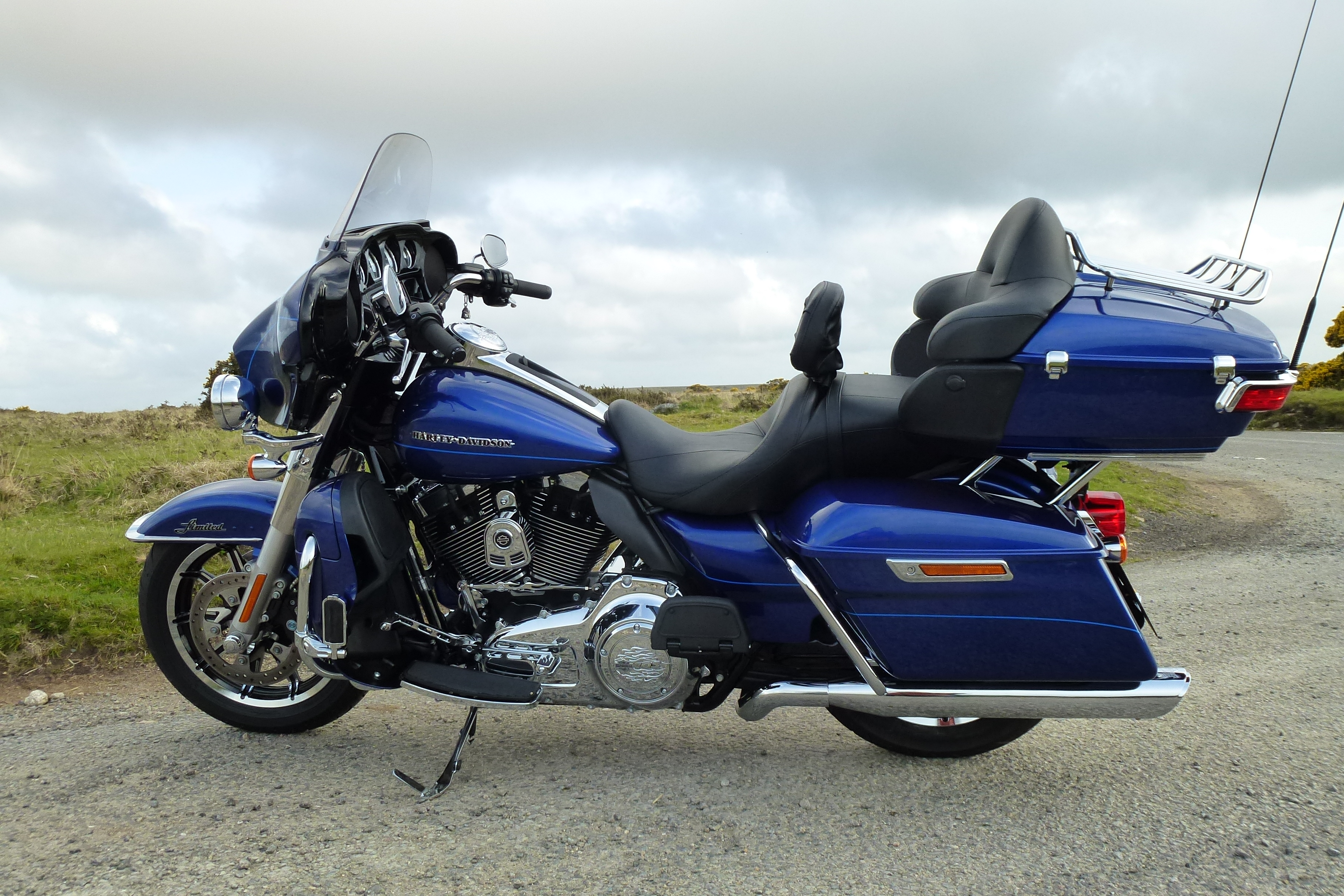
May I introduce to you all my 2015 Harley Davidson Ultra Limited!

She's a bit of a "looker!"

She’s a bit of a “looker!”


I ordered her back in November, but only took delivery a month ago and in between life stuff have been getting to know her.
Comfy seats!

Comfy seats!


Last Saturday I popped out for a few bits of shopping and stopped on the Moor for a quick photo shoot.
Nice bright lights!

Nice bright lights!

I hope you all approve, but frankly it don’t matter much if ya don’t!!!!

I love her.

I’ll bore you all plenty about how great she is to ride over the coming months and years, but for now, wish us both well out on the road!

So hot, she's on fire!

So hot, she’s on fire!


“I’ve got a silver machine!”

Catch you all soon.

Dookes

PS
I’ve still got my beloved Softail as well.
I could never part with her, we’ve shared so much together!

Last Lap of Geoff Duke, TT Legend.

IMG_0414Geoff Duke, one of the great figures from the world of Motorcycle Racing passed away earlier this month at his home on the Isle of Man, he was 92.

Geoff was a multiple motorcycle Grand Prix Road Racing World Champion.

In the 1950’s he won six World Championships and also Seven Isle of Man TT Titles. His name became synonymous with the famous “Manx Norton” motorcycle. He also was beloved in Italy for his rides on the 500cc Gilera, which gave him three consecutive world titles.

He was declared the first rider to lap the 37.73 mile Isle of Man course at 100mph, though this was later corrected to a mere 99.97mph!

Today, Geoff made his last lap of the famous Island Circuit when his coffin completed a tour around the roads on which he made his name. He was accompanied by his sons Mike and Peter, who followed the hearse on motorcycles, along with a whole procession of well wishers and supporters on all kinds of machines. It sounds like quite an appropriate send off, I trust Geoff approved!IMG_0412
Geoff Duke 29th March 1923 – 1st May 2015

71 Years Ago Today

Today is the 70th anniversary of Victory in Europe Day, generally known as VE Day. It marks the formal acceptance of Nazi Germany’s unconditional surrender and the end of World War II in Europe.

Let me take you back a year further, to May 8th 1944.

In Northern Europe things are gearing up towards D-Day; the allied invasion of Northern France, which will eventually lead a year later to the liberation of the occupied countries and the end of this terrible conflict.

19:00hrs
Royal Air Force Coningsby, an airfield in Lincolnshire about 110 miles North of London.

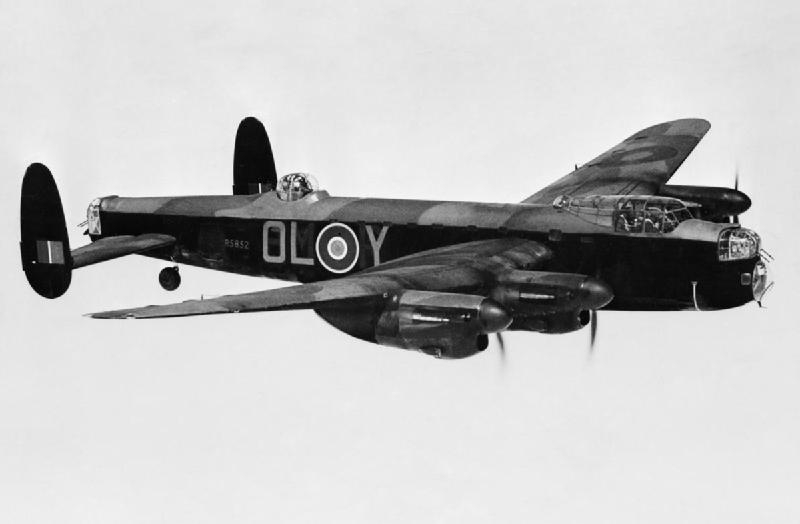
The base has been on “Lock Down” for the last 24 hours, there is an operation planned for this evening. Dispersed around the perimeter of the base, four engined Lancaster bomber aircraft are being readied for tonight’s mission. Fuel, ammunition, marker flares and bombs are being loaded as the engineers carry out final checks and adjustments to the machines. Most aircraft will carry one 4000lb bomb and sixteen 500lb bombs, though on some the load will be augmented with special marker flares to provide an accurate aiming point for the main force. This is 83 Squadron, the Pathfinders of RAF 5 Group, a crack unit that specialises in night-time low-level marking of targets, an extremely hazardous undertaking.
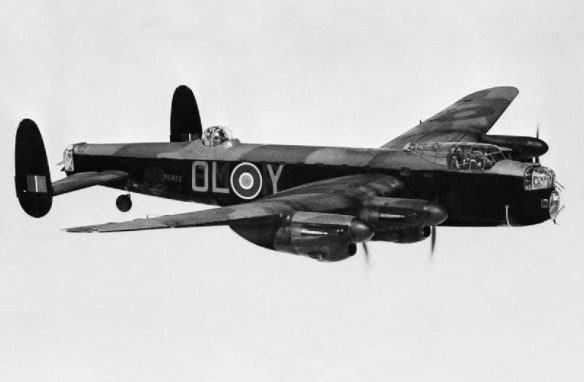
An 83 Squadron Lancaster; OL-Y, in flight.

An 83 Squadron Lancaster; OL-Y, in flight.

The aircrew flying tonight have gathered in the Briefing Room and nervously await their mission, which is revealed by the base Intelligence Officer. Tonight they are attacking the airfield of Lanvéoc-Poulmic, just south of the maritime city of Brest, in Brittany, North West France. There is a buzz around the room, it’s not as risky as going to Berlin or The Ruhr Valley both regular haunts of “83”, but Brest is heavily fortified and the target is a Luftwaffe (German Airforce) fighter base which is sure to give a hot reception. The aim of the raid is to push the German fighter aircraft back from the planned invasion beaches and deny the enemy the use of bases within short-range of the landings.

Navigators take details of the route; Flight Engineers calculate aircraft weights and range; Pilots note the meteorology reports as well as operational instructions and procedures.

The briefing ends and the nervousness in the room is growing. Notwithstanding that every man here is a volunteer, bombing operations over occupied europe are dangerous, there was a better chance of survival in the trenches of World War One than amongst the aircrews of Bomber command. A “tour” comprised 30 operations and the chances of you completing that was only 27%, the death rate was 44.4%. Just time now to pop back to your room and check that things are in order; things like the “If I don’t come back” letter to home.

20:00hrs
The crew of Lancaster ND818, code letters OL-T, gather together and hitch a ride on the crew truck to their aircraft on the far side of the ‘field as dusk begins to fall.

A Lancaster is prepared for action.

A Lancaster is prepared for action.

She’s an almost new Avro Lancaster BIII, this will be her third mission. On arrival the men disembark and are greeted by the “Crew Chief” who declares the aircraft ready for service; Pilot and aircraft commander, Flight Lieutenant Allan Whitford DFC, signs the acceptance papers and the ‘plane is officially his.
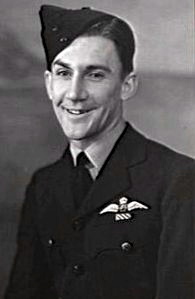
Flight Lieutenant Allan Whitford DFC RAAF. Note DFC ribbon beneath his "Wings."

Flight Lt. Allan Whitford DFC RAAF. Note DFC ribbon beneath his “Wings.”

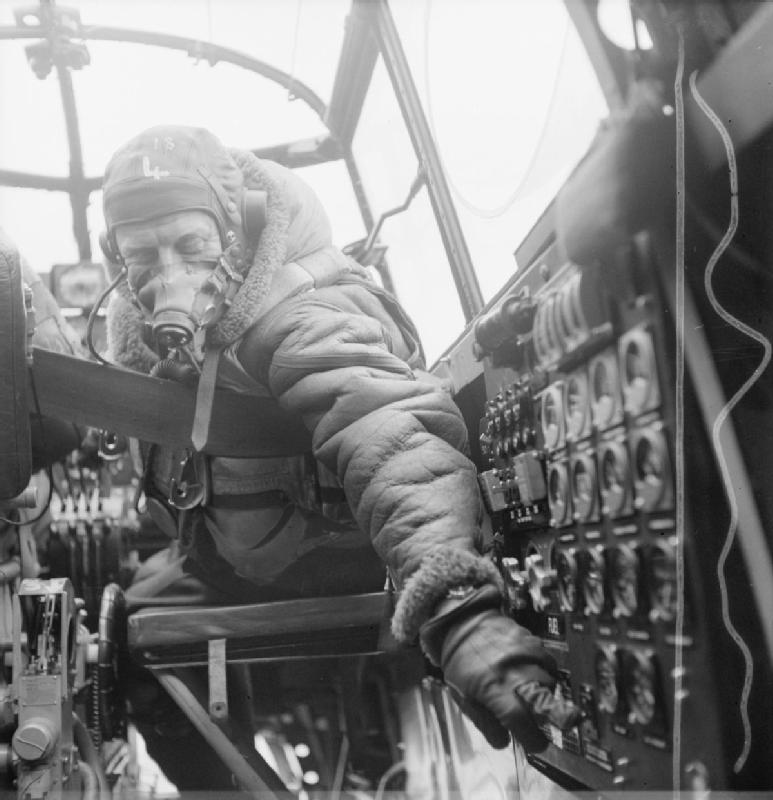
Whitford like three others of his crew of seven is an Australian, from Perth in Western Australia to be exact. Now a seasoned veteran of 39 missions he was awarded the Distinguished Flying Cross in December 1943, before the war he worked as a railway clerk; he is just 23. Helping his Pilot with the pre-flight checks is Sergeant Harold Millard, the flight engineer, his job is to monitor and control the complex systems and help the pilot fly the aircraft.

The Flight Engineer adjusts an instrument on board a Lancaster.

The Flight Engineer adjusts an instrument on board a Lancaster.

Climbing into the rear of the aircraft is Flight Sergeant Leonard Arnold, his is the loneliest and coldest position of the crew, tail gunner. The plexiglass has been removed from his gun turret to give him a better view of the night sky as he scans for enemy night fighters and so tight is it in there that he has to hang his parachute on a hook further down the fuselage; like his Flight Engineer he is from the RAF Volunteer Reserve.
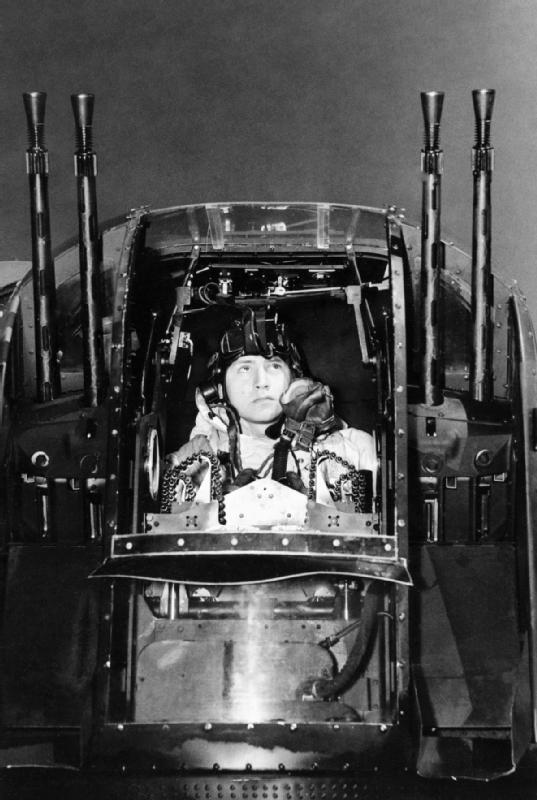
The Tail Gunner in his turret. Cold, lonely, dangerous.

The Tail Gunner in his turret. Cold, lonely, dangerous.

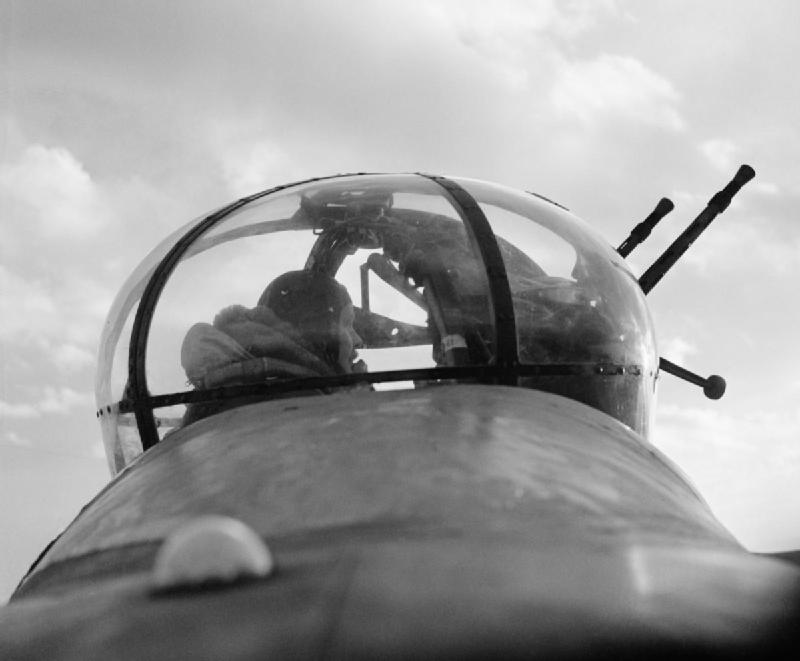
Mid-Upper Turret gunner is Warrant Officer Dennis Cross, another RAFVR man, a veteran aged 22. A sits on a canvas sling seat behind two .303 machine guns in a gun turret halfway along the top of the aircraft and will be constantly scanning the sky for enemy aircraft.

Mid-Upper Gunner in his Turret.

Mid-Upper Gunner in his Turret.

The Navigator is another of the Australians, Flight Lieutenant Watson Loftus DFC RAAF is from Homebush in New South Wales. At the moment he is settling into his position, getting the charts sorted and warming up the various electronic navigation aids. His DFC was only awarded on the 21st April and he too is a 22-year-old veteran.

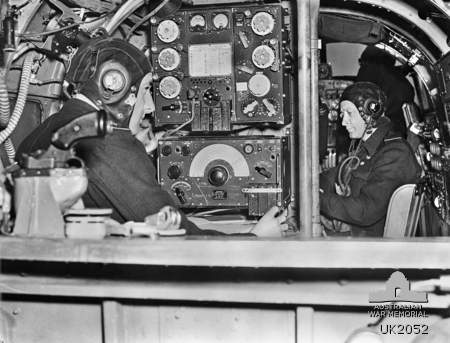
Almost next to the navigator sits Pilot Officer Newman Higgins from Earlwood New South Wales, the Wireless Operator/Air Gunner who is also switching on and tuning in his radio equipment. He is the baby of the crew at 20 years of age.

Wireless Operator and Navigator at their stations.

Wireless Operator and Navigator at their stations.

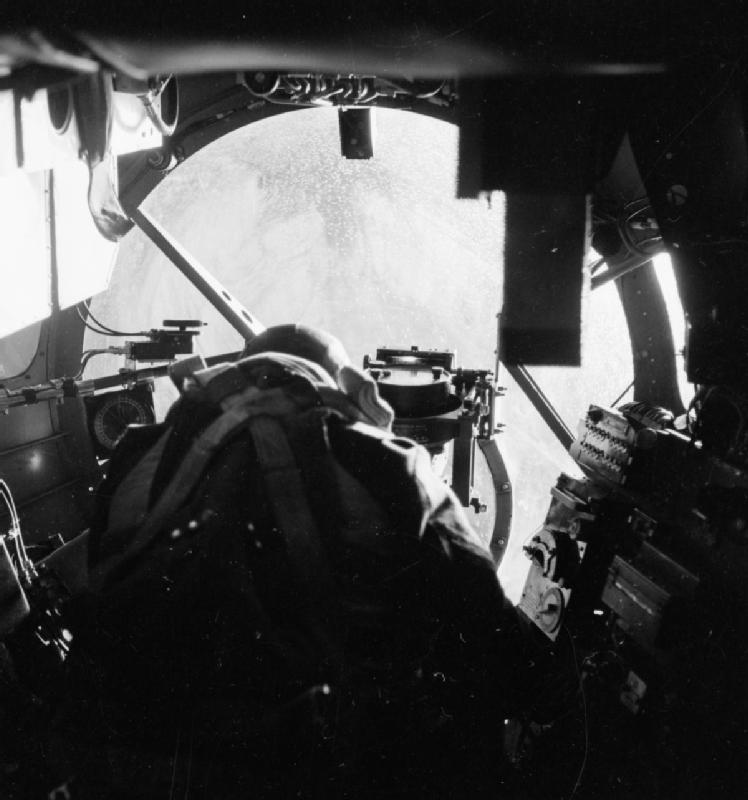
Finally there is the bomb aimer, Pilot Officer Robert Dobbyn, 21, from Queensland Australia. He will be up in the plexiglass nose once the plane takes off, but that’s forbidden during takeoff and landing. So he jambs himself into a corner behind the main spar in the middle of the aircraft, he tries not to think about the bomb load directly under his backside.
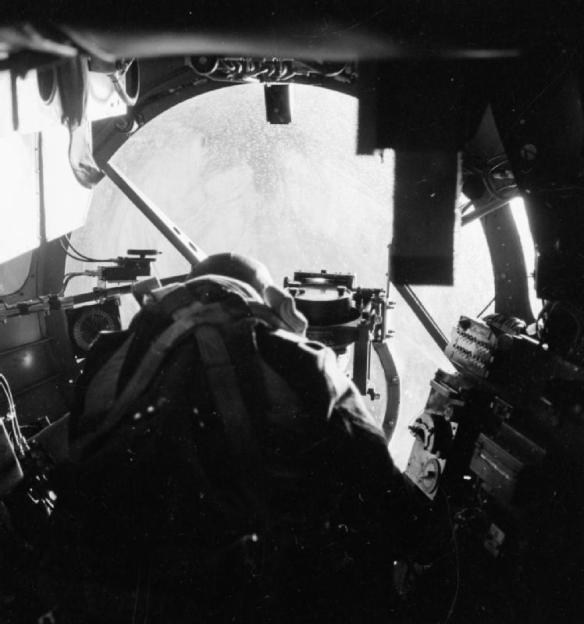
A Lancaster Bomb Aimer looks down to the target.

A Lancaster Bomb Aimer looks down to the target.

20:45hrs
A green flare from the Control Tower announces that the mission is on. Allan Whitford signals to the ground crew and one by one the powerful Rolls-Royce Merlin engines cough into life. Harold Millard, watches the gauges intensely as the pressures and temperatures rise; electrical charge is good all magnetos are behaving and hydraulic pressures look fine. With hydraulic power the gunners check that their turrets move freely.

One by one the pilot calls each crew member on the intercom to confirm their readiness; six “OK’s” reply and now they wait, the air pulsating with the throb from the mighty engines, palms sticky with nervous sweat, throats dry.

21:00hrs
Another green flare and the aircraft begin to move towards their assembly points, ready to thunder down the runway and take off.

21:10hrs
ND818 pauses at the end of the runway as the aircraft in front, OL-V begins it’s take off run.

21:12hrs
ND818 moves into place at the end of Coningsby’s main runway 08/26, at over a mile long it should give the heavily laden bomber plenty of time and space to claw itself into the air.

Last minute checks are called, their voices clipped with tension, now Allan Whitford must safely get his crew on their way. He scans his instruments and glances at his Flight Engineer;
“Altimeter?” “Set.”
“Auto?” “Clutch in, Clock, Spin.”
“Pitot heater?” “On.”
“Trim?” “Elevator forward, rudder neutral, aileron neutral.”
“Props?” “Fully up.”
“Fuel?” “Tanks full, master cocks on, tank selector two, cross feed off, booster pumps on.”
“Superchargers?” “Mod.”
‘Air intake?” “Cold.”
‘Radiators?” “Auto.”
“Flaps?” “Take off, 15 degrees.”
“Mixture?” “Rich.”
“Mags?” “All good.”
“Hydraulics?” “Good.”
“Bomb doors?” ” Closed.”

The radio crackles in his ear, “T – Tommy, clear for take off.” “Roger, cleared for take off, rolling!”

Whitford pushes the four throttle levers fully forward, the Flight Engineer has his hand behind his Pilot’s to ensure all throttles move smoothly together, the port side engines are given a touch more throttle to counter the aircraft’s tendency to swing to the left. Both men watch the gauges as the engine boost pressures rise and the revs climb to 3,000rpm. In the rear of the aircraft the noise is incredible from the four 1280hp engines straining against the brakes.

The flying controls. Throttle levers in the middle, control column on the left.

The flying controls. Throttle levers in the middle, control column on the left.

“Brakes off, rolling.”

The heavy bomber at first slowly, then rapidly accelerating, begins it’s dash along the darkening runway.
The tail rises quickly as Flt Lt Whitford guides the leviathan down the centre of the tarmac strip.

Millard calls out the Indicated Air Speed; “50, 70, 80, 90, 100, 105, rotate.” Whitford pulls firmly back on the control column and the 60,000lb aircraft takes to the sky. It’s 21:16hrs.

Millard, “130.” This is the safety speed. “Landing gear up.” “Roger, gear up.”

At 500 feet altitude Allan Whitford raises the flaps and adjusts the trim. Speed is now 160 knots I.A.S., nearly at 175, the best for climbing.

21:20hrs
On the ground the next aircraft takes up it’s position, a golden sunset lights the western sky silhouetting and caressing T-Tommy as she departs and climbs towards the heavens.IMG_0408
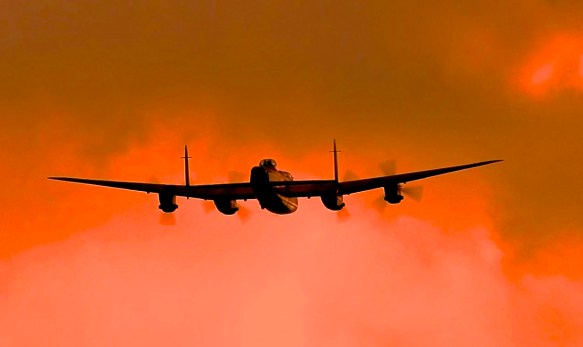
On board ND818 there is still work to be done, but the anxiety of take off loaded full of bombs and fuel is behind them. Soon they reach the rendezvous point and circle to formate with the other squadrons taking part in the mission.

It’s largely an Australian affair tonight. The raid comprises of aircraft from 463 and 467 Squadrons which are both Royal Australian Air Force units, whilst “83” will lead the show by marking the target with flares. Initially the “Master Bomber,” who is flying a super fast Mosquito, will drop small flares known as ground markers, then it’s down to the crew of ND818 to further mark on these with more flares and bombs whilst the other two squadrons will come in at a higher altitude for the main attack.

22:40hrs
T-Tommy crosses the English coast at Portland, heading South West towards Nazi skies.

Robert Dobbyn is now lying at his bomb aimer’s position in the nose, looking down and calling landmarks to Navigator Loftus. Then comes the call that really heightens the tension.

23:20hrs
“Enemy coast ahead!”

The gunners strain their eyes just a little bit more, searching for any enemy night fighter that may be stalking amongst the clouds.

The dark French countryside passes beneath them as ND818 begins to descend to 6000feet and the attack.

The target is located South across the bay from the city of Brest. Originally it was a French Airforce seaplane and training base, but now in the hands of the Luftwaffe it homes German fighter bombers, convoy raiders and possibly a few night fighters. Intelligence reports from the French Resistance, the Maquis, indicate up to 190 german aircraft are resident.

00:01hrs 9th May 1944
The Master Bomber is now almost at the target.

Searchlights probe the sky and anti-aircraft fire, known to the crews as “Flak,” begins to spray upwards into the night.

The sky in the target area has a scattering of clouds, but the view of the airfield is good. The first flares are dropped by the Master Bomber who circles his aircraft to check the accuracy; then he calls in “83” to continue the job.

Ahead of ND818, sister Lancaster OL-V begins its run. Tail Gunner Clayton Moore realises that they are not alone, he has spotted a German Nightfighter closing in on them from below and behind. “Corkscrew left,” he screams into the intercom. His Pilot throws the heavy plane to the side in a desperate attempt to throw the attacker off. Moore can see that the Fighter is still with them; “Flaps!” The plane shudders and almost stops dead in the air as the flaps extend and violently slow the aircraft. Caught unaware the German plane narrowly shoots over the top of the rearing bomber as the Mid-Upper gunner lets fly a burst of fire at it with his twin browning machine guns. “That was bloody close,” someone says as silence returns and V-Victor circles to resume its attack.

The airfield is now well-lit by more flares and smoke rises into the night sky.

Flight Lieutenant Allan Whitford and his crew begin their attack.

Robert Dobbyn lies in the nose concentrating on positioning the flares on the target, the aircraft needs to fly straight and level for ten seconds; the gunners continue to scan the sky; Harold Millard watches the engine instruments in case any show signs of being hit by the shards of metal from the anti-aircraft guns, he’s also ready to assist his pilot in case he is wounded at a critical moment. Navigator Watson Loftus can only sit at his post ready to plot the course home, whilst Wireless Operator Newman Higgins is concentrating on the various radio messages between the aircraft.

The bomb-bay doors of T-Tommy slowly open.

The anti-aircraft fire grows thicker, ND818 is buffeted by the mid-air explosions as evil strands of tracer fire appear to lazily climb into the night sky from all directions.

Dobbyn strains to see the target through his bombsight, line the cross hairs up, then press the release button to drop the flares.

00:15hrs 9th May 1944
Immediately above the target, there is a bright flash in the sky. . . ND818 and her crew vanish in a bright orange ball of light.

8th May 2015
58 Lancaster and 6 Mosquito Bombers attacked the target, only one failed to return.

The bodies of Allan Whitford and his comrades were found the next day by the German defenders and given a full military funeral in the local cemetery. Today their graves are tended by the community of Lanvéoc with support from the Commonwealth War Graves Commission.

Next Tuesday we are going to visit them, pay our respects and let them know that they are not forgotten.

83 Squadron, “Strike to defend.”

Per Ardua Ad Astra.
The Next Little Trip

Regular blogonaughts of these pages will hopefully remember the pilgrimage trip that we made last April to the Somme Battlefield in Northern France, in order to trace the footsteps of my two Grandfathers.

As I explained at the time, it was my attempt at making sense of some of what they were both involved in nearly 100 years ago and the sequence of posts hopefully gave you all an insight into what I found.

Now here we are, just over a year later and a number of things have fallen into place for me about those dark, far off, days. Further research has uncovered couple of snippets;

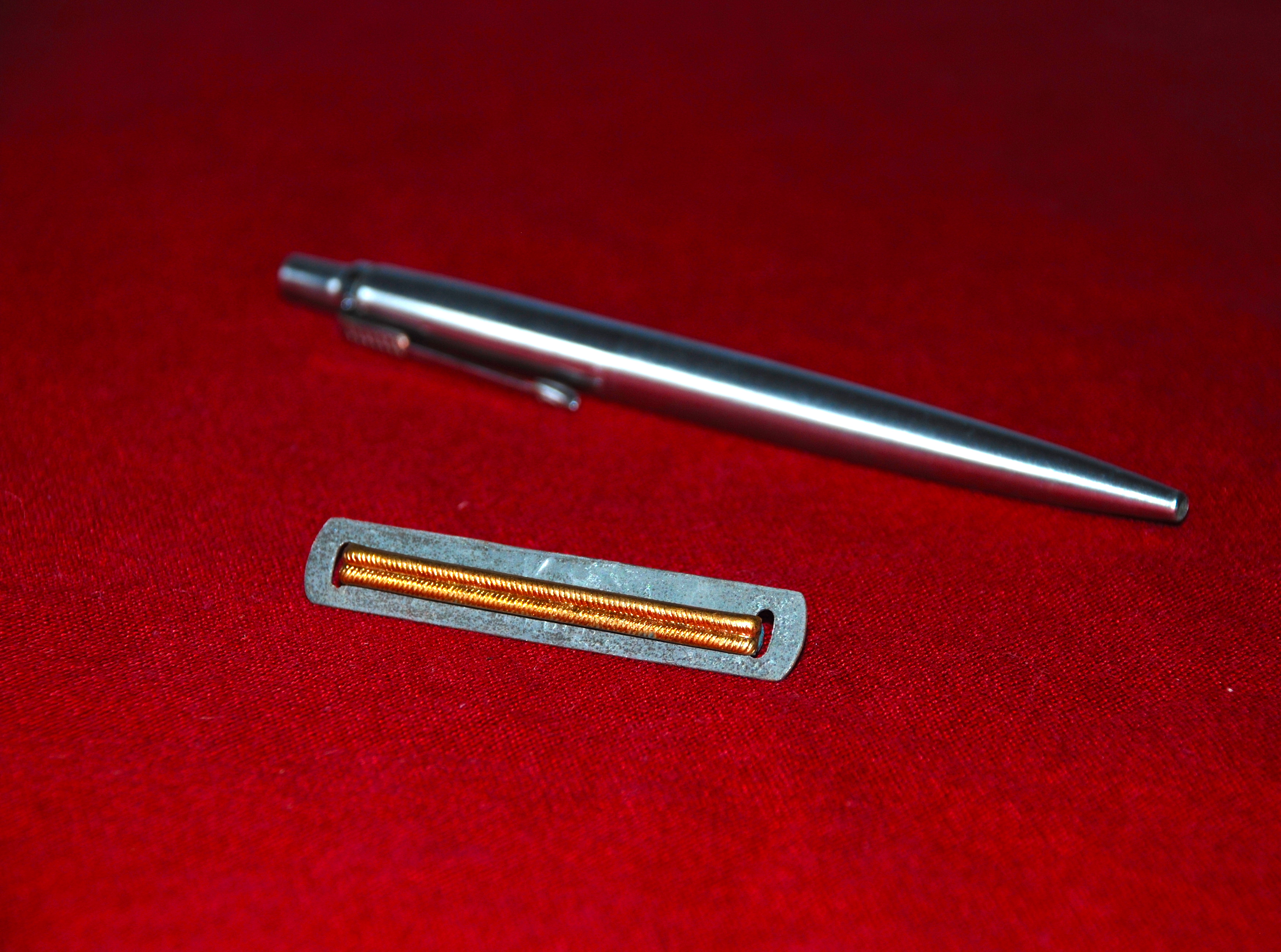
Grandfather William was awarded a “Wound Stripe,” after stopping a piece of shrapnel with his head whilst in action near Nieuport in 1917! The stripe was a metal badge worn vertically on the left uniform sleeve and signified that the wearer had been wounded in combat. The British Army started awarding them in 1916 but stopped after the end of WW1. Some were also issued after D-day in 1944, but were discontinued after 1946. The fact that William was awarded the stripe is a detail that no-one in the family appears to have been aware of, up until now! I have managed to obtain a genuine, but unissued, WW1 wound stripe that I am going to mount along side his medals and insignia; one day it can pass to one of his Great granddaughters, my nieces, if they ever show any interest. If not then the collection can be sold in aid of veterans charities.

WW1 Wound Stripe,  out of focus pen for scale.

WW1 Wound Stripe,
out of focus pen for scale.

Searches in the Public Records for Grandfather Charles have also been interesting. I found out that he and his unit of the Royal Field Artillery is recorded as “Entering Theatre, France,” on the 12th May 1915.

Now that got me thinking. . . That’s exactly 100 years ago next Tuesday!

I haven’t been able to find out where Charles first “Entered Theatre,” but you can bet it was probably at one of the French Channel Ports. I can just imagine the scene as men, equipment and horses were all being unloaded from a ship. The more I have thought about it, the more I feel that I just have to be in France next Tuesday; nowhere specific, just in France 100 years on.

I shared my feelings with my oldest friend, known in these pages as “Vifferman,” he gets it and is going to ride with me again. It’ll be cool.

We are going to pop over on the night ferry to Roscoff, have a little ride around, then go pay our respects to some guys from another conflict that never made it home, then we’ll come back. I’ll tell you all about that in another post, be great if you ride with us.

Until then, gotta dash and polish Harley for a special day out!

Catch you all soon.

Dookes

PS Serious stuff this, so no Rock n’Roll.

Gremlins!

I first published this post way back in 2015!

Following a comment this week from my blogging friend Michael Green, I thought that I would revisit and update it as things in the Gremiln world have moved on a bit since 2015!

Now with Gremlins I’m not referring the  fictional characters in the Hollywood films of the same name. These little fellows are real and play havoc with all kinds of electrical and mechanical equipment.

It is believed that these little creatures first came to notice during the First World War between 1914 and 1918. Perhaps the activities of the war released them from an underground lair? Certainly they were documented by the Royal Air Force in the 1920’s, when the Gremlin delectation for mischief with aeroplanes and engines was further recorded.

During World War II aircrew of the RAF blamed Gremlins for inexplicable occurrences during their flights and missions. Members of the United States Army Air Force also began to experience the exasperating effects of these Imp like little devils. There was even a view that Gremlins had enemy sympathies, but investigations subsequently revealed that enemy aircraft had similar and equally inexplicable mechanical problems; they were just as prevalent in the Luftwaffe and Imperial Japanese Airforce!

It appeared that Gremlins were equal opportunity beings that took no side in the battle; rather they acted in self-interest wreaking their mischief on whoever came into their range.

Since the end of the Second World War the opportunity for Gremlin mischief has literally exploded. The world is now a much more mechanical and electrical place, giving even the most inept trainee Gremlin the chance to practice their dark skills. Since the demise of powerful piston engine aircraft, there is however, one machine that Gremlins love above all others. . . Motorcycles!

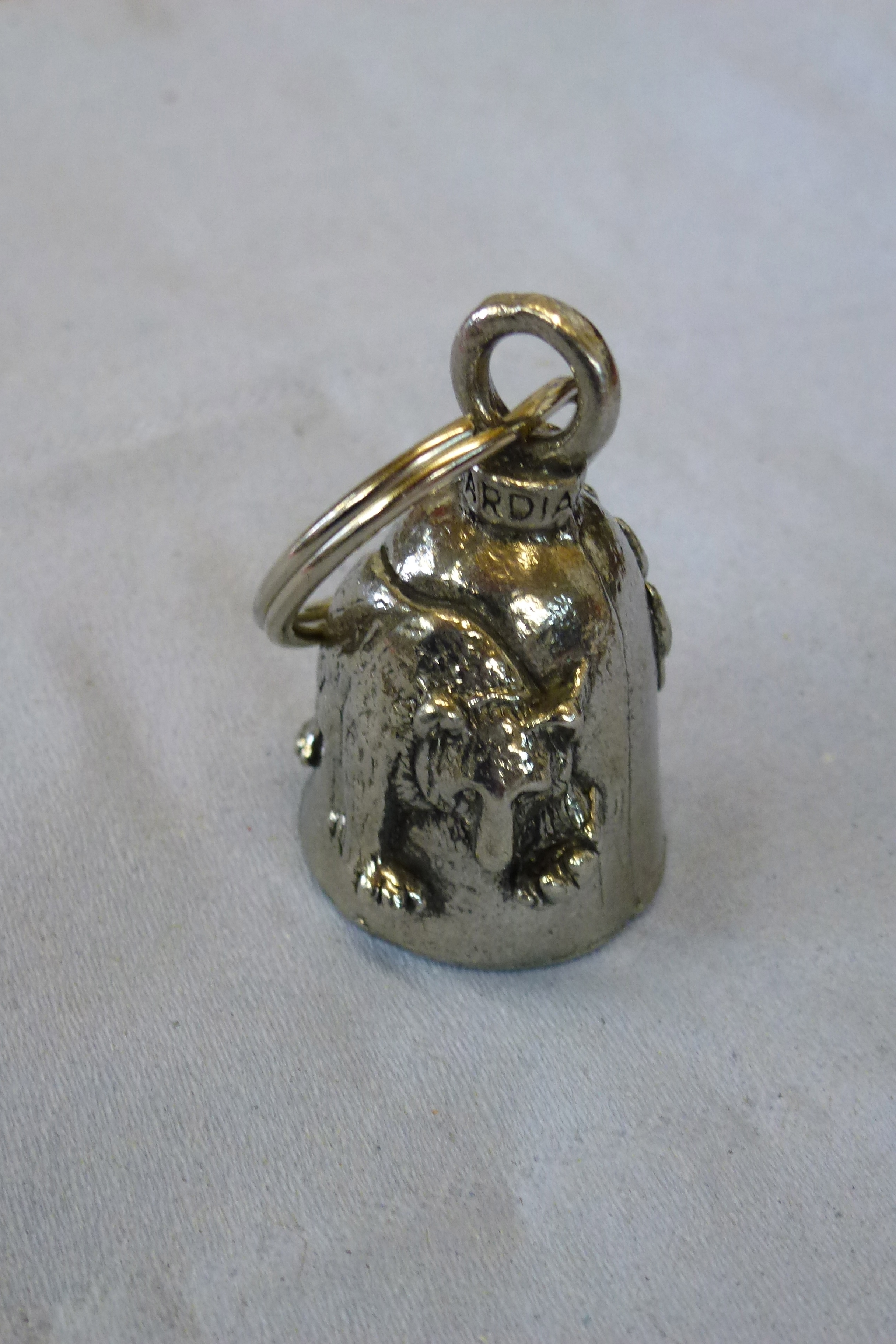
Gremlins are now known to be evil road spirits. They jump onto passing motorcycles because they love to ride, feel the wind in their ears and the vibrations of the engine, they are often the cause of many problems endured by bikers. There is however, hope. Many years ago an old biker discovered that Gremlins hate the sound of a small ringing bell. There are many versions of the story of how this happened, but it appears that the evil road spirits can’t bear the ringing and that they get trapped in the hollow body of the bell. Then their hypersensitive hearing and the constant ringing in a confined space drives them insane and they lose their grip and eventually fall off.

Over time it has become apparent that these bells have even more power if they have been received as a gift; sure they work fine if you buy one yourself, but for maximum protection you really need to receive one from a friend or loved one as a gift. That way the magic is doubled, because out there somewhere, you have a friend looking out for you.

So next time you walk past a motorcycle, take a look and see if you can spot a small bell, either on the handlebars or maybe on the swing arm. Whenever you see a biker with a bell you will know that they have been blessed with the most important thing in life, love and friendship. The spirit of camaraderie and brotherhood between bikers is what the ride bell encompasses.

P1030523

So you can imagine I was pretty happy when Mrs Dookes presented me with this little beauty to hang on Hettie.

P1030524

…..and then another one for Harls!

As you can see, I took the picture of Hettie’s bell when it was new and before I fixed it to her.
Harls bell shows it has done quite a few miles!

IA word of caution though…f you steal a bell from a biker, you steal all the gremlins and the evil that comes with them. So don’t do it, the consequences could be dire!

“You got me ringing hells bells.”

Catch you soon.

Dookes