Each a Glimpse…

…..and gone forever.

Sometimes, when I’m out on the road I catch a brief fleeting glimpse of something that grabs my attention. Often I just keep on going, but keep the image in my mind to investigate at a future opportunity.

With the interests that I have this stuff frequently falls into the category that Mrs Dookes calls “Rusty Junk!” To me it’s industrial archeology.

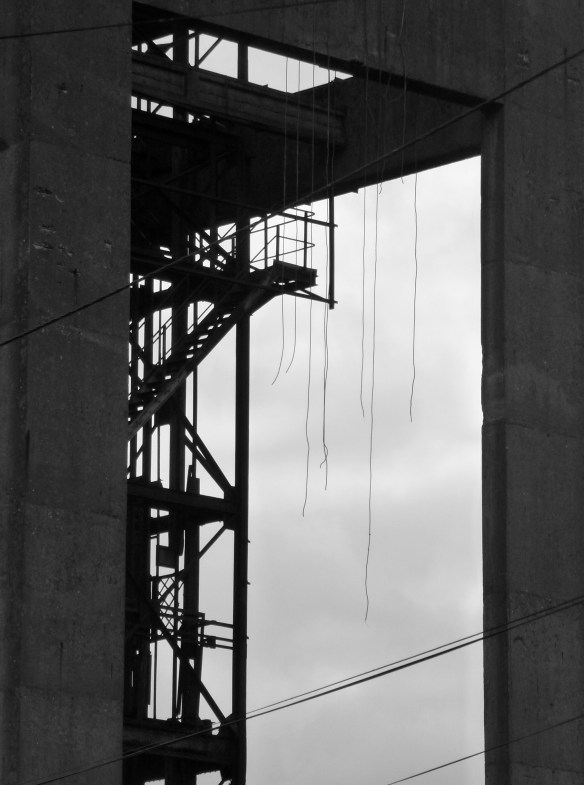
Near the small town of Segré, a few miles North of Angers, the D775 road negotiates a roundabout. Perched on a low hill to the East is the rusting head-gear of an old mine. I’ve seen it loads of times, but yesterday I decided, on the spur of the moment, to go investigate.

From what I’ve been able to discover, this is the last remnant of a once thriving slate mining industry. It’s unusual in that in the rest of the world slate is usually quarried, not mined. It must have been very good quality to have gone to such trouble to dig it out from underground.

Although the site was fenced off, with a few very fierce and loose guard-dogs, I did manage to grab some photos. I just love the beautiful desolation of the place!

How many faces can you see?


Rusty, yes.
Junk or beauty?


Blowin’ in the wind.

Catch you soon.

Dookes

Looking For The Loire (Back in Black)

Well, my beloved “Harls” and I are back on the Continental roads again!
Today we’ve just reeled off 360 miles, (600 kilometres sounds more impressive though!) since rolling off our overnight ferry at Roscoff in Brittany.

For those who like checking our progress on the map, we travelled via Rennes, Angers and Bourgueil to our overnight stop with my old friends Jacques and Claudine, just East of Vierzon.

I’ve got to admit, I’m pretty knackered tonight, that’s “tired out” for those of you not used to my colloquial English! I absolutely adore every second that I ride Harls, but I’d forgotten just how much effort she demands, compared to cruising on the big blue Ultra Limited. Harls is safely tucked away in Jacques’ barn for the night and here I am sitting on the terrace, sipping a glass of rather splendid local red wine, watching the sun drop in the western sky as a warm breeze rustles the Autumn tinted leaves; tinnitus is screaming in my ears, my wrist aches from holding the throttle open (oh yes, I do mean open!) my backside is. . . tender, but I’m happy, very very happy. The old team is back doing what we do best, having fun on the open road.

Now a little observation; I’ve come to the conclusion that there are three types of French Dual carriageway/autoroute:

Dull.

Dangerous.

Delightful.

Today we sampled all three, I’m not going to dwell on the bad bits, but those wonderful French road builders have been stealthily rebuilding the D775 between Rennes and Angers and it’s a beaut! Lovely sweeping curves, enough gradient to make it interesting and smooth as can be!

Somewhere along the road we slipped from Brittany into the Loire valley. It’s strange, but for however many years it is that I’ve been travelling in this part of France I’ve never been able to spot exactly when the transition takes place. It’s like…”Yes, this is nice familiar Brittany.” Then a bit later, “Oh, this must be the Loire Valley!” I really have tried to spot the dividing point, but no, not managed it yet.

I always find the River Loire a bit difficult to define. Yes, it’s France’s longest river and it’s also one of the great rivers of Europe, but it’s a lazy old thing meandering around like a big question mark from the Massif Central to the Atlantic.

The whole concept of the “Loire Valley” is a bit baffling, as for most of the time the landscape to me resembles a prairie with a river running through it and it’s not just the Loire that’s included, its tributaries such as the Cher, Indre and Vienne get lumped in as well!

I’m not complaining though. The Loire valley is a veritable treasure trove of some of the best things France has to offer. It’s largely temperate climate and fertile soils have brought great wealth for centuries, it’s a big wine growing region and as a result there are over a thousand stately châteaux of all shapes and sizes.

Today I wanted to look in on one of the most famous, Château de Chenonceau. This place has been intriguing me from a distance for years, so I had to go check it out.
Oh dear, what a disappointment.

Now I’m sure that if I could swallow my pride and elevated view that I am a traveller and not a tourist, when actually I’m really a leather clad motorcycle riding tourist, then I might get along fine with the thousands of folk swarming between the car parks and the Château…but just one glance at the sandal wearing, short-clad hoards and I did a graceful U-turn and carried on East! Jacques roared with laughter when I told him.

Thanks to Ra-Smit for the use of the photo and yes, the Château really does partly sit out on a bridge over the river!

So back to the “terroir” of the Loire valley…the soils are largely sandy and calcareous and that generally means one thing….wine! Famous appellations such as Touraine, Saumur and Bourgueil, are known the world over; indeed some say that Saumur sparkling wines are better than Champagne.

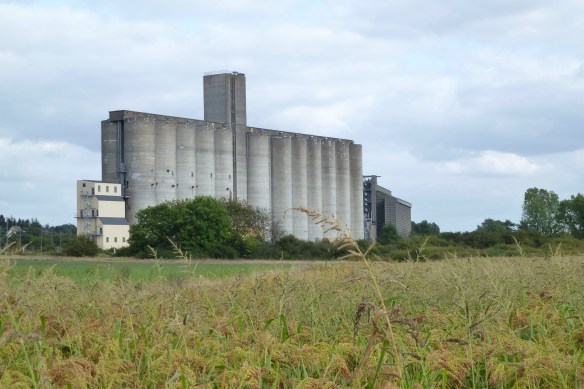
It’s not just grapes that they grow here, the area produces thousands of tonnes of arable crops. All over the place you can see grain elevators, known as “Prairie Skyscrapers” in Canada and the USA. The grain harvest is long over now, but the farmers are still busy; currently it’s maize that is being cut. Next will be the sunflowers, with the start of Autumn their bright yellow petals have withered and fallen. Where once their happy little faces looked up and followed the sun, now they hang their heads sorrowfully looking for their lost petals and contemplating the turning of the season. In French the sunflower is called “tournesol” – “turns to the sun,” I like that!

“Yes, I’m back in black.”

Catch you soon

Dookes

Stand By For Action!

It’s been a frustrating summer this year, not just because since the middle of July the weather in Cornwall has been pants, but I’ve been sort of stuck in the land of Dookes H.Q..

Mrs Dookes has been pursuing new and exciting business openings; well she’s excited by it all, I just keep out-of-the-way! For my part it didn’t seem right to clear off on two wheels and leave her with the hassle of running the H.Q. as well as developing her career and managing other stress levels.

So yeah, I’ve been a good Dookes and stayed at home doing the supportive husband bit, but now it’s getting time to ride! Or as Mrs D says,

“Please clear off on two wheels as you are getting to be a major pain in the backside!”

Here’s the plan gang….

Italy is calling again. I’ve said before that I’ve sort of fallen in love with the place; it’s just so….crazy, in a totally bonkers lovely sort of way! It also has some wonderful mountain roads that I still need to ride! The food is great and the language musical, something I’m still working on but getting there slowly….the language that is, I’m totally there with the food!

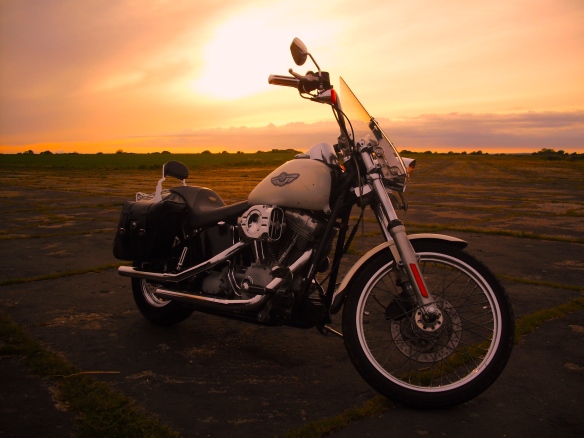
Now regular Blogonaughts might have spotted that I said “Mountain Roads” and after last year I vowed not to take ‘Baby Blue’ into the high country anytime soon. I’m a man of my word, so on this trip I’m delighted to be riding ‘Harls,’ my beloved Softail Centenary model.

There’s cool and there’s my Harls – Supercool!

Taking ‘Harls’ is a bit of a step back in time, but not in a bad way; it’s also an opportunity to get back to a more stripped back, lightweight, way of touring and I’m really excited about it. True, she’s more basic in the comfort department than the big tourer, but makes up for that with her lighter handling and bags of character, plus she’s a real head turner too!

The plan will start as many of my trips do, with the sea crossing to France from Plymouth. We’ll cut across France towards the Vosges Mountains, where I’ve not been before and do a bit of exploring there, before looping through the Black Forest in Germany; then Switzerland and Austria before the Italian Alps and Dolomites. That should keep us out of mischief for a while anyway! I’m going to try to avoid too many Autoroutes if I possibly can, apart from when I need to cover some serious miles; the idea is to take it easy.

As usual, I’ll be sharing our experiences on this blog and a really hope that you will be able to ride along with us.

Now if you’ll excuse me, I’d better go and start to get ‘Harls’ ready….I think that she’s quite looking forward to the trip too! We set sail on Wednesday.

“White lines on the highway rolling out into the night
Got no bag to slow us down
We’re travelling light, travelling light tonight.”

Catch you soon,

Dookes

Candles in the Wind

I am sitting watching long grass waving in the brisk, yet warm, South-Westerly breeze. In the sunshine the shimmering meadow looks for all the world like a rippling sea of green and the gentle swishing of the wind through standing stalks could be the music of distant waves.

It’s at times like this that I often get a tad philosophical about life, reflective if you like, as my mind wanders through idle nothingness.

One of the things that bugs me about getting older is the number of my friends that disappear off this mortal coil at a shockingly frequent pace. Often it occurs without much notice, blink and they are gone; no I’m not talking about motorcycle accidents either, it’s just the age thing!

I consider myself lucky to have known and count as friends a bunch of really amazing people.

Fortunately there are tangible things around that often remind me of my lost pals and never fail to raise a smile or lift my heart.

There’s the old big brass whistle that stands by our fireplace, it once graced my steam engine, a gift from dear David who passed away a couple of years back.

Then a couple of months ago I was walking through the grounds of Launceston (that’s pronounced “Lawn-ston”) Castle in East Cornwall, when I came across this splendid horse chestnut tree, Aesculus hippocastanum.

This species is often considered as a native British tree, as it is found throughout the U.K., but it actually originates from the Balkans in South East Europe.

As you can see the tree was in full flower and that made me smile. I stood admiring the display and my mind wandered back across the years to Roger, an old and sadly missed friend.

Roger lived in the New Forest, an area of Central Southern England that is now a National Park, but was once the hunting ground of Kings dating back to before the Norman Conquest in 1066AD.

Roger was a true man of the forest; his chalet stood in a spot that nestled in a clearing deep in the heart of the green silence. His few acres were approached by a gravel track that ended at his front door. He kept a few chickens and his beloved Jersey house cow named Wendy. Apart from his animals and indeed all the creatures and plants of the forest, Roger’s main passion was for vintage agricultural tractors.

I used to spend hours with Roger and his son, sometimes working his land with whichever piece of vintage machinery took our fancy that day; or maybe on an expedition to track down some rare spare parts to repair one of his or indeed my collection. Often though we would just walk deeper into the forest and sit watching deer, foxes or badgers until the sun dipped and the air grew cool.

Roger’s favourite tree was the Horse Chestnut. He loved it’s deep mahogany brown fruits, known as conkers in the UK and beloved of small boys for “conker fights” in Autumn time; best of all though Roger adored the display of white and pink flowers that stand proud on the trees in early summer, he called them “Candles.”

So there I stood watching the “Candles” waving in the breeze and thinking of my dear old chum.

The great thing that Roger taught me is that a true Countryman plants trees not for himself for now, but for future generations. I resolved to return in the autumn, gather some “Conkers” and plant them, then watch new trees grow.

He would have liked that, would Roger.

Catch you soon,

Dookes.

Black Circles

They hold up each corner of a car or truck.
They’re round, generally black and often unloved.
They are one of the most technical elements of any motor vehicle yet are frequently ignored…..unless of course you ride a motorcycle; I’m talking about tyres.

So why do us bike riders care so much more about our rubber?

Well, in essence it’s because we rely on our tyres so much more to help us stay alive!

A tyre has to do many things in it’s working life; it has to transmit the power from the engine to the road when accelerating and then be the gripping medium to slow the vehicle under braking. It’s grooves throw water away from the contact area in wet conditions to prevent aqua planing and when you go round a corner it’s your tyres that stop you sliding off the road.

On a motorcycle the tyre has of course to work when in contact with the road at other than the perpendicular, that means when it’s leaning through a corner. If you look at a motorcycle tyre you will notice how it’s profile is very different to that of a car or truck version; in cross-section it’s rounded with curved walls, whilst a tyre on a car has generally straight-ish sides.

Harls Skinny Front Wheel, with new Michelin Commander tyre.

Put a group of motorcycle riders together and pretty soon the conversation will turn to the topic of tyres and then become apparent that there are many different views and opinions on “the black stuff.” Fortunately the tyre manufacturers have noticed this too, so the range and choice available to bike owners is quite large, if not a tad confusing! In general, the sports bike rider is best served of all with tyres for every possible scenario catered for; there are hard compounds, soft compounds, dual hard/soft, wet tyres, road legal slick types and goodness knows how many other offerings!

Now I have a bit of a “thing” about tyres too, particularly those for my Harley Davidson motorcycles.

As standard the tyres that are fitted as original equipment to Harley Davidson’s are made by Dunlop. Indeed, until recently, these tyres were all that was “approved” by Harley Davidson to be fitted to their machines. All good “Union-Produced-Made-in-the-USA” stuff. I acknowledge that motor companies spend many millions on research and development, but that these tyres have earned the nickname “Dunlop Ditch Finders” amongst a lot of end users tells quite a lot about their performance!

It’s in that word “performance” that the issue lies and where the inflexible approach by Harley Davidson is, in my mind, working against them. I’m sure that from their base in Milwaukee the Harley Research and Development Girls and Boys look out at the Mid-West Plains or the sun-baked highways of Arizona and California and truly believe that the good old Dunlop D4xx family are really a “one-size-fits-all” answer. Only they are most definitely not.

On the Grössglockner, sunny but cold.

The tyres are made of a hard rubber compound, rock hard in fact. True they last forever, some folk get well over 15,000 miles out of a set, but it’s a trade-off as the tyres don’t really “work” at the average temperatures we enjoy here in Northern Europe and probably a fair slice of the USA as well! Yes I know that there are folk in the USA who swear by the stock Dunlop, mainly because they last forever, but hear me out…

Riding in Provence a couple of years ago with “Baby” my big tourer, the air temperature was around 40°Celsius and only then did I feel that the D402’s were gripping the road well; though that could have been because the asphalt was melting! Earlier in that trip I had been riding through the Black Forest in Germany, temperatures were around 10°C and it was raining, grip was scarily minimal, especially cornering, when the back-end of the bike twitched as the tyre frequently lost grip through the bends. Not nice!

40ºC it’s hot, very hot.

So what’s the answer?

Well a quick look on a couple of on-line Harley forums threw up two interesting schools of thought.
a) High mileage is good, doesn’t matter if it doesn’t grip the road well.
b) Must grip the road in all conditions, especially the wet, but mileage doesn’t matter as much.

Broadly: a) = North America b)=Northern Europe!

For me it’s a case of find a tyre that does work in cooler wetter climates…but to be honest, for a Harley the choice is very limited. Aside from the stock offerings for my big tourer, I’m looking at tyres made by Avon, Metzler and Michelin.

There is another type of Dunlop, GT502, which H-D fit to some their Custom Vehicle Operations machines and from personal experience on Harls, these are a fantastic tyre; grippy in wet and dry, with a lovely rolling action, but with the trade-off of relatively short mileage….but they don’t make them for the bigger bike!

I’ve used Avon’s on my Softail previously and have been very pleased with them. Metzler are a new manufacturer to me, originally based in Germany, but now owned by Pirelli of Milan…so many decisions! In recent times H-D have begun to approve some tyres made by Michelin, but as yet I haven’t received any reliable feedback on these.

Spot what’s missing!

OK here’s the plan.

Softail Harls needed a new set of boots this summer, she had a set of the Dunlop GT502’s put on a couple of years ago and I wanted stick with them, but unfortunately they seem to be currently unavailable at the moment; bummer! So taking a leap of faith I’ve gone for the Michelin “Commander,” lets see how we get on. Initial feedback is that I like them, I’ve only done around 220 miles on the new rubber so far, but I can report that they heat up nicely, grip well and best of all feel great in the wet; so big smiles all round….if you excuse the pun!

New Michelin Commander on the rear of Harls.

I’ll report further when I’ve done a more meaningful mileage.

Then I’ve got to figure out which tyre to fit on Baby Blue….!

Just to close…

A couple of years ago Mrs Dookes overheard one of her colleagues talking on the telephone to a tyre supplier when their car needed a new set of rubber, it went like this…

“I need some new tyres for my car please. What size? Well, er ‘medium’ I suppose, oh and black ones too.”

Catch you soon.

Dookes

Digging The Past

Living here in Cornwall, at the extreme South West of the UK, I am frequently reminded just how lucky I am to be a resident in one of the most beautiful parts of our country. Actually I go a bit further, just living in our country is pretty OK too..despite Brexit and a host of other things!

You see the thing about Cornwall is that it’s a land of moods and a matter of choosing what you fancy today. If you want rugged cliffs and stunning coastal vistas, then head for the North Coast. High Tors and rolling moorland are on Bodmin Moor, whilst more pastoral scenery nestles on the banks of the River Tamar and the Roseland Peninsular. Not forgetting the sun-kissed miles of golden sand and some of the best surfing in the world at Gwithian and Praa Sands….we’ve got most needs covered!

The other thing that we’ve got in abundance is history, it’s everywhere and again there’s something for everyone’s interest, from the Stone-Age to Twentieth Century stuff via the Middle Ages and the Industrial Revolution.

So when the opportunity comes up to mix a couple of these points of interest together and throw in a bit of motorcycling, Dookes is always available…! So last Monday I started up Harls and hit the road.

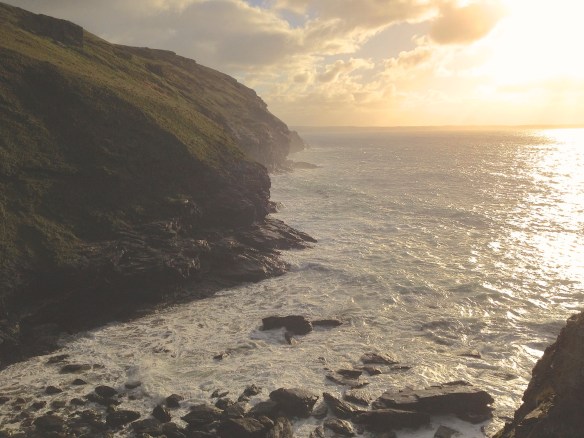
Over on the North Coast, about 20 miles from Dookes H.Q. stands the bastion of Tintagel Castle. Perched on a high cliff-top above the wild Atlantic waves these mysterious and evocative ruins are, legend says, the birthplace of the mythical King Arthur.

Tintagel Castle

The reality is a bit different, in that the remains of the castle we see today were built in the 13th Century by Richard, Earl of Cornwall, who was brother to King Henry III. On the headland where this medieval castle was constructed evidence exists to show that the area had been inhabited for many hundreds of years previously. The problem is that no-one really knows what was happening here!

You see, apart from the 13th Century castle, the only other remains have been dated from what were once euphemistically referred to as “The Dark Ages.”

At this point I can almost hear the sharp intake of breath from various archaeological friends…these days, apparently, we must say “Early Middle Ages!” All I know is that it was a bloomin’ long time ago, between the 5th to the 10th Centuries to be precise!

One of the reasons that this period gained it’s “Dark” moniker is that following the decline of the Western Roman Empire very little literature or cultural output occurred and few relics have been found, especially in North West Europe; that’ll be here then!

Since the 1930’s Tintagel has been subject of a number of archaeological investigations into its unknown “bits,” that’s the stuff not including Richard’s castle. The view as to what was going on has varied from; Monastery, Trading Port and has now shifted to “possibly a Royal Palace,” delete as applicable and the mood takes you!

This summer staff and volunteers from the Cornwall Archaeology Unit have been undertaking a “Dig” to try to piece together some of the jigsaw. They were building on work that had been started last year, following a new geophysical survey of the headland that had given some interesting pointers where to start digging.

To say what they have found is impressive sort of depends on your viewpoint, but certainly there’s been a lot of hard work put in to uncover another tantalising glimpse into the past. Hence why I popped into to see for myself.

The excavation site lies on the very Southern edge of Tintagel headland, in a sheltered spot under the lee of higher inland cliffs. The view our 6th Century ancestors had can’t have changed very much and must have been as impressive as today.

The dig team have unearthed substantial remains of walls, giving an interesting perspective of what must have been a most impressive structure. What exactly it was, remains to be unearthed, if you’ll excuse the pun, but being positioned on a sloping cliff-side I’m not at all surprised that it’s walls were substantially built!

Amongst the stones they have also found a veritable treasure trove of pottery shards, oyster shells, animal bones, charcoal, fragments of glass and possibly the remains of a metal blade.

Is this a 1600 year old blade?

The media have been quick to enthuse that this “suggests” that “early Cornish Kings” once lived and dined lavishly at this place… only it doesn’t – and that came from one of the archaeologists!

What it really does is add more weight to Tintagel being an important trading point; precious local metals out; wine, oil and spices in.

5th Century Pottery shards from the Mediterranean.

It was fascinating to talk to some of the team and watch them at work. There’s clearly a lot more to be discovered and here’s hoping that they will be back next year to keep digging. I spent a happy couple of hours on site and left with a head more full of questions than answers, but archaeology is like that.

Then it was time to fire up Harls and head home… and take a lot longer route than the 20 mile hop to get to Tintagel!

Catch you soon.

Dookes

Explaining a Special Place – Col du Galibier

In a post last week I talked about Col du Galibier in the high French Alps and how it is a place that is very special to me.

Then regular commenter on my posts, AGMA, posed the question;

“Why is it special?”

I started to write a reply for AGMA, then paused and thought that probably it would be a good idea to explain “why” to a broader audience.

We have to rewind the clock back about 50 years…

Young Dookes was exploring the darkest parts of his father’s workshop/garage. At the very back, almost hidden from view and next to the engine of an old BSA motorbike, young Dookes found a man’s bicycle. In the eyes of Young Dookes, this was a prize of great beauty for not only did it have racing style drop handlebars, but there on the rear wheel was a set of derailleur gears – a “Racing Bike!”

To be honest, it was also tatty, well used, in need of a complete overhaul and it wasn’t a “Racer,” it was an old Raleigh Trent Sports Tourer with four gears, 26 inch wheels, a Brookes saddle and a Dyno-Hub, but in my young eyes it was one of the most beautiful things I’d ever seen!

There was a fundamental problem though, it was too big for me to ride and I had to wait a few years before I could safely sit on the thing and turn the pedals!

Once that happy day came there was no stopping me; well actually there was, the old tyres soon gave up the struggle to hold air and I was grounded, literally!

At this juncture my father suggested that it was time for the old bike to have a complete strip-down and rebuild, wise words. Actually, it was much more life-changing than that; for here was my first introduction to the engineering principle of taking something apart, fixing it and putting it back together so it was better than before. It stood me in pretty good stead.

So the old bike came apart and I learnt about bearings, Bowden cables, cotter pins, crank arms and gear sets. Looking back the old girl was is pretty rough shape, but with my father’s guiding hand we made a fair job of restoring her back to road-worthy condition, but oh the satisfaction!

All the time that I was, a) growing and b) rebuilding the bike I was avidly reading everything I could lay my hands on about cycling. In due course I discovered that there was a prestigious cycle race called the “Tour de France” that was run annually and took three weeks to circulate around our near European neighbours.

One day my father returned home from work with a copy of The London Evening News and showed me an article about that year’s “Tour” which had just finished and had been won by a rider from Belgium, his name was Eddy Merckx and it was 1969.
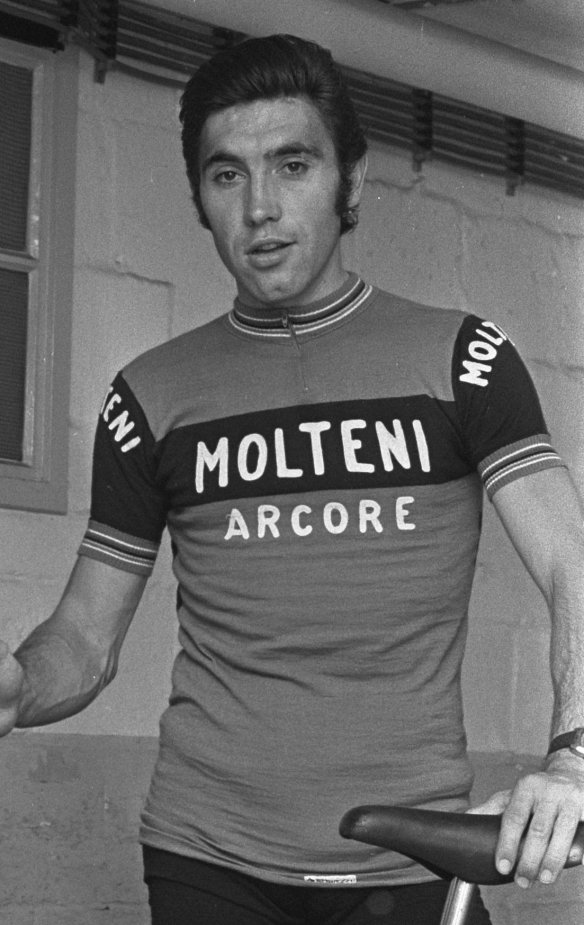
Eddy Merckx

Who was this Merckx?

Not only had this fella just won the “Le Tour,” but he had also won the “King of the Mountains” title, which is given to the rider that gains most points for reaching mountain summits first within the greater race.

That year the tenth stage of the race was held in the Alps where Merckx put down a marker with a storming ascent of a place called “Col du Galibier.” Then he had blown away the completion with aggressive attacking over Col d’Aubisque in the Pyrenees and pretty much sealed his victory.

Oh yes, Merckx also won the best Sprinter Green jersey plus the prize for most combative rider and the most individual stages, 6 out of 24. What a rider!

Cycling had got it’s hooks into me and I had a new hero!

In those days though, Le Tour simply wasn’t covered by British television; in fact it wasn’t covered much by the French either. All our information tended to come from newspapers and cycling magazines; it was all a little bit second hand!

…but also where was this place Col du Galibier?

Now in those days not only had the Internet not been invented, but the guy who invented it had only just started Secondary School! So if you wanted to find out anything, it was a case of looking in books, either at school or in the local library.

It was a good job that I also had a big passion for geography.

I discovered that Col du Galibier is a high, 2645m/8678ft, mountain pass lying at the Southern end of the French Dauphiné Alps. Now this in itself was a revelation, as up until that point I had believed that the Alps solely existed in Switzerland…doh! Anyway, the more a learnt about Galibier, the more I wanted to know.

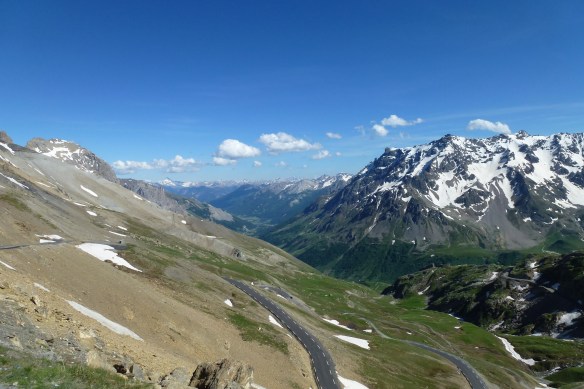
Looking South from Galibier.

I devoured everything I could about the place, it’s geography, geology, flora and fauna and most of all it’s history.

The first passable road over the mountain was built in 1876 and by 1891 a tunnel had been built beneath the crest, things stayed like this until 1970 when a new loop was added to the road, taking it once again over the high summit. Gradients on each side are formidable, with a maximum of 12.1% and height gain of 2058m/4085ft over a distance 8.5km/5.3miles.
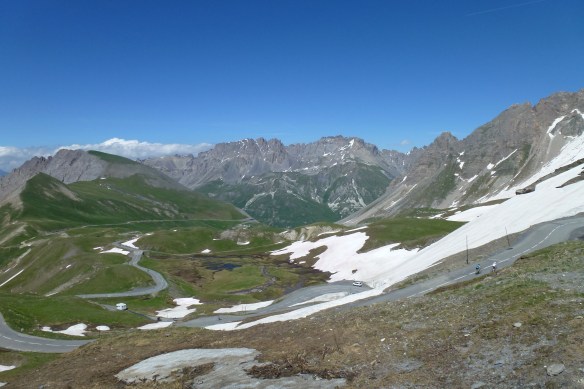
Looking North.


I began to dream of visiting this place.

Le Tour returned to Galibier in 1972 and the mountain was conquered by Joop Zoetemelk, though Merckx again won the overall race; as he also did in 1970, 71 and 74.

The urge to visit Galibier started to become a bit of an obsession…then career and life stuff got in the way, but I never forgot about that mythical mountain in the high Alps and my need to climb it.

Many years later, when life had settled down and I started solo motorcycle touring, I soon realised that here was my opportunity to retrace the tracks of my heroes who rode “Le Tour.” It didn’t take me long to put together a few outline itineraries that encompassed some of the mythical climbs: Col de Vars, Izoard, L’Iseran, Lautaret…but most of all Galibier.

The day I finally set out to head towards Le Galibier I was fussing around Harls, getting her ready for the great adventure ahead when my eyes caught that old Raleigh Trent Sports bicycle in the corner of my workshop. I paused, then pushed my way over to her and ran my hand along her substantial steel frame; silently I told her where I was going and how much she still means to me. Dad had been dead for about ten years and in many ways she was my only tangible link to him

In the French Alps a week later, I sat in a café in Briançon; Col de Vars had been topped, Izoard crested and both were delightful, next was Le Galibier!

I banged out a quick email to a couple of friends, walked out into the midday sunshine, put on my helmet and started up Harls.

The ride to Lauteret was a delight; it’s a pretty quick road with a great surface, lovely sweeping bends and hugely impressive views all around.
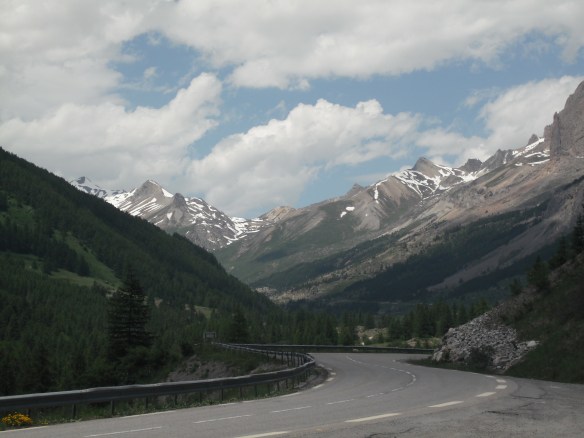
The road to Lautaret, just look at those sweepers!

Then we turned right and dug in on the climb to Galibier.
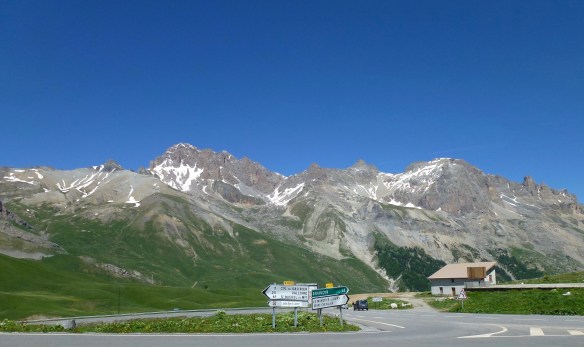
Turn here for Col du Galibier.


It took my breath away.

The road starts passively enough then turns sharply to the left and the gradient kicks you in the teeth. Hairpins follow, a blind left with a sheer drop to the right and the relentless climb continues, thank goodness I’ve got an engine! As we gained altitude, runoff water from the last of the winter snow was streaming across the road. Climbing higher the air quickly became cooler and noticeably thinner; Harls with her carburetor and naturally aspirated engine began to run a bit rich and lose power.

Just before the tunnel we turned right onto the summit loop, we are well above the treeline here. More hairpins, more climbing and soon we reach the summit.

I pull over and switch off the engine.

At the summit looking back where we came from, winter snow still lies by the road.


Silence; save for the gentle ticking of an air-cooled Harley engine cooling down.

The views are….heavenly, but then I guess you are almost up there in heaven as wisps of cloud drift by below!

A couple of other riders walked past and a few very brave cyclists trundled by, I didn’t quite have the place to myself.

I stayed sitting on Harls and just let it all sink in; I was here on Col du Galibier, magical, legendary, Galibier and as I am want to do my mind did a bit of wandering.

I remembered that day discovering an old bicycle, of my late father helping me restore it, of a newspaper article about the Tour de France, of Eddie Merckx…I kept my helmet on and let my tear filled eyes weep in private. Crash helmets are useful like that.

You see, Galibier had become something more than just a famous mountain pass in the French Alps…it had become part of me and me of it.

It represents the melange that we all are inside; that mix of hope, experience, light/dark, triumph, tragedy, sorrow, pain, elation and happiness….above all, happiness!

Snow everywhere!


Finally, I took off the crash helmet and sat in the bright sunlight.

I felt truly at home and totally in tune with this incredible place, it’s probably my Celtic blood that gives me a deep love of high places, but this place was and is, very, very special, call it spiritual if you like.

Galibier had called and I had answered, eventually.

“The mountain’s high,
The road ran steep and winding,
The promises so easily made
Unbearable, yet binding.”

Catch you soon

Dookes

For AGMA – I hope this answers your question, Dookes.

PS I return as often as possible!
Tanks a Million!

The rehabilitation of my mate G continues at an almost frightening pace, particularly as he is now able to ride his motorcycle again. By that I don’t mean that he is riding his bike at a frightening pace! The great thing is that he has regained his zest for life again and two wheels are largely responsible for that.

We seem to have slipped into a weekly routine of having a worthwhile ride to somewhere specific and take in some good riding roads along the way.

Last week’s excursion saw us on another great “Boys Day Out” as Mrs Dookes is now calling them. Where previously we visited an aviation museum, this time we kept our feet firmly on the ground and set our destination as The Tank Museum in Bovington, Dorset.

The museum traces the history of armoured fighting vehicles and particularly tanks, from their invention over 100 years ago right through to the present day. There are over 300 vehicles on display and it is the largest collection of tanks in the world.

First though we had to get there.

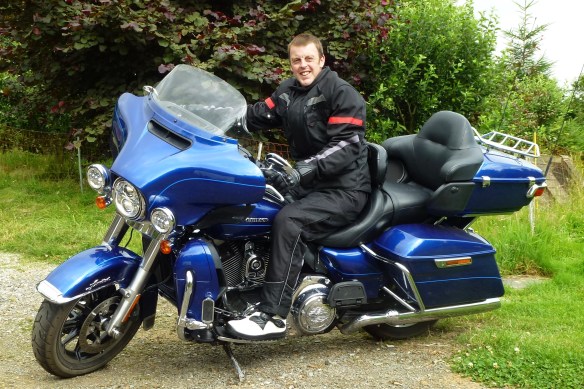
I met G in Exeter at his favourite motorcycle dealership and after a good double espresso we hit the road. I took Baby Blue, partly because she is so comfortable on a transit run, but also because I’m back in love with riding her after some months of mixed emotions, but more of that in another post…

The road east out of Exeter, the A30, is largely fast dual carriageway and although it runs through pleasant enough country it’s pretty boring. At Honiton, once famous for its lace making, we turned onto the A35 and followed it for about 40 miles to Dorchester. Now I always get frustrated with the ’35; it runs through lovely scenery, has enough bends to make it interesting on a bike, but it’s always snarled up with traffic and this morning was situation normal!

On a bike it’s true that you can usually make progress where other vehicles struggle, but even so it becomes hard work and if you are constantly looking for the next overtake opportunity it’s a tad difficult to also look at the scenery!

By Dorchester I was ready for a change and taking a more looping route away from traffic we soon arrived at Bovington.

The museum is located ay Bovington Camp, home of the British Army’s Tank Corps and the place where most tracked vehicle training and repair is carried out by the Army. It’s a busy place and you are just as likely to find a tank scurrying along the surrounding roads as a mail delivery van.

A tank in the car park!

In other words this is big-boys-toys country!

There are seven display halls in the museum. The first, called “The Tank Story Hall,” has a collection of key vehicles displayed in chronological order to show the evolution of tanks through the last 100 years. I found it fascinating and dallied so much that G soon wandered on ahead of me!

“Little Willie” the very first tank.

Incidentally, do you know that the name “Tank” stems from when the British Army were building the first vehicles in 1915? At the time, fearful of espionage, the prefered name of “Armoured Landship” was replaced with “tank” as a subterfuge to explain why vast amounts of boiler plate steel was being built onto track laying chassis….and the name has stuck ever since.

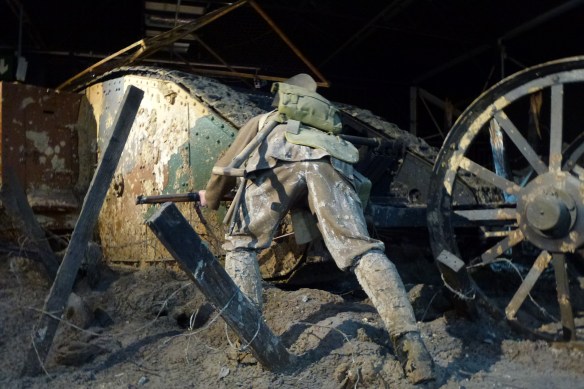
Another hall is dedicated to showing the very first tanks in the context to which they saw action, on the battlefields of France in World War One. This part of the collection struck particular resonance with me after tracing the footsteps and experiences of both my Grandfathers during the Battle of the Somme in 1916. If you missed those posts then please click here to read more. One of the tanks here, which actually saw action during those grim days, is posed in a particularly striking way, as if crossing No-Mans Land and attacking enemy trenches.

Across No-Man’s Land in WW1

As World War 1 tank as seen from the receiving end!

Looking at some of these early tanks, I was struck by their primitive nature and even though they were clad in boiler-plate they were not at all impervious to penetration by anything but the lightest bullet.

Bullet hole in WW1 tank.

They were brave men who took these machines into battle.

I went a bit crazy with my camera, but after a while realised that apart from colour difference one tank begins to look pretty much like any other after a while….I hear sighs from Mrs Dookes in the background! So I resorted to up close and personal stuff, just for entertainment!

Prize exhibit at the museum is Tiger 131, the only original working German Second World War Tiger Tank in the world; incidentally, the majority of the tanks here all still work, how brilliant is that! The added bonus with these being working machines is that they not only look great, but they smell good too…yeah, I know, it’s a bloke thing; axle grease, diesel fuel and gear oil, magic!

Tiger 131, 63tonnes of trouble.

Amongst all this engineering and heavy plant, it’s important not to forget that these are killing machines; they bristle with guns, armour and missiles. Amongst the machismo of ever bigger and more deadly machines there a quiet corners where extraordinary, often tragic tales of bravery and sacrifice are recounted and give the chance for remembrance and contemplation.

Finally, for those of you that are either film or Brad Pitt fans, the tank “Fury” from the 2014 film of the same name is also on display in “as filmed condition, along with some interesting props from the film. The Tiger also appeared in the film unsurprisingly playing the part of one of the bad guys, such is Hollywood!

Fury

Anyway, top marks to the Tank Museum, not only is it a great day out and I highly recommend it, but your admission ticket can be used again as much as you like for up to 12 months; I think that G and I will be back!

Any great day out deserves a great ride home, so once again we struck out to the Jurassic Coast, grabbed an ice-cream in Bridport and just rode the twisties back West. 250miles all in when I got back to Dookes H.Q..

Here’s to the next time.

“I put a Tiger in your tank.”

Catch you soon.

Dookes

The Galibier

Yesterday, my good blogging friend AGMA published a post about her love of the Tour de France cycle race. Please pop over to her blog by clicking here and check it out.

Regular blogonaughts may remember that Hogrider Dookes is also rather partial to the “Le Tour” and it is certainly one of my guilty pleasures to sit inside on a bright summer day watching the action on television. My excuse is that live Tour action simply did not exist when Dookes was a lad!

Chris Froome attacks in the mountains.

Today the weather outside is OK, but not great, so not too much guilt is involved…but today is a very special day for “Le Tour,” today the race crosses the iconic Col du Galibier!

Col du Galibier

This was a mountain that I always dreamed of climbing. The domain of Merckx, Zoetemelk, Coppi and Jiméez, it stands at 2645metres, 8678ft, above sea level and has featured in the tour since 1911.

This year “Le Tour” is crossing Galibier from the North side, 18km of climbing at an average gradient of 6.9%….that’s bloody tough! Oh yes, I nearly forgot, they also had to climb Col du Télégraph first, 11.8km at 7.3%!

Galibier is to me the home of “Le Tour” in the high Alps and also for me a place of great spiritual significance. The first time I rode up her glorious majestic slopes I had serious tears running down my cheeks and to be honest it’s not changed much since! I love the place.

Now if you’ll excuse me, I’ve got to go watch a cycle race!

Catch you soon.

Dookes

Two Up – Again!

In my last post I said how I’m not wild about having a pillion ride with me on my bikes.

Well, just like waiting for a bus, nothing for ages then two come along almost at once!

First it was G, to go collect his new bike and then last weekend nephew Chris twisted my arm to take him for a ride on Baby Blue. I’ve introduced Chris previously, but if you want to read a bit more about him and his back story then click here.

For the non-riders amongst you let me try to explain…

When I ride a motorcycle solo, it’s just me, the machine and the road.

I suppose it’s a bit elemental, but I definitely get “in tune” with the bike and can “read” the feedback it’s giving me as we progress along our way. Little signals from the bike give me an indication as to how much grip the tyres have, what the road camber is doing as well as how gradients are affecting things. Because I spend so much time riding solo, all this information goes haywire as soon as someone else climbs on the back and the bike feels….weird!

The most obvious thing is the extra weight, even on a big touring bike such as the Harley Davidson Ultra Limited it’s very noticeable. Sometimes there have been pillions trying to ride the bike for me and leaning this way and that, usually at the wrong time. Then there’s that other matter that I call “Wriggle Bum” and that’s basically when the pillion just won’t sit still, particularly at critical moments, such at junctions and intersections; it can quite easily lead to “interesting” domestic conversations!

When I agreed to give Chris a ride, I must admit that lots of thoughts about the above went through my mind.

Chris usually rides a Yamaha 125 on the road and a various trials bikes off it, so he’s well used to the niceties of motorcycling, but this would be his first time as a pillion.

Last Saturday morning we set off from Dookes H.Q. and had a nicely varied ride-out covering around 55 miles of beautiful North Cornwall countryside. We Stopped for petrol and collected some Cornish Pasties for lunch from Aunt Avis at St Kew Highway, before a spirited, though sensible, loop back home.

All smiles, Chris tries out the front seat….
Hands off nephew!


Well I needn’t have worried, Chris was a dream to have sitting on the back!

All the time he sat perfectly still, allowed the motion of the bike to flow under him and basically trusted me to get on with my job of piloting the beast!

Chris, you can ride pillion on Baby Blue anytime!

“I’m cruising fast on a motorcycle down this winding country road.”

Catch you soon

Dookes