Stonehenge

It probably seems that I just ride a pair of big American built motorbikes and yes, in some ways that’s true, but…in reality…I also ride two time machines!

Many countries around the world have ancient monuments, sites of great historic interest and significance. On my travels I like to look in on some of these places, but it’s strange it’s always the ones closest to home that you overlook or put off to “some other day.”

On a gin clear late autumn morning last week, I fired up Baby Blue’s engine, turned East from Dookes H.Q., rode 150 miles on the road and back 5000 years in time.

Our destination: Stonehenge.
image

One of the world’s most famous prehistoric monuments, Stonehenge has been acknowledged by the United Nations as a World Heritage Site of International importance. Archeological research suggests that it was built in several stages: the first monument was an early henge monument, consisting of banks and ditches started about 5,000BC. That’s 2500 years before the Great Pyramid in Egypt! The impressive stone circle that is the quintessential image of Stonehenge was erected in the late Neolithic period about 2500 BC. Many burial mounds were built nearby in the late Bronze Age, around 800BC, and dot the landscape around the monument to the present day.

Round Barrow Burial Mounds near Stonehenge

Round Barrow Burial Mounds near Stonehenge

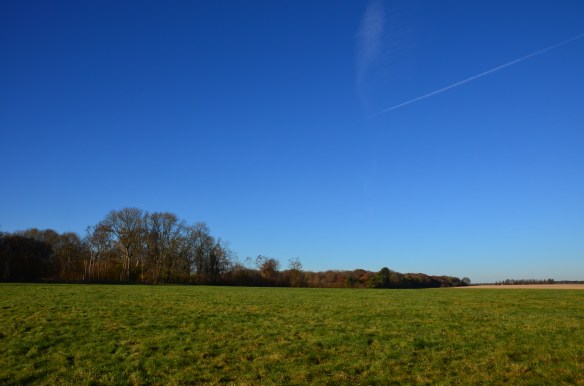
Stonehenge lies on Salisbury Plain, a chalk plateau in Central Southern England that covers over 300 square miles and is renowned for its rich archeological heritage. Even today it is sparsely populated, a combination of its worth as agricultural land and also use by the military for training purposes. As an aside my Grandfather Charles spent much of his early Army service with the Royal Horse Artillery training on the Plain, before heading off to the horrors of the Western Front in 1915. The Plain is also a special place for wildlife, with two national nature reserves, many rare plants and a haven for wild mammals and birds.image
Now let me be clear, I’m no archeologist, but I do have a massive interest in all things ancient. The reason I am saying this dear reader, is because there are many more detailed explanations that have been written about Stonehenge by far more qualified folk than I! So what follows is my take on the place…if you want more detailed stuff, well it’s out there in all different forms.

A fantastic new visitor centre was built in 2014 and stands about a mile and a half from the stones, where a superb exhibition tells the story of the monument through displays of excavated artefacts, photographs and diagrams. I thought it was very well done.

An example of a burial from 4500 years ago.

An example of a burial from 4500 years ago.

You can park at the visitor centre and catch frequent shuttle buses to the monument or enjoy the walk across the Plain, taking in some of the other surrounding archeology and delightful woodland as I did. Actually after 150 miles of riding I was ready to stretch my legs!image

I first visited the stones as a young lad, many years ago. In those days the public were free to wander amongst the stones and touch them as you tried to make sense of it all. Unfortunately, people then started to chip lumps off as souvenirs and the increased footfall of ever more visitors began to erode the delicate archeology. Since 1977 visitors are no longer able to touch the stones, but are allowed to walk around the monument and through the henge ditch, however on the two Solstice days plus the spring and autumn equinox access is briefly permitted.image

Exactly what function Stonehenge had in ancient times remains a mystery, indeed it may have had several uses. Hypotheses range from ancestor worship, celestial calendar, a place of healing or simply a place of the dead, a funerary monument if you like. The modern thinking on the reason for Stonehenge is that it was first built as a place of burial. Cremated remains of 63 individuals were excavated in 2013 and carbon dated to around 3000BC, it appears that at this time the standing stones that we know today were beginning to be erected and this is where things start to get very interesting.
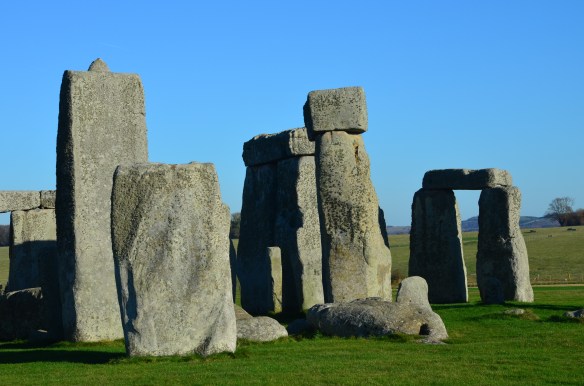
image
There are two types of stone found in the monument; Bluestones and Sarsens.

The first to appear were 80 Bluestones, of which only 43 remain today. These monoliths are about two metres high, about one metre wide and 0.8 metre thick, each one weighs about two tons. Now the really fascinating thing is that this type of stone, a variety of igneous dolerite, is only found 150 miles away in the Preseli Hills of South Wales…So how to goodness did they get to Stonehenge?

About 2000 years after the Bluestones were erected, the ring of 30 Saracens with their lintels resting on top made their appearance. Now these fellas really put things into ever greater perspective! Each stone is around 4.1 metres high, 2.1 metres wide and 1.8 metres deep, oh yes and they weigh about 25 tons!

Part of the Sarsen ring.

Part of the Sarsen ring.

Inside the Sarsen ring stood five trilithons, two large sarsens with a third one set across the top, in a horse shoe shape. imagePutting the all the other stones to shame, these behemoths weigh up to 50 tons each, the largest stood 7.3 metres tall with another 2.4 metres buried in the ground. These stones appear to have been transported from a quarry that was 25 miles to the North of Stonehenge…even so, just consider moving and erecting one of these mammoths with nothing other than manpower!

The whole site and specifically the trilithons and heel stone, which lies outside the main circle, are aligned to the position of the sun on the solstice.

The Heel Stone, on the Midsummer Solstice the sun rises over this point.

The Heel Stone, on the Midsummer Solstice the sun rises over this point.

On the winter solstice the sun sets over the alignment and in the summer the sun rises in line with the stones.
Looking along the Midwinter Solstice line from the Heel Stone.

Looking along the Midwinter Solstice line from the Heel Stone.

I spent a couple of hours wandering around looking at the monument, taking photographs, reading the various interpretation panels, listening to the free audio guide and generally really enjoying myself getting to know the place again. image

I took the shuttle bus back to the visitor centre and enjoyed a very pleasant lunch in the café/restaurant, after a quick look around the impressive souvenir shop.

Soon it was time to head back West towards home. I pointed “Baby” into the setting sun, we hit the road and basked in the freedom that only two wheels can give!

West, into the setting sun.

West, into the setting sun.

The air was certainly beginning to turn cool by the time we got back to Cornwall, but heated gloves, jacket and handlebar grips kept me snug over the miles.

What a simply brilliant day we had!

I’ve got to admit that as I rode back, I couldn’t help but keep thinking of the hilarious lyrics of Spinal Tap…

“No one knows who they were or what they were doing,
but their legacy remains
hewn in the living rock…of Stonehenge”

Catch you soon.

Dookes

Admission to the monument, including free shuttle bus and the visitor centre exhibition costs £15.50 for adults and £9.30 for children, with a family ticket (2 adults and up to 3 children) £40.30. Best value is to buy English Heritage Annual Membership for a family (2 adults and up to 12 children) £92.50 or £52 for an individual adult. Concessions also available. This gives you unlimited access to over 400 historic places for a whole year. For Overseas Visitors EH offer passes that are valid for either 9 or 16 days. Family Overseas Visitors Pass (2 adults and up to 4 children) costs are £57 or £66 respectively. So you don’t need to visit many places before you start saving money and you can keep going back as often as you like!

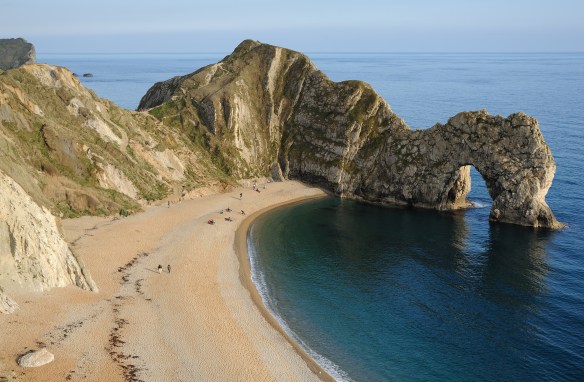
Equalising the Equinox

There are some days when you just have to get out there and celebrate the sheer joy of life and if you can share that with one of your dearest mates then so much the better.

If that mate is battling cancer…

Well, it’s sort of inspiring and at the same time frankly humbling.

The Autumn Equinox, 22nd September this year, dawned bright and sunny.

I had arranged to meet G in the historic city of Exeter, about 50 miles from Dookes H.Q., just enough miles to warm up both man and machine. At our rendezvous G was on good form and after fueling both riders and machines we set out Eastwards along the beautiful South Devon coast. p1070794

We trundled along in glorious early autumn sunshine; OK I’ll be honest, I trundled along whilst G flicked his Yamaha Super Tenere effortlessly through the corners. These days, knowing what he has been going through, it always makes me smile when G does that with a motorbike; you see I know that underneath his crash helmet will be a big grin and that makes me happy too!

The beautiful County of Devon soon gave way to its equally lovely neighbour, Dorset and the famous world Heritage Site of the “Jurassic Coast.” The area cuts across nearly 190 million years of geological history, covering the Triassic, Jurassic and Cretaceous periods. Fossilised remains found in its rocks testify to the land having changed over the millennia from tropical seas to desert and marshland. The region is a magnet to fossil hunters from around the world whilst the mellow yellow rock is very easy on the eye and the gentle hills a delight to a motorcyclist. There are many interesting features along the coastal landscape with the natural arch of Durdle Door being probably the most famous.

Durdle Door -  Photo by Saffron Blaze

Durdle Door – Photo by Saffron Blaze

Between Abbotsbury and Portland the impressive shingle bank of Chesil Beach extends for 18 miles (29Km). The beach is 200 metres wide and 15 metres high and shelters a broad lagoon known as The Fleet. It is fascinating that the size of the shingle pebbles on the beach varies from West to East; they range from pea size at West Bay to around the size of an orange near Portland.

Chesil Bank

Chesil Beach

We paused high above Chesil, partly for a breather, but also to take in the stunning view and enjoy the gentle sea breeze. When a Westerly gale is blowing here the place changes out of all recognition and takes on a ferocious face as the many shipwrecks that litter the seabed here bear witness.

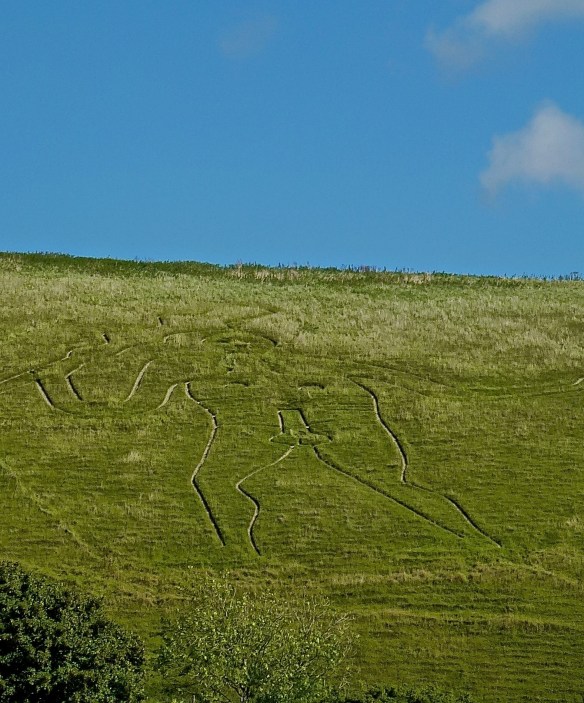
From Chesil we turned inland and skirted the county town of Dorchester before heading north onto the chalk downlands. At Cerne Abbas it was time for another stop, we needed to discuss the important matter of lunch, but also to grab a cheeky view of the famous Cerne Abbas Giant, a massive fella, (in more ways than one!), carved in the chalk hillside.p1070814

This old chap is a bit of a mystery. Some people believe he is a Celtic fertility symbol and dates from around 10 AD, others say that he is Roman and represents Hercules, whilst a third school of thought is that he dates from the 17th century and is a caricature of Oliver Cromwell. My shot of him shows that he needs a bit of re-chalking so thanks to Pete Harlow for the use of his aerial picture.

Carne Abbas Giant - Aerial shot by Pete Harlow

Carne Abbas Giant – Aerial shot by Pete Harlow

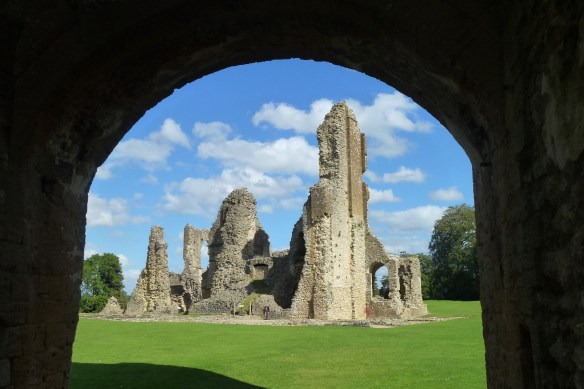
We decided on lunch in Sherborne, a short ride from the Giant and after a gentle stroll around the old castle settled down to a relaxing meal. p1070818

Sherborne Old Castle was built in the 12th century as the fortified palace of the Bishop of Salisbury; it seems a tad strange for a Bishop to live in a castle! p1070824Later the castle was home to Sir Walter Raleigh and following its siege during the English Civil War was left in ruins by General Fairfax of the Parliamentary Army in 1645.p1070848

Today Sir Walter is said to return to his castle each St Michael’s Eve, 29th September, to roam the grounds and check up on his beloved former home. I don’t blame him, it’s a lovely place.

Refueled by our lunch we turned East and soon were crossing the Somerset Levels. This region of around 160,000 acres is an ancient coastal plain and wetland area of tremendously important habitat and biodiversity of international importance, plus rich agricultural land. It has been inhabited since at least 4000BC.
p1070864
The levels mostly lie only about 20 feet above mean sea level, but in some places only manage 10-12 feet. With peak spring tides of around 25 feet you can see the area is frequently in trouble from flooding. Drainage and land reclamation has been going on here since the 12th century, but every now and then nature shows who is still really in charge!

I like to think of the levels as our local equivalent of “Big Sky” country, it certainly is a pretty special place.

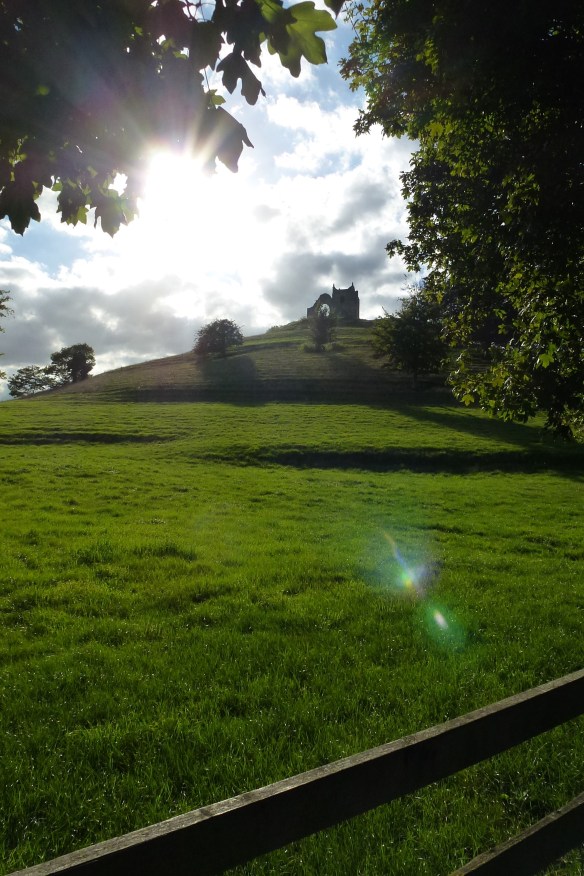
Burrow Mump is a hill and historic site that lies towards the Western levels. Our road passed the base of the hill and I couldn’t resist squeezing off a quick moody shot looking towards the ruined church on top of the hill.p1070857

Our route to deliver G back home swept over the lovely Blackdown Hills at Whiteball where on sweeping roads we crossed back into Devon. We parted just by G’s house, set in rolling rural loveliness between the Rivers Exe and Creedy.

My friend looked a tad tired as I rode off, tired but happy. I still had another 50 miles to ride, 50 more glorious twisty miles to enjoy my lovely big blue Harley and reflect on special times shared with special friends.

The equinox had been equalised, everything was balanced up nicely.

“It’s easy watchin’ seasons go
As sunshine turns to new-born snow.”

Catch you soon.

Dookes

p1070861

Taking it Easy With Memories

A couple of days ago, I was sitting on a ferry returning from France. It’s quite a long crossing at the Western end of the English Channel, so over an espresso I sat idly fooling around with my iPad looking at photographs and only half aware of the canned Muzak emanating from a speaker on the ceiling just above me.

It all changed when “Hotel California” by the Eagles began.

The album of the same name was one of the companions of my youth and I still love it now as much as when I first heard it. It’s also become one of my companions when touring on two wheels and today I guess it represents the sense of freedom that motorcycle travel gives me.

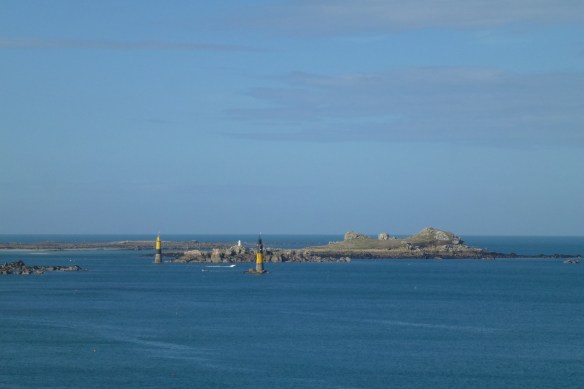
Having left the port of Roscoff in Northern Brittany, we were enjoying a glass smooth passage. The various Islets that rise out of the sea off the coast here fascinate me every time I sail by and over the years I’ve passed this way over fifty times now!p1070978

Now we were on the open Sea and the French coast had long disappeared in our wake over the receding horizon. I sat up and looked out at the passing ocean, the sun was rapidly setting. It’s always fun to anticipate the big hiss as it sinks into the water, but that never happens…!

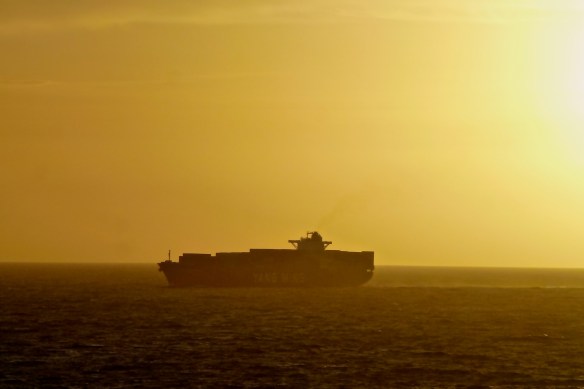
A large container ship was passing through the lengthening golden rays, it’s decks and hold crammed with shipping boxes carrying goodness knows what. For a moment it seemed to pause, silhouetted against the horizon; what a shame it wasn’t one of those classic liners from the past, such as the Queen Mary, Normandie or France. I was fortunate, years ago, to have actually witnessed the last of those graceful ships before the scrapyards claimed most of them, what a memory to have!p1070994

Yes, the old Dookes mind was definitely wandering…

When I’m at sea I find I can have space to think, probably because there’s not much else to do and watching the endless waves go by has a wonderfully calming effect on me.

The Eagles continued as we left the container ship in our wake.

In my mind I was now back on my big two-wheeler, sweeping across the fertile plains of Central France and catching that first breath-taking glimpse of the Alps. I could feel the warmth of the summer sun on my face and the scent of wild flowers as we passed verdant meadows of blooms nodding in gentle summer breezes. The drum of the ship’s engines became the soundtrack of the road, or at least a pretty good substitute.

It’s been lovely to be back in Brittany, if only for a short time. The weather has been kind to us and the early colours of Autumn quite enchanting. For a change I’ve not been chasing the miles and have been quite content to stay in one place, visit some local towns and villages, catch up with friends and of course enjoy the local food and drink.

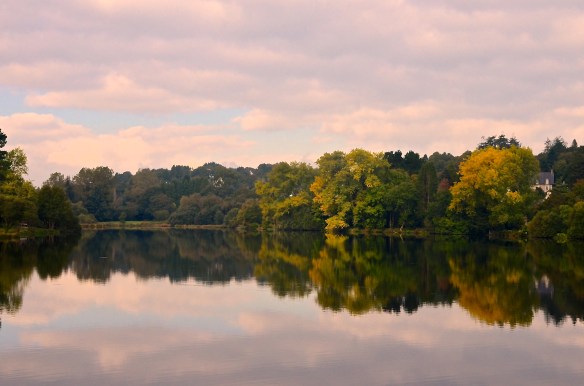
The season has been relentlessly turning, with the trees slowly fading from verdant greens to gold and brown.p1070960 In the dense forest around our friends château we found sweet chestnuts dropping from the branches of ancient trees, one of natures tasty gifts to be eagerly gathered and enjoyed a long with wild mushrooms and other edible fungi.p1070964 By the pretty village of Huelgoat the glassy lake looked stunning, framed by majestic autumnal colour.dsc_0060

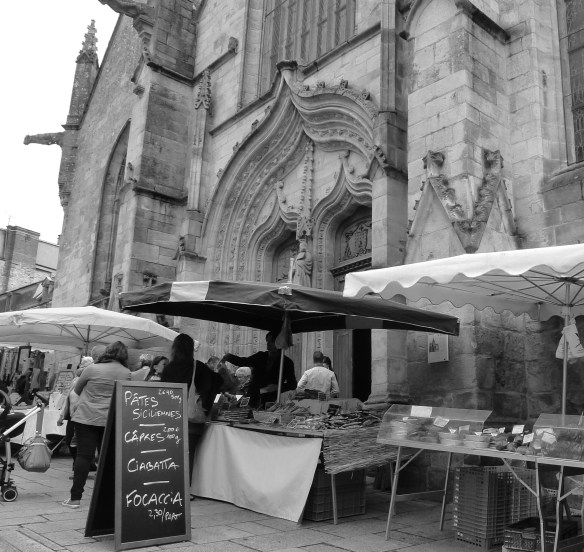
The medieval town of Josselin has a street market that always captivates me and to have the time to stroll amongst its bustling stalls is a real treat. p1040879As with most things French, food takes centre stage. We stocked up with tresses of smoked garlic, air-dried sausages, onions and olives. Mouth-watering aromas hung on the air; there were spit roasting chickens, outsize pans of tartiflette, grilled ham and a host of other tempting goodies all being freshly cooked and available to eat now or later. I let my senses take in the atmosphere and I realised that each passing moment is another precious memory to look back on, enjoy and savour.

The Brest - Nantes Canal at Josselin.

The Brest – Nantes Canal at Josselin.

Yes, memories are wonderful things, though like many people I have some that I’d rather erase, but memories of travel I cherish. It’s really the heartbeat of my life, travel and memories. I guess that I’m just one of those people that is constantly called to keep moving by voices of the road.p1070789

“…and still those voices are calling from far away….”

Catch you soon.

Dookes

In memory of Glenn Frey, 1948-2016, with thanks for all the music and memories.
– Take it Easy.

A Little Bit of History Repeating

When I’m off on my little motorcycle adventures, there’s nothing I love more than riding new roads. Actually, that’s what its all about, new roads, new vistas, new places and new people.

There are times though when I retrace my steps. Sometimes it’s because of necessity because there is no other practical route and other times it’s just because I want to.

Now I’m not talking not those grand places that call me back, like for example Col du Galibier in the French Alps. No, I mean those back roads that just need to be ridden at a leisurely pace without a care in the world.

A few weeks back, as I trundled across Brittany heading for the ferry home, I had one of those moments. I wasn’t in a hurry and the D764 road to Pontivy just sort of called me to enjoy a steady trundle across the gentle Breton countryside.

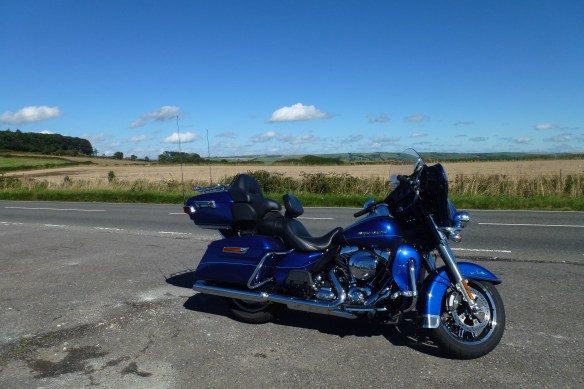
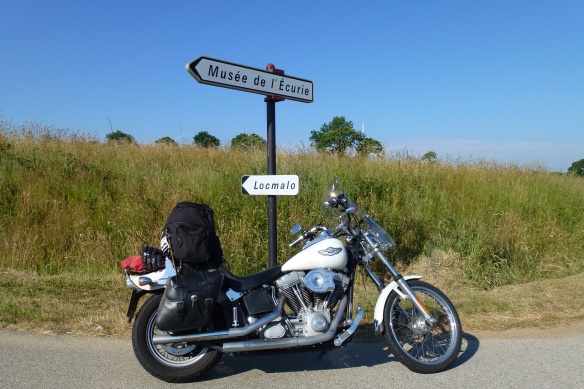
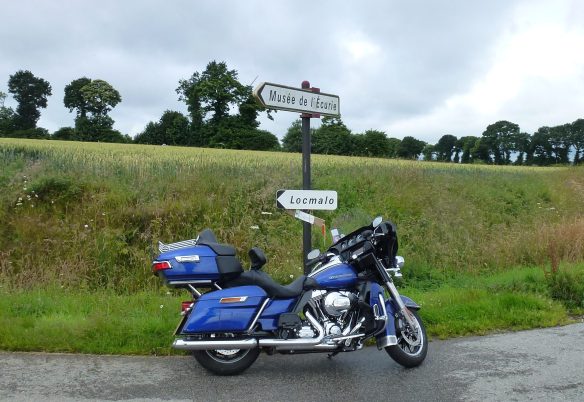
I couldn’t resist stopping to try to recreate a photo that I took of “Harls” a couple of years ago on the same road.
Heres the first picture:

Harls in Brittany 2014.

Harls in Brittany 2014.

And here we are with “Baby” in the same spot two years later!

Baby, Brittany 2016.

Baby in Brittany 2016.

Apart from the difference in the weather and the height of the crops in the field behind the bikes, I don’t think too much has changed.

“Harls” looks a bit dirtier than “Baby,” but that’s probably got a lot to do with her being a naked bike and all exposed to the elements, as I am when I’m riding her!

All I know is that it’s a privilege to be able to own, ride and enjoy two lovely machines such as these and take them to the many wonderful places that I do.

It’s what keeps me sane in this crazy world that we live in!

“Yes I’ve seen it before,
just little bits of history repeating.”

Catch you soon.

Dookes

Melting Again

I’m quite proud to be labelled as an “All Weather Rider.”

Now normally, to most people, this would indicate I am some kind of mad-man who enjoys riding in the rain! Well, not exactly thank you, like most sensible folk on two wheels I would really much prefer to ride in dry daylight, but when you do long distance road trips you sometimes have to contend with what nature throws at you.

Over the years, weather-wise, I think I’ve just about collected the set, ridden in everything that there is and yes had a few “Squeaky-Bum” moments along the way as well. Sometimes though, it’s the conditions that appear the most benign that can catch out the unwary and hot days are right up there!

The hottest temperature that I’m aware that I’ve ridden in was last year in Provence, South East France, when the mercury was nudging 40 degrees Celsius, that’s about 104 Fahrenheit. Add into the mix a whopping big V-Twin engine between the legs and you can appreciate that it was bloody hot! The biggest problem with days like that is fatigue, you quickly get tired in the heat which screws your reactions and clouds judgement. Dehydration can be a real issue too.

Now all of this is very predictable if you are riding in countries where high climatic temperatures are the norm. Here in the UK though, we don’t have a climate… we just have weather!

On Tuesday this week Mrs Dookes had a business meeting in Plymouth, that’s the famous sea port city about 25 miles from Dookes H.Q. and as her meeting would be over by lunchtime we decided to meet up for a bite to eat. All good so far.

I thought it would be nice to take “Baby” for a little ride around and enjoy some of the good weather. I set out and rode a nice sixty mile loop taking in the lovely A374, with its twisty bends from Trerulefoot to Torpoint, before taking the chain-ferry across to Plymouth.

Torpoint ferry, not high on the list of best looking ships!

Torpoint ferry, not high on the list of best looking ships!

What I didn’t realise was that whilst we were out the temperature would soar to 30 degrees Celsius and guess who put the wrong jacket on and took the wrong bike as Baby’s faring keeps all the passing breeze off me? Fortunately I took a change of shirt and a handy towel as by the time I arrived for our lunch date I was, frankly, dripping!

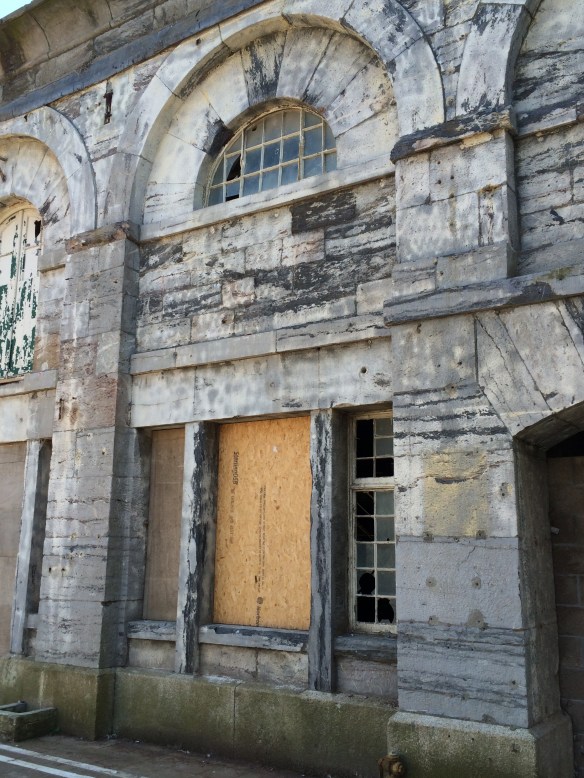
Our rendezvous was the old Royal William Yard in Stonehouse, a part of Plymouth that lies adjacent to Devonport Naval Base on the Hamoaze estuary.IMG_1681

The yard was a major victualling depot for the Royal Navy from 1826 until 1992. It’s an amazing 16 acre site that is all historically protected and although now in private hands still very much retains it’s identity and heritage.

Once a store for beer, spirits and vinegar; now expensive apartments.

Once a store for beer, spirits and vinegar; now expensive apartments.

Urban re-development has converted many of the buildings into award-winning swanky apartments, boutiques, exhibition halls and restaurants. There are still odd corners that await the developers touch,IMG_1695 but largely most of the restoration is now complete. It is, however, one of the most impressive industrial monuments in the whole of the UK.

The scale of what this place did in its heyday is amazing. On site was a flour mill, bakery, slaughterhouse, butchery, brewery and cooperage, not to mention dozens of other smaller workshops and storehouses. Worthy of note is that the flour mill could produce 270,00 pounds/122,500kilos of flour every week, that’s an awful lot of bread and ships biscuits!

Part of the brewhouse, now a restaurant.

Part of the brewhouse, now a restaurant.

The impressive buildings were designed by the architect Sir John Rennie and are built of local limestone and granite. The whole site is also paved with similar stone cut to engineered precision, these are not common cobbles! image

Anyway, we had a super lunch with great views up the river towards CornwallIMG_1686…..then it was time to start-up Baby and cook a bit more!

Next day, it was ten degrees cooler and today it’s been raining!
Like I said, we just have weather!

Catch you soon.

Dookes

Back to Brittany

I’ve just been playing with the Via Michelin App to see what it made of the trip from Como to Brittany, where we are this evening. Interestingly, it nearly came up with the same route that I had, but mine was a bit more interesting and therefore longer!

Today we passed the 2000 mile mark on this little jaunt. Not bad when you consider that three days were spent in Como and on the day we rode Stelvio and Gavia it really wasn’t any mileage at all.

The journey today has been nice and relaxing, if you can ever say that about nearly three hundred miles on a motorbike! We kicked off with a nice little trundle of around twenty miles to warm up before we hit the Autoroute and then followed a spirited 130 miles dash to Angers. That blew the morning cobwebs away!
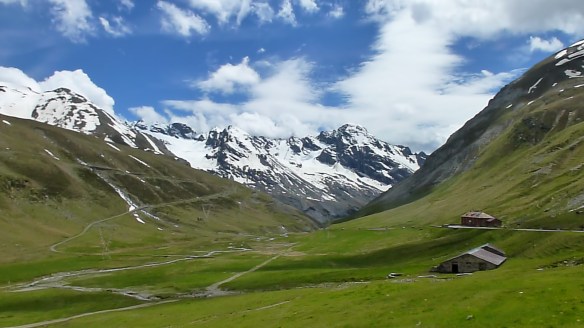
Baby was certainly on song cruising the Autoroute westwards and to add to my pleasure there was hardly any traffic at all. We stopped briefly for fuel in Bougueil; the town is rightly famous for delightful wines that are flavoursome yet light. Well, we had to grab a bottle whilst we were passing through, it was only polite!
I always look on Angers as a defining point on any journey through this part of France, heading West you enter the wide, wide, valley of the River Loire and coming East it’s the gateway to Brittany. I can almost spot exactly where the wide open wheat fields and vineyards end and the smaller Breton pastures bounded by hedges and old oak trees begin, it’s quite magical!

In France, Brittany is often referred to as “Little Britain,” such is the similarity to the Western parts of the U.K. No wonder I always feel so at home here. You can tell it’s a region influenced by the weather of the North Atlantic, slate roofs steeply sloped to throw off the sometimes copious rain!

I have Mrs Dookes to thank for introducing me to Brittany, as before we met I’d never been to this lovely part of “L’Hexagone.” Merci beaucoup mon amour, je t’aime!

Tonight I’m staying with my friends Denis and Anne, at their delightful Château which nestles on the edge of an ancient wood, deep in the centre of the region. Baby is safely ensconced in the garage, Anne’s Mercedes was evicted to make room! Denis is his usual loud energetic self, laughing at the Euro 2016 football tournament and especially the English losing to Iceland – we both agree on that! He’s threatening to cook me “Carre de porcelet,” which I suppose translates as piglet chops….! Knowing him this is going to be good! Anne meanwhile rolls her eyes at the two of us, she’s seen the floor show before.

I’ll report on the food later.

Now back to the ride….

From Angers we went cross-country, first to the delightful town of Chateaubriant then I just headed West.

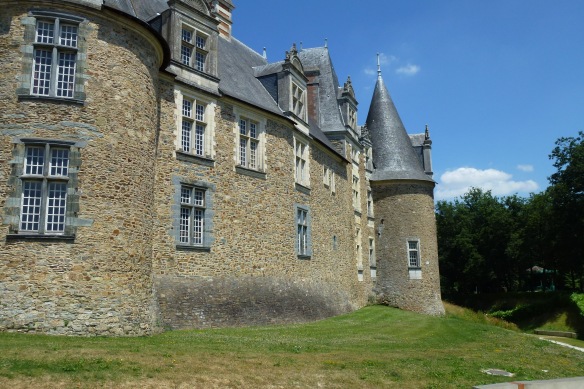
Le château, Châteaubriant.

Le château, Châteaubriant.

I know it sounds corny, but I do have an innate sense of direction and so I turned the SatNav off and just followed my internal compass. I find it quite relaxing as well, heading where the mood takes. It must’ve worked, we got here!

So here comes that familiar “end of trip” hollow feeling. It’s sort of a mix of elation that the plan came together and also the realisation that it’s nearly all over, until next time.

I usually fight it off by starting to think about “The Next One.” Therein lies a problem, as Mrs Dookes and I have a shedload of work to do over the coming months. . .
“The Next One” may lay some way off in the future.

Actually, to tell the truth, I have an idea.

Why don’t we go to……….

“Freedom is a dusty road heading to a highway.”

Catch you later.

Dookes

Beastie – Beating Stevio.

Just under a year ago I was in Italy with a brand new bike. One day I wrote this:

“Today we should have ridden the Stelvio Pass, but poor weather at Bolzano, low cloud and rain put paid to that idea. In addition I have come to the conclusion that Baby Harls just ain’t the girl for that type of road, she’s too heavy and her long wheelbase makes it “interesting” on the tight hairpins. What she is good at though is “mile munching” and today she did that just fine. ”

A few days later we crested the Col de Lombarde and rode the Cime de la Bonette, the highest paved through road in Europe. Was I wrong a few days previously? Yes, totally!

Since then there’s been a beast gnawing at my back and it’s name is Stelvio.

In the past year there hasn’t been a week when I haven’t studied the map of that bloody Pass, or read articles about it, or watched videos of people riding it’s famous hairpins. I wasn’t obsessed, it was eating at me and mocking me from a distance. It seemed that Stelvio believed that it had beaten me, it’s reputation had scared me away and it had wormed into my psyche.

You see I believe that mountains have something, call it character, call it soul; I’ve felt it many times. Sometimes it’s as if it doesn’t want you there. In my beloved Welsh mountains Aran Fawddwy stands out like that, perhaps it’s because it has claimed so many lives, but it definitely never wants you on its slopes; mountains, like the sea, demand respect.

What Stelvio hadn’t realised was that I’m a Celt, we understand and feel these things and we don’t take crap from anyone or anything.

All that time I was plotting my revenge, looking for the moment when I would return and conquer.

Today I woke early in Livigno. There had been rain overnight, the ground was soaking with large puddles everywhere and the cloud still hugged the mountains like gossamer strands caressing the silent peaks. A slow steady breakfast was on the cards, followed by a gentle stroll through the awakening streets.

By ten o’clock, things were looking up and the sun had begun to break through. Time to move, Stelvio – I’m coming to get you!

Livigno, basecamp.

Livigno, basecamp.

From Livigno the only road to Bormio and today’s target is the S301. At the Passo di Foscagno there’s a customs post, which is a bit strange as we are still in Italy, but it’s all due to the duty-free status of Livigno. I have to say that however laid back the Italians are, they do love a good bit of bureaucracy and this customs post took the biscuit! There was a poor chap in front of me who was made to unpack his car and another who was given a right grilling! When it came to my turn, I’m afraid I tired of the game pretty quickly – “just how many cigarettes and bottles of alcohol do you think I can carry on a motorbike?” I demanded of the official. He shrugged his shoulders and backed off when I told him that he was welcome to search through my dirty washing. “Grazie, buongiorno ,” was all I got, with a thumbs up and a jerk of the wrist indicating I was free to go!

Stelvio, I’m coming for you!

I dropped the bags off at my hotel in Bormio, I wanted the least top weight on Baby as possible, she’s heavy enough empty! Leaving the hotel, we turned left took a deep breath and hit the road.

Passo dello Stelvio at 2757 m / 9045 ft above sea level is the highest paved mountain pass in the Eastern Alps and the second highest in the whole of the Alps being just a tad below Col de Bonette in France. I’ve ridden Bonette on both Harls and Baby, so this upstart needed taming.

The climb and the hairpins start as soon as you leave Bormio. There are 75 in total, split roughly 50/50 between each side, this was going to be hard work! Throw into the mix various tunnels and Avalanche shelters, all dripping with water and having questionable road surfaces, life was getting very interesting.

The great thing about a Harley Davidson is the low-end grunt you get from the engine, there’s torque aplenty even below 2000 revs, so we stayed in second or third gears and just kept plugging at it. Just after a flight of 14 hairpins and about 7/8ths of the way up there is a road that bears off to the Umbrail Pass, right on the Swiss Border; well it would have been rude to ignore it, so hello again Switzerland! The customs post was, predictably, deserted!

Umbrail Pass, customs post. I like to declare...oh don't bother!

Umbrail Pass, customs post. I like to declare…oh don’t bother!

Returning to Italy and a further half-dozen bends took us to the summit…

Oh dear, what a disappointment!image

I love the peace that you normally find on a high mountain summit, maybe a small refuge or café, but this was something else! Every kind of small shop and stall selling any sort of Stelvio branded rubbish that you can imagine! It was all so tacky!

Stevio Pass? Over-used, over-publicised, over-rated!

Ok, so I did buy a pin badge, a patch and a bratwurst… which makes me a hypocrite, but I’m not the first in my family at that!

With perfect timing Mrs Dookes telephoned me whilst I was at the top, which was nice. She’s not a hypocrite incidentally!

We came up there!

We came up there!

Then it was time to escape and trundle back down the seemingly never-ending hill, for me going down is always harder that the uphill stretch.
Stelvio hairpin, just a silly old bend!

Stelvio hairpin, just a silly old bend!

Downhill you are always riding the brake and keeping the speed in check, going up gravity helps with that!
Serious bends!

Serious bends!


Stelvio, the high alp. It's not all hairpins, honestly!

Stelvio, the high alp. It’s not all hairpins, honestly!

Anyway, after a few “moments” we made it to Bormio and being a sucker for punishment I turned left for the Gavia Pass.

At 2621 metres, Passo di Gavia is right up there with the big ones. Unlike Stelvio it’s wild country, unspoilt by commerce and hordes of people. True there’s a cafe and a rundown refuge at the top, but there’s also silence, still tranquility.

Gavia Pass, for those that like their mountains pointy and peaceful!

Gavia Pass, for those that like their mountains pointy and peaceful!

The road up was in a terrible state, but with only eight true hairpins I could relax a bit more than earlier. Where Stelvio was a battle, this was almost a pilgrimage back to real mountain roads. On top of that, the scenery was amazing!

Baby and I trundled back to Bormio happy in a job well done. The beast had been laid to rest and now it was time to move on.

I’ve ridden all bar one of the top twenty paved passes in Europe and goodness knows how many others, maybe one day I’ll count them. For now, I’m going to ride a couple more tomorrow then a few old friends next week, after that if you see me heading for a mountain pass on a motorbike….just shoot me!

“So stand as one defiant – yes, and let your voices swell.
Stare that beastie in the face and really give him hell.”

Catch you later.

Dookes

Passo del Tonale

It’s the 30th of November, happy St Andrew’s Day everyone!

Outside a Westerly gale is howling in off the North Atlantic, winds are gusting at 55knots, that’s over 60 miles per hour, the rain swirls horizontally hardly touching the ground, but soaking everything that dares to be vertical, definitely not motorcycling weather!

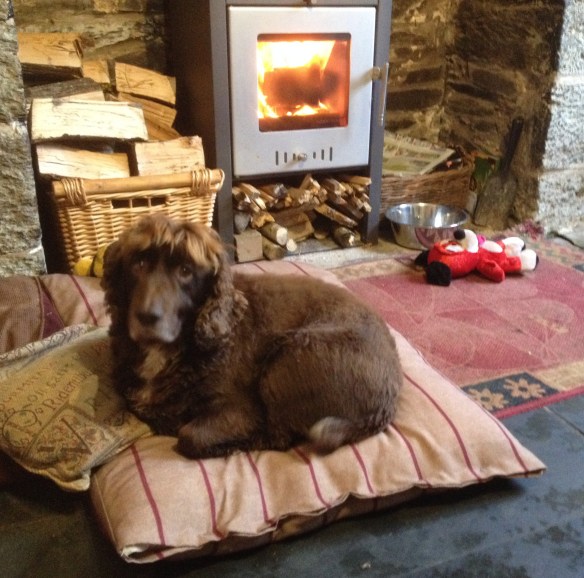
Inside Dookes H.Q. the kitchen log fire is oozing warmth and comfort, which is greatly appreciated by Deltic, my old gun-dog, who firmly refuses to budge from his chosen cozy spot in front of the dancing flames, who can blame him! He’s like me now, retired and content, I hate to think of how many muddy wet miles he’s trotted alongside me, patiently waiting to pick up a pheasant, partridge or pigeon, he’s earned his time in front of the fire.

Deltic's favourite spot.

Deltic’s favourite spot.

The espresso pot hisses as it produces a brew of strong, almost black, Italian coffee and my mind is transported back to sunnier days in Italy riding from Bolzano to Milan. I had to slightly rearrange my planned route on account of bad weather over the Stelvio Pass so I consulted the map for another way to go without too much Autostrada riding.

Hmm, Passo del Tonale with an elevation of 1883m/6178ft, that would fit the bill!

I wander into the lounge and settle in front of the other log-burner as my dear old dog won’t let me near the one in the kitchen. Hmm, thinking of Italy let’s have a Grappa to accompany the espresso! Ah yes, the ride. . .

Leaving Bolzano to we followed the wide Adige valley to San Michele, where we hung a right and crossed the pale green river.P1040419

The SS43 road soon began to climb up through vineyards and it became quite a pleasant day.
P1040430
The scenery got more alpine as we approached Passo del Tonale, very pleasant indeed.P1040434
The thing about Tonale today is that it’s one of Italy’s biggest ski stations and unfortunately has been blighted with a whole bunch of, frankly, ugly apartment blocks! I’m sure that when there is snow everywhere and the place is buzzing with ‘Apres Ski’ activity, it must be quite pleasant, but it looked pretty grim to me as we rolled in. It didn’t smell too good either, the verdant ski slopes were well populated with goats doing a great job at keeping the grass nice and short and the air was full of their distinctive odour. Oh yes, I nearly forgot, their “calling cards” were all over the road as well!

One reason why I wanted to visit Tonale was because of its significance during World War One, when the whole of what is now Northern Italy, stretching from Switzerland to Slovenia, became known as “The Italian Front.”

Battles were sporadically fought here between 1915 and 1918, but mostly it was a cold, bloody, stalemate.

Italy had entered the war in order to annex parts of Austria, including the regions of present day Trentino and South Tyrol. The Italians had hoped to gain the initiative with a surprise offensive, but the front soon bogged down into trench warfare. This was grimly similar to the Western Front fought in France, but at high altitude. The fighting here was at times savage, but in reality the most deadly enemy was the weather. Both armies also suffered from poor logistical supply networks, meaning that not only ammunition, but more importantly food and fuel, was constantly in dreadfully short supply.

Autumn 1917 on the front line.

Autumn 1917 on the front line.

The soldiers had to contend with snow, ice and sub-zero temperatures and soon it was dubbed “The White War”. The civilian population was forced to evacuate and many thousands died in Italian and Austrian refugee camps from malnutrition and illness. The really sad thing about the war here, apart from the 1.2 million lost lives, was that the area has always been and still remains, somewhat autonomous, walk into a shop and you will be as likely to be greeted in German as Italian, the locals had always rubbed along just fine.

The front line passed directly through Passo del Tonale. Today a memorial stands in what was once No-Mans Land.P1040435
Built in 1936 on the instructions of Benito Mussolini and designed by architect Pietro Del Fabbro, it is dedicated to the soldiers of all countries who died fighting in the surrounding mountains during WW1.

Actually, its much more than just a monument, it’s also an ossuary, where the wall niches hold the remains of 847 soldiers.

I parked Baby and walked past the heavy wood and bronze doors into the Stygian gloom of a large square crypt. The atmosphere was oppressive and cold. A rack of votive candles flickered before a small altar, the light from their tear shaped flames fell onto a large marble statue of the risen Christ in the center of the room.

I paused for a moment taking in the scene and then lit a candle myself. I’m not big into religion these days, but it seemed the right thing to do as I stood there, being the only living one of the 848 of us who were present.

Walking around the crypt I paused frequently in front of the niches. Some were marked as “Unknown Italian Soldier” or “Unknown Austrian Soldier.” Some had names and others held fading photographs of the occupants, sometimes in uniform and sometimes in civilian dress. Some niches held multiple remains.

I only did one tour around the room before I had to leave, it was just too oppressive and hauntingly sad.

Outside, steps curve to a semicircular terrace above the crypt where I was able to sit in the warm sunlight and ponder the room beneath me. I was honestly glad to get out of there. P1040437

Today in the surrounding mountains, as snow and glaciers melt with climate change, further corpses and remains are being uncovered. Modern generations are still honouring the memory of these newly discovered soldiers of a hundred years ago, but thankfully the mountains are now playgrounds, not battlegrounds.P1040438

Playgrounds for people like me, free to play on a wonderful Harley Davidson.

Most of all, just grateful to be Free.

“‘Till the next time we say goodbye, I’ll be thinking of you.”

Catch you all soon.

Dookes

Gremlins!

I first published this post way back in 2015!

Following a comment this week from my blogging friend Michael Green, I thought that I would revisit and update it as things in the Gremiln world have moved on a bit since 2015!

Now with Gremlins I’m not referring the  fictional characters in the Hollywood films of the same name. These little fellows are real and play havoc with all kinds of electrical and mechanical equipment.

It is believed that these little creatures first came to notice during the First World War between 1914 and 1918. Perhaps the activities of the war released them from an underground lair? Certainly they were documented by the Royal Air Force in the 1920’s, when the Gremlin delectation for mischief with aeroplanes and engines was further recorded.

During World War II aircrew of the RAF blamed Gremlins for inexplicable occurrences during their flights and missions. Members of the United States Army Air Force also began to experience the exasperating effects of these Imp like little devils. There was even a view that Gremlins had enemy sympathies, but investigations subsequently revealed that enemy aircraft had similar and equally inexplicable mechanical problems; they were just as prevalent in the Luftwaffe and Imperial Japanese Airforce!

It appeared that Gremlins were equal opportunity beings that took no side in the battle; rather they acted in self-interest wreaking their mischief on whoever came into their range.

Since the end of the Second World War the opportunity for Gremlin mischief has literally exploded. The world is now a much more mechanical and electrical place, giving even the most inept trainee Gremlin the chance to practice their dark skills. Since the demise of powerful piston engine aircraft, there is however, one machine that Gremlins love above all others. . . Motorcycles!

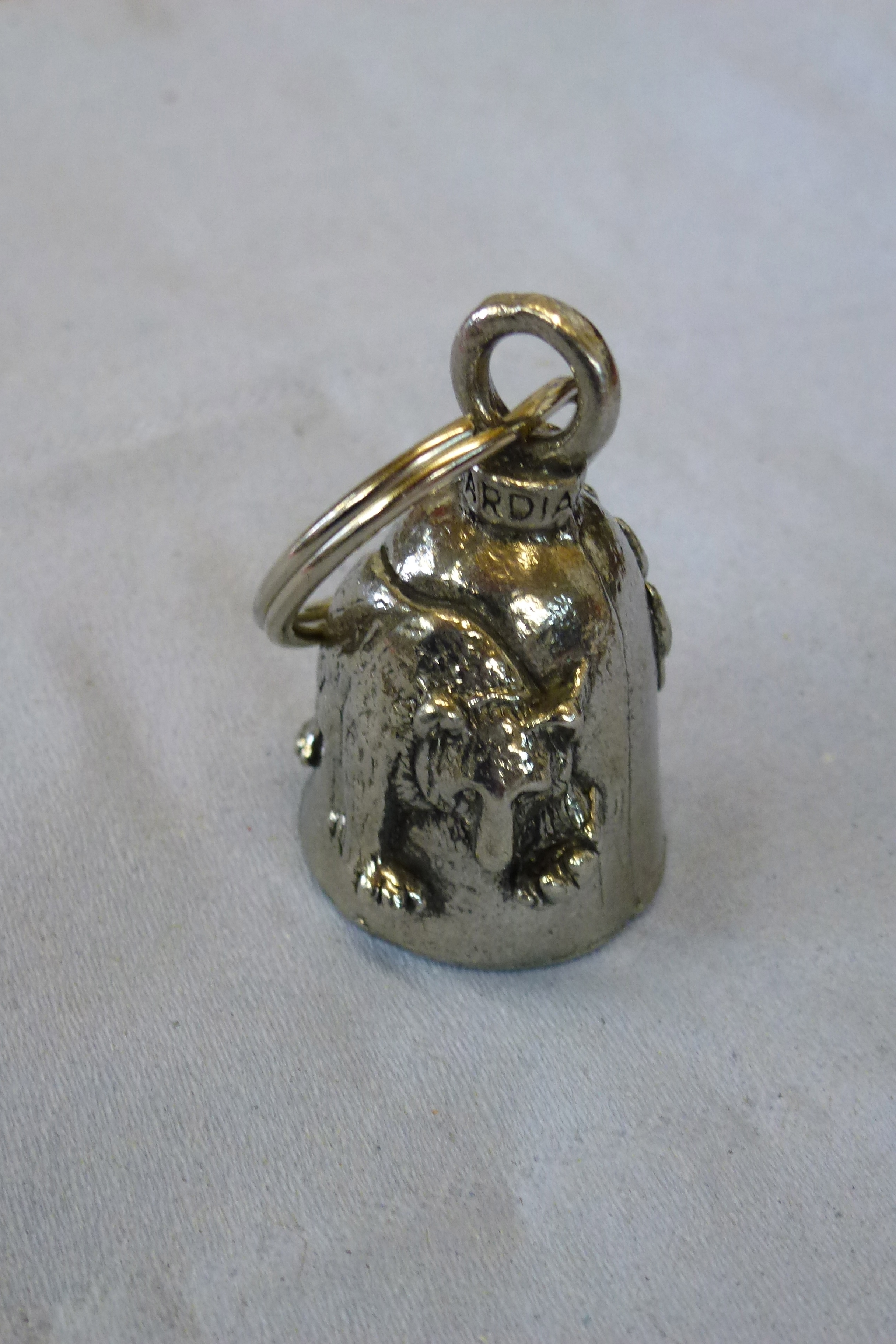
Gremlins are now known to be evil road spirits. They jump onto passing motorcycles because they love to ride, feel the wind in their ears and the vibrations of the engine, they are often the cause of many problems endured by bikers. There is however, hope. Many years ago an old biker discovered that Gremlins hate the sound of a small ringing bell. There are many versions of the story of how this happened, but it appears that the evil road spirits can’t bear the ringing and that they get trapped in the hollow body of the bell. Then their hypersensitive hearing and the constant ringing in a confined space drives them insane and they lose their grip and eventually fall off.

Over time it has become apparent that these bells have even more power if they have been received as a gift; sure they work fine if you buy one yourself, but for maximum protection you really need to receive one from a friend or loved one as a gift. That way the magic is doubled, because out there somewhere, you have a friend looking out for you.

So next time you walk past a motorcycle, take a look and see if you can spot a small bell, either on the handlebars or maybe on the swing arm. Whenever you see a biker with a bell you will know that they have been blessed with the most important thing in life, love and friendship. The spirit of camaraderie and brotherhood between bikers is what the ride bell encompasses.

P1030523

So you can imagine I was pretty happy when Mrs Dookes presented me with this little beauty to hang on Hettie.

P1030524

…..and then another one for Harls!

As you can see, I took the picture of Hettie’s bell when it was new and before I fixed it to her.
Harls bell shows it has done quite a few miles!

IA word of caution though…f you steal a bell from a biker, you steal all the gremlins and the evil that comes with them. So don’t do it, the consequences could be dire!

“You got me ringing hells bells.”

Catch you soon.

Dookes

Triumph and Contrast

Photography 101. Final Assignment: Triumph and Contrast.

I really had to scratch my head with this one.

I thought of getting back to the motorcycle theme and grabbing a shot of a Triumph Bonneville, but that would have been too corny!

Until today all of my photos for the course have been fresh and newly shot just for Photography 101. I had hoped to go for a full house, but today something kept drawing me back to a couple of shots from previous road trips and on a purely personal level both scream out “Triumph” to me.

The first is the summit marker on Col du Galibier, in the French Alps.

When I was young, my friends and I avidly followed the great cycle race that is the Tour de France. There was no television coverage of Le Tour in the UK back then. We had to get our race updates from the sports pages of daily newspapers, which didn’t always carry much up to date information at that! Our idols were the great Eddy Merckx, Bernard Hinault and Joop Zoetemelk and many other too.

Amongst the magical places on Le Tour that we learnt about were the great Cols of the Pyrenees and the Alps; it certainly did our school geography no harm at all! Greatest, most famous and certainly legendary above the rest was the magical Col du Galibier.

I dreamed of cresting that climb on two wheels, emulating my heroes and just standing where they had passed.

Many years later I was able to do just that, OK I did cheat a bit because my two wheels by then had acquired a great big Harley Davidson engine between them… but I did go there on two wheels!

I’ve been back many times since, each time is special, each time my eyes fill with emotion and each time I give thanks that I’ve been able to return to my special spiritual place; it’s my enduring “Triumph!”

Col du Galibier

Col du Galibier, colourful contrasts.


My second “Triumph” is a shot of my beloved Softail sitting by the beach at Carantec in Brittany, France. Again this is another special spot. It’s the place that I go to at the end of every big Continental Europe road trip, somewhere just to collect my thoughts and memories before getting onto the ship back to the UK and home.

So here is Harley loaded with my travel bags and carrying an honest patina of road grime accrued over a few thousand miles of riding.

I can hear in my own mind the gentle metallic music of her engine ticking as she cools down contentedly, knowing that she has Triumphed in bringing us both back safely again.

Carentec beach.

Carantec Beach.


Oh did I tell you before that I love that bike?

Thank you sincerely to everyone who has been riding with me on the Photography 101 course. I really appreciate your feedback and honest comments and would love you to ride some more with me.

“The river flows, it flows to the sea.
Wherever it goes that’s where I want to be.”

Dookes