The Thoughts And Travels Of A Geezer On A Harley ……………………………………… Looking at the World Through Teenage Eyes, But With The Cunning, Guile and Wisdom That Comes With Age!
Dookes is not a great drinker. This is partly a result of age, I just can’t consume any volume of beer without being at most three steps away from a toilet these days, plus I really don’t like how alcohol disrupts my sleep pattern.
That said, I do occasionally enjoy a glass of wine or a cocktail, BUT…it has to be a damn fine glass of wine or a proper classic cocktail. I want none of that silly paper umbrella and sparkler “Pornstar Martini” nonsense, nor wine that could alternatively be used as paint stripper! I work on the basis that if I am going to suffer later, then the cause needs to be incredibly worth it!
Earlier this month, I was amused to notice that some bright individual had designated this week as “World Negroni Week.” Amused because it does seem to me these days that there is always some sort of “World _____ Week/Day” (fill in the blank as you see fit) doing the rounds. Now as you might expect. “World Parsnip Day” or “International Air Frying Week” doesn’t really cause me much excitement, but as a Negroni is one of a very small few cocktails that I REALLY like , my attention was grabbed!
OK, Dookes, all very interesting, but what exactly is a “Negroni?
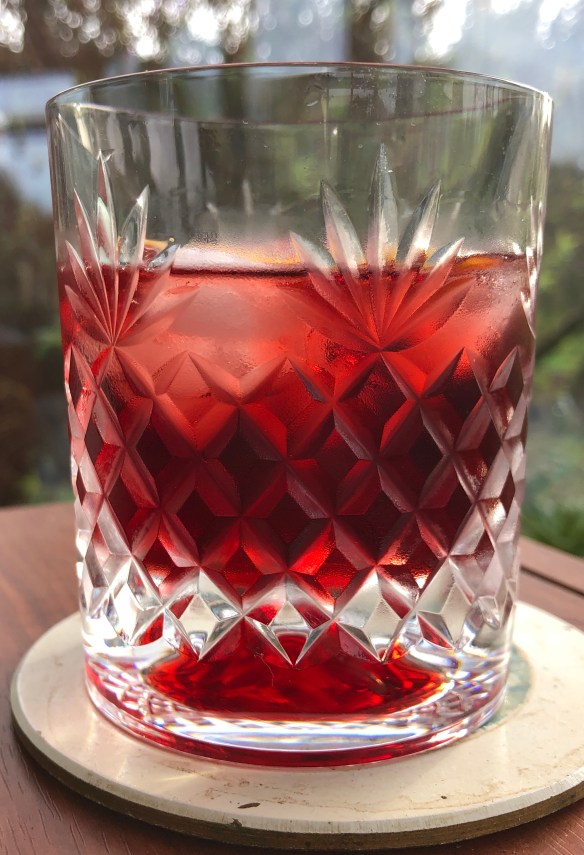
Well, its very simple really, it’s a drink made of equal measures of Gin, Orange Bitters and Red Vermouth, stirred together in a glass with a couple of ice cubes and served with a slice of orange or simply a twist of orange peel. It’s a lovely aperitif.
The Negroni
The origins of the drink are a little clouded, but it is thought to stem from Northern Italy where a popular “Apero” is the “Milano-Torino”; Campari (in Milan) or Amaro Cora (in Turin) and Vermouth Rosso. The drink become a bit diluted by American tourists in the early 20th Century who added soda water to it, causing the local bartenders to call it an “Americano.” The story is that a Count Camillo Negroni, by all accounts a somewhat flamboyant, but dubious character, was in the famous Casoni Bar in Florence and asked for a bit more punch to his “Americano” so the bartender swapped the soda water for gin. By all accounts was a hit and people started asking for “one of Count Negroni’s drinks”, and that was simply shortened to a ‘Negroni.”
All that nonsense aside, when I saw the “World Negroni Week” headline, it did make me think when I last had one…and I honestly couldn’t remember!
To remedy that state of affairs, I have decided that this evening Dookes H.Q. will raise a glass to the wonderful concept of “World Negroni Week.”
I’ll be mixing mine with equal 25ml measures of:
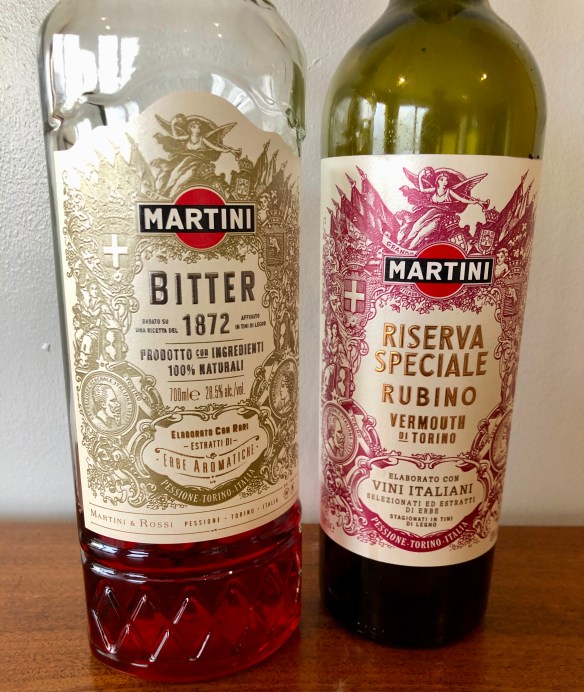
Aatta Gin, a local gin to us and a delightful birthday gift last year from my mate “Vifferman.” Martini 1872 Bitter. Martini Riserva Speciale Rubino Vermouth di Torino.
Aatta Gin
As I said at the beginning, it has be be good stuff for Dookes! Cheers!
“So, join me for a drink, boys We’re gonna make a big noise”
Catch you soon, Dookes
PS I have no affiliation/association with any of the products listed in this post, other than as a paying consumer.
Last night I got word that an old railway colleague of mine had died suddenly. Mike was a year or two younger than me.
I first met him when I was a Junior Manager in my first real managerial position. Mike was a Management Trainee and had been sent to shadow me and get a feel for what it was life was like for a newly appointed trainee after graduation. We hit it off straight away and got along really well.
As was the way in the Rail industry back then, people tended to move around the country to different postings and positions. Over the years our paths crossed occasionally and we often smiled about those two young men at the start of their careers and where our incredible journey’s took us. We weren’t close, nor friends really, just colleagues who got on very well.
Mike left the industry a few years after me and like me always kept an eye on what was currently happening in our old industry. Also like me, he was a keen railway modeller; only two days before he passed away he was writing about the “life-project” of a layout he was planning to start, just as soon as he had time to get round to it…
Now that time has gone.
I’ve spent today doing various jobs around Dookes H.Q., popping out to the local recycling centre, plus getting a few groceries.
All the time though my mind has been pondering that phrase, “When I have time to get round to it.”
Time…It’s the most precious commodity that we have, because for all of us it is finite.
I told Mrs Dookes how I was feeling. That I’d been thinking about people that have gone on; Mike, Little Brother Greg, David and a few others that have their share of health issues at the moment. I do a lot of thinking when I’m cutting the lawn.
In her usual wise way, Mrs Dookes smiled at me and reminded me off all the good things in my life and to be grateful that I’m still, almost, in full working order. She didn’t exactly tell me to, “Snap out of it!” but I got the drift…
My new “Man Cave,” a big shed for my model making and other stuff, is being delivered in two weeks and believe me ,once I move into it, my “Time to get round to it!” will begin in earnest!
Oh yes, there’s room in the “Cave” for Harls and Hettie too!
“Gotta keep rollin, gotta keep ridin’, keep searchin’ till I find what’s right”
OK, I need to be honest about this trip; I’ve found it really tough!
I’m thinking that its a mixture of things: 1. I’m out of practice riding motorcycles; with all the upheaval last year I just haven’t had time to get out on any kind of two wheels. Plus with all our things in storage, I couldn’t get at them anyway. 2. I’m carrying a couple of injuries at the moment, nothing serious, but enough to inhibit me a bit and at times make life a bit uncomfortable, plus I’m as a result not as fit as I like to be! 3. The weather. Riding in our Northern latitudes in early Spring is always going to be a bit of a lottery with the weather, plus inevitably it’s going to cold a times. OK, I do wear my heated clothing and it has been quite a bonus on this trip, but after a few hours in the saddle you do still feel the cold in the unheated bits! Rain doesn’t really bother me, except when it makes the roads greasy, as my gear is all very waterproof. 4. I’m getting older. No escaping this, I’m not going to let it stop me, but maybe I need to modify my approach to motorcycle touring in future?
Anyway, we are now home in Caithness, arriving here after a 300 mile push from Lauder in the Scottish Borders last Saturday.
I think that I can describe the day as a symphony in four movements…
Lauder to Edinburgh was delightful on open roads in the early morning crisp sunshine.
Scottish Borders Roads.
Smooth, Sweeping, Empty.
Edinburgh ring road to Perth via the Queensferry Crossing was busy, very busy and not over enjoyable.
Queensferry Crossing.
Perth to Inverness on the A9 climbing into the Highlands was a hard section; fantastic scenery as the mountains rose around us, annoying traffic at times and getting colder.
Welcome to The Highlands, snow on the mountains still!
Inverness to Caithness, a feeling of opening freedom, clean air, less traffic, fun roads and the joy of getting near home.
Nearly Home!
The last bit is always something to be wary of, as many accidents befall motorcyclists at the end of long trips just as they are nearing home! A bit of light rain began to fall ten minutes from Dookes H.Q. and was enough to turn the roads quite greasy, so yes, time to be extra cautious!
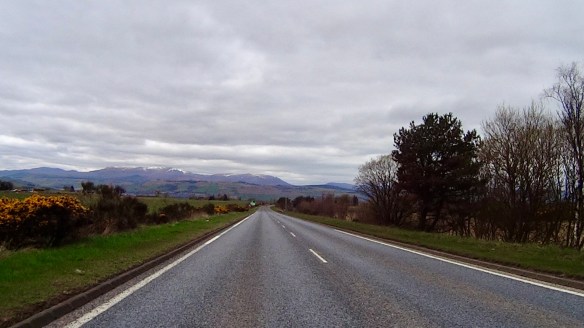
Caithness Roads, take us home!
The trip is over now and though I’m still physically recovering from it, I’ve had time to process it all a bit.
It’s been strange doing a long trip in my own Country and by that I mean the UK.
In comparison to my many Continental Europe trips I was struck by how busy and crowded our small island is; I didn’t have to stray into any major city centres to notice that! Everywhere in England people seemed to be always in a massive hurry and yes it was really noticeable how much things change once we got into Scotland.
I saw evidence throughout the journey of crumbling and neglected infrastructure. Roads were deteriorating and pot holes common; bloody dangerous for the unwary motorcyclist too! Even on the arterial Motorways, potholes were not uncommon and many motorway signs were becoming barely legible through weathering and neglect. The verges of many roads were strewn with litter and obvious fly tipping in lay-bys seemed normal. Considerate and careful driving was not over common… In many ways parts of the trip were quite depressing, but then there were the people, people who were friendly, wanted to ask about Harls and just were interested in what we were doing; that was nice and rather up-lifting. More about them in another post I feel.
The scenery was the thing though; at time it’s just breathtakingly beautiful. From distant glimpses of the Welsh mountains, the wide sweeping Severn Valley, the sturdy Pennines and West Riding of Yorkshire, the high Westmorland Fells, Scottish Borders and finally the Highlands, every region has such lovely natural treasures. The 868 miles that we covered were worth it for that alone; even though I didn’t grab many pictures, so much variety in such a little island! Would I want to do the whole trip again? No, I don’t think so, I’ve got a lot of other new places I really want to go and most of them are pretty much on my doorstep.
The view from home at Dookes H.Q.
Now, I’m starting to build a new garage for Harls and Hettie and when I’ve done that we will be back out on the road, after all I have the whole of Scotland to explore!
Hope to catch you soon.
“This land is my land, This land is your land, From Cornwall to the Scottish Highlands, This land was made for you and me” …with apologies to Woody Guthrie!
This blog is supposed to be about the my travels on my Harley Davidson motorcycles and to be honest, of late they haven’t featured very much. Our move from one end of the UK to the other, Cornwall to Caithness has had a lot to do with that….not to mention that my beloved Softail, Harls, remained behind when we moved, waiting for me to collect her at a suitable date in the future.
Well that date has arrived!
I’m currently in Lancashire just over 300 miles from Cornwall and 450 still to go back to Caithness….and yes Harls is with me!
It’s Harls! Looking a bit road stained in the Lancashire rain.
We hit the road yesterday and wow, was it good to be sitting in her saddle again! It had been a while since I last rode her, September last year to be honest, since then she has safely resided in my friend Peter’s workshop in Cornwall. I’m pleased to say that after a thorough safety check, a wiff of air in the tyres and reconnecting the battery…she started first time, bursting back into life and happily burbling that familiar Harley “Potato, Potato” song from her exhaust.
I just fell in love with her all over again!
Yesterday we took a steady trundle up through the Welsh Marches to an ovenight stop in North Shropshire with two wonderful and special hosts, plus on the way meeting up with a very, very, special person who I hadn’t seen in years. That was quite some hug!! It was quite an emotional day that left me feeling very happy and grateful for my many blessings. Today we rode to Skipton, in the Yorkshire Dales, to drop in on to say hello and share a coffee with a mate. Tonight we are at the foot of Pendle Hill in Lancashire, made famous/infamous by the trial and execution of The Pendle Witches in 1612.
Yesterday and this morning we enjoyed glorious riding weather; this afternoon, not so great, with vicious winds and lashing rain. Let’s be honest, it was just the “Weather Clerk” checking out just how much I enjoy riding Harls…
How did it go? Well, I will admit to being a bit “Ride Rusty” yesterday when we got going, not dangerously so, but I was having to think about what I was doing, but after a couple of hours I got into the groove and things became more instinctive and considerably more enjoyable.
It occurred to me that this is the first long distance ride that I have ever done in the UK and as such I really should embrace the same principle I apply to my long distance Continental trips. In other words, as my late lamented mate Floyd used to say, “To know a country, you must eat a country!”
Well OK Floyd; last night was Shropshire beef steak, beautifully cooked blue, just how I like it, accompanied by wonderful conversation and a toast to those we have lost
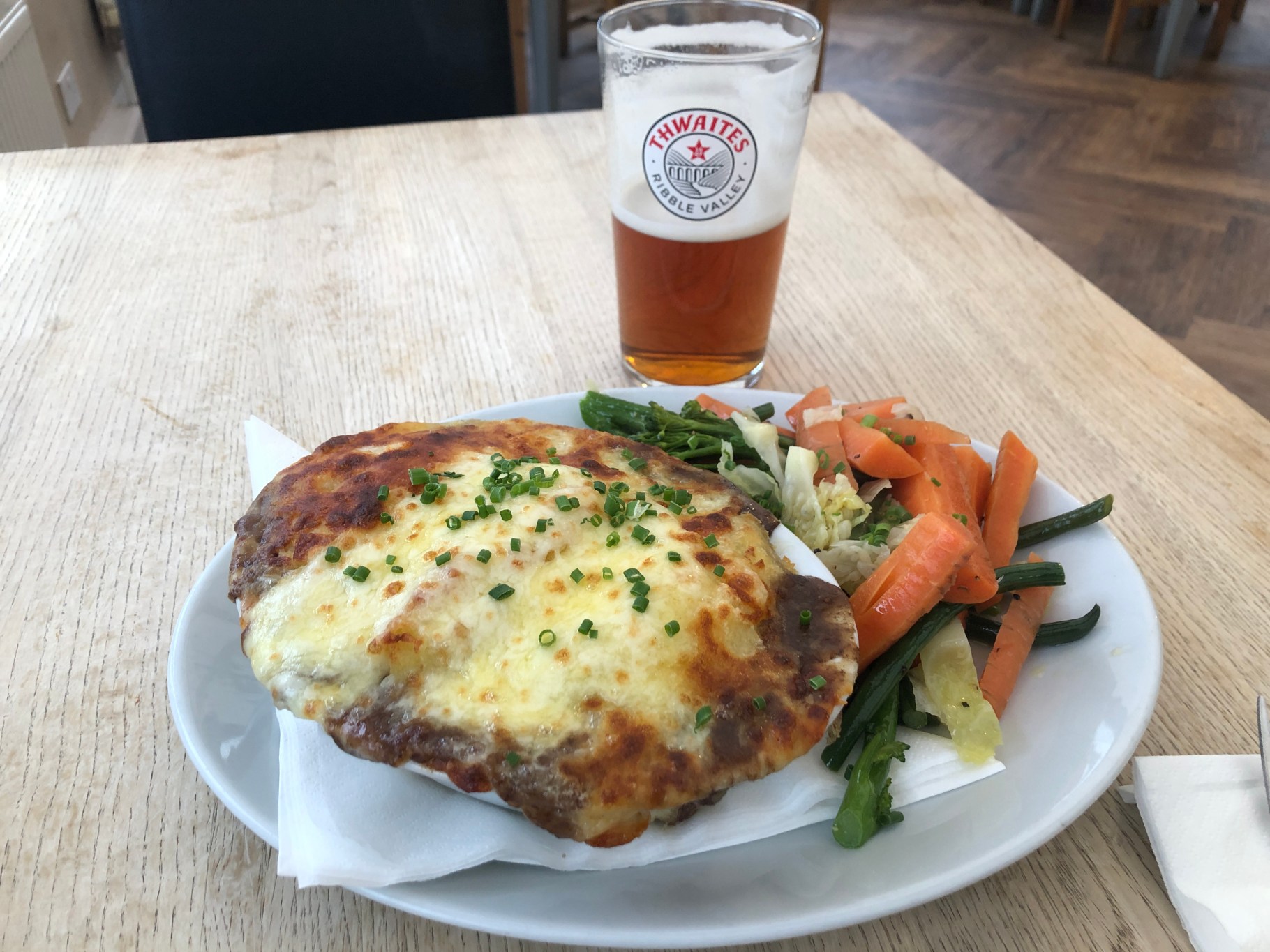
Tonight, it’s the local speciality of Pendle Pie a wonderfully calorie laden creation of beef in an ale gravy, topped with mash potatoes and cheese, served with seasonal vegetables. Accompanied with a pint, or two, of the local IPA. “Only” 1055kcal, it’s how they keep the rain out in these parts!
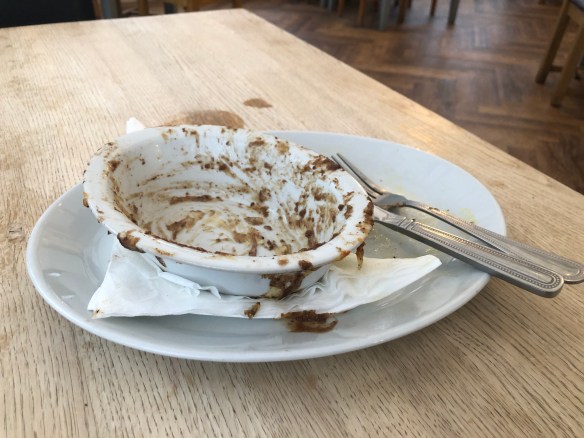
It seems to be working!
Tomorrow we will get to Scotland, but with still a bunch of miles to follow on Saturday. I could have had Harls shipped up, but I feel its only right to give her the dignity of arriving in her new home on her own two wheels. I love that bike and for the people and things I love, I will do anything.
“Spread out the oil, the gasoline I walk smooth, ride a mean, mean machine Start it up”
Well, my night on the Caledonian Sleeper is over, time to report on the experience.
As I said in my previous post, internally the train was spotless and my cabin, though a tad compact was very adequate. With two people in it though I feel that you would have to choreograph your moves as it really could be a bit cramped!
We departed Inverness bang on time and effortlessly slipped into the Highland darkness. The train follows the Highland Railway mainline through Aviemore to Perth, Gleneagles and Stirling before taking a left for Edinburgh, where the portions from Fort William and Aberdeen are attached. There were quite few station stops and as a result the ride was a bit jerky! Equally the attachment of extra carriages and a locomotive change at Edinburgh was, unavoidably a bit sleep interrupting!
The Mark 5 carriages rode well, very well in fact on the higher speed sections of line, particularly the West Coast Mainline South of Carstairs all the way to London Euston. On the Highland Mainline though they suffered with a lot of bogie noise and vibration. It does strike me these days that rolling stock design engineers seem to be able to manufacture vehicles that only do one thing well, but are incapable of coping with a variety of conditions…just a thought.
Inverness. Waiting departure.
The bad news was that due to signalling track circuit failures in the Partick area, our train was delayed by 95 minutes waiting for the Fort William portion; not a major issue for me for my onward journey, but I’m sure that some people might have been annoyed. On the plus side though, Caledonian Sleepers give a very generous refund for this inconvenience so I’m really not complaining and you can’t blame the train operator for the infrastructure owner’s shortcomings!
A point I made in my previous post about top speeds was quite pertinent and noticeable with our delay. By using a combination of stopwatch and GPS, I was able to see that we travelled along at a steady 87mph, the top speed of the locomotive. Now allowing that the Caledonian Sleeper is timed at 80mph, the maximum possible recovery of lost time in running can only be less than 10% with a 7mph excess over timing; I guess thats the price you pay for using a class 92 locomotive that was originally designed for freight work.
Journey’s end at Euston.
A light breakfast of coffee, fruit juice and a sausage bap was served to me in my cabin and was very enjoyable.
Yes arrival at Euston was late, but on the plus side avoided the infamous London “rush hour!”
A railway sleeper service has run between Scotland and England since February 1873. Sleeping cars were initially introduced on the East Coast Route via Edinburgh and York, with the rival West Coast catching up in October of the same year. The status quo remained pretty much the same until 1988 when services were withdrawn on the East Coast and trains consolidated on the West Coast.
Following the privatisation of rail operations in the UK during the 1990’s, like all other passenger trains the Anglo – Scottish sleepers passed into private hands.
It was not a stunning success!
True, new Mark 5 rolling stock was procured to run the trains, though it’s introduction was somewhat troubled and painful. The first run of the new carriages arrived at it’s destination hours late and received great derision from the media! Then there was a period of poor and deteriorating industrial relations that did little aid reliability nor reputation.
Finally in October 2022, the Scottish Government, possibly out of despair, announced that the franchise, then run by Serco, would be terminated and the operation taken over by Scottish Rail Holdings, a Government Owned Department from June 2023. Since then the service has stabilised and is beginning to rebuild it’s reputation.
The Mark 5 carriages are still a bit of a mixed bag and it is fair to say that they give the maintenance engineers headaches at time, but overall are settling into reliable performers.
Two trains are operated on six days each week. The “Highland Sleeper” is made up of three trains that depart from Inverness, Fort William and Aberdeen, then combine at Edinburgh and travel onward to London Euston as a 16 coach train. A “Lowland Sleeper” train has two portions serving Glasgow and Edinburgh, also to London.
The trains normally operate at a maximum speed of 80 mph (130 km/h), but are authorised to travel at 100 mph (160 km/h) where line speeds permit and if the train has been significantly delayed. Though as the locomotives used are not permitted to run any faster than 90mph, I find this to be a tad perplexing! It’s the old railway operator in me!
North of Edinburgh the trains are all hauled by diesel locomotives and South from there by electric traction.
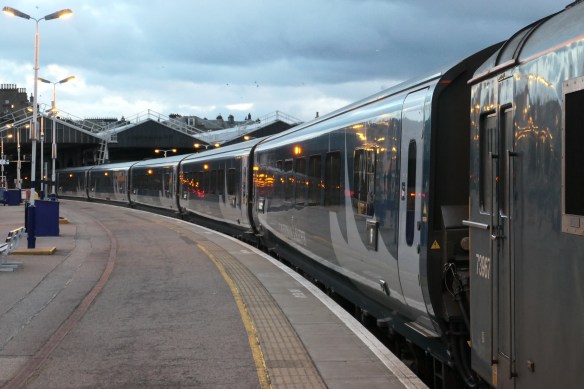
My Inverness portion of the train tonight consists of six sleeper coaches, one seated carriage and one “club car” (lounge car). Up front we have two Class 73/9 Electro-Diesel locomotives, 73. 970 and 73 967, old friends from my days on the Southern Region, though unlike me, they has been through a complete rebuild and now boast a 1600hp V8 engine each, which is an improvement over it’s original 650hp one. So 3200hp for a load of 305tonnes should do the job!
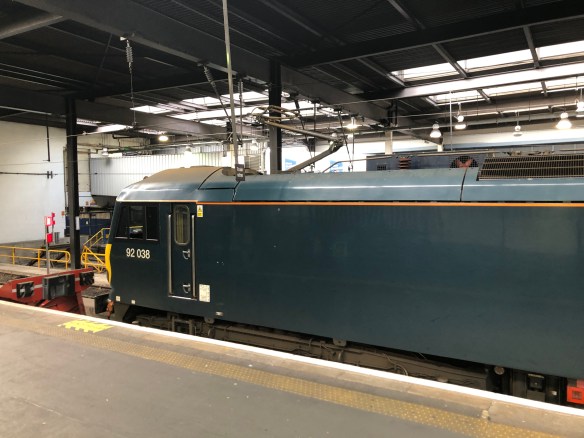
I’ll check out the electric loco when we get to Euston, I’m not getting out of bed at Edinburgh just to see it!
My berth, a solo Club cabin, is well appointed with an ensuite toilet and shower adjacent to the bedroom. In the past, the old Mark 1 sleeping cars had lovely wide windows that you could open and enjoy the mountain air as the train traversed the Highland railways; sadly now that facility has gone, but the air conditioning is much nicer than the old draughty sleeping cars!
Cosy, clean and comfortable, all I need.
I enjoyed a relaxing hour in the Caledonian Sleeper Lounge at Inverness with complementary refreshments before wandering over to the platform and getting comfy in my cabin. I’m really looking forward to this trip, it must be nearly 30 years since I was on a sleeping train…
As regular Blogonaughts will know, railways have always played a big part in my life. I grew up with a railway engineer father and subsequently spent a long part of my working life running railways. More often than not, I’ve also lived within earshot of a railway line… except for the last twenty something years in Cornwall. New Dookes H.Q. here in Caithness has returned to the status quo; when the wind is right we can hear trains!
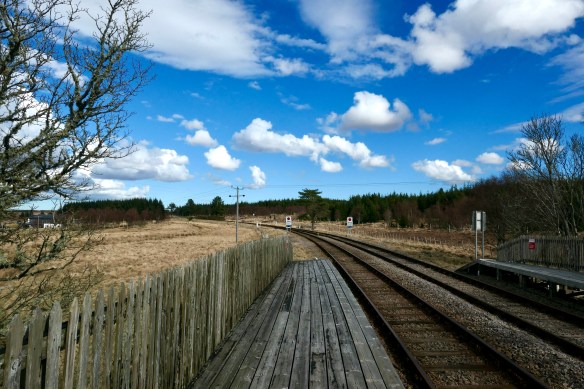
Now please don’t get to think that we are kept awake at night by endless trains pounding the steel rails. No, we live a couple of miles from the Far North Line; a wonderfully bucolic railway that gently meanders for 168 miles linking Inverness, the capital of the Highlands, to Wick and Thurso at the extreme Northern end of Scotland. As the name suggests, it is the most northern railway in the United Kingdom. It’s not so much “InterCity”, more “Inter Village” and pretty small ones at that! The line is totally single track, with numerous passing loops. Speeds are generally not high, due in part to the somewhat tortuous nature of the route and its lighter construction., but that’s ok, there is so much lovely scenery to enjoy!
The line was built in stages starting from Inverness to Ardgay in 1862, to Golspie in 1868, Helmsdale in 1870 and to Wick and Thurso in 1874 . Each section was constructed by different companies that each subsequently ceded operations to The Highland Railway. The line was built to generally avoid major civil engineering works; there are no tunnels and only a couple of large viaducts, for the most part the route traces the contours of the land and as a result takes a somewhat roundabout course to reach is destination. By road from Inverness to Thurso is 110 miles, the train takes an extra 50 miles! Prominent amongst the railway’s sponsors was the 3rd Duke of Sutherland, who not only had his own station at Dunrobin Castle, but his own private train that he apparently greatly enjoyed driving! He sounds like the sort of chap I would have got on well with!!
It is fair to say that the line has never been very profitable, indeed it has often be in danger of partial or total closure. Busy periods during the two World Wars saw heavy traffic to the Royal Navy bases in Northern Scotland whilst the boom in North Sea oil exploration in the 1970’s saw some increase in construction traffic to the deep water anchorage at Invergordon, along with a nearby aluminium smelter. Generally though freight has declined now to virtually nothing, whilst passenger traffic numbers are really sustained by tourists during the summer period. The stations between Dingwall and Inverness do however see some use by passengers commuting into Inverness. The line is today heavily supported by the Scottish Government who recognise its value to local communities.
I first rode the Far North Line over 40 years ago, in those days the service was provided by locomotive hauled trains and there was a lot of parcel and mail traffic that had to be manually loaded and unloaded at the various stations. Today the trains are diesel sprinter units solely dedicated to passengers as the mail and parcels have disappeared to road hauliers. To me the modern trains are not a great improvement as they are noisy, the seats lack comfort and the toilets are a tad smelly, but they are more economic to operate and maintain; if that helps to keep the line open, then I’m all for it!
I’m riding the whole length of the line today, from Wick to Inverness, taking in the short branch to Thurso. I’m in no rush, just as well, I leave Wick at 12:34 and arrive in Inverness at 17:08 with my onward sleeper connection to London leaving there at 20:45; this like so many of my trips is about the journey, not the arrival!
Both Wick and Thurso stations share a common and for a rural railway, an unusual feature, a rather delightful overall roof; though as each only cover around 80 feet of platform not many carriages can fit inside! At Wick the train generally has one vehicle under the roof, but at Thurso the train normally stops outside. Thurso is the most Northerly railway station in the UK.
Thurso
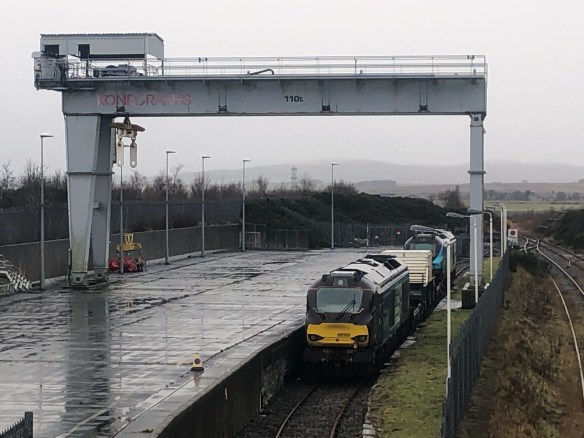
Eighteen miles from Wick the trains stop at Georgemas Junction where the short 6 mile branch diverges to Thurso. All trains go to Thurso. Georgemas also has a freight terminal where spent nuclear material form the decommisioned Dounreay Power Station is transhipped to for transport to Sellafield for processing.
Georgemas Junction and Nuclear Flask Train
The bit of railway from Georgemas to Thurso always reminds me of a model railway, it winds around a lot, crosses the river and finally climbs into the terminus almost in the heart of the town. The trains briefly pause whilst the driver changes ends and then we are off again back to the Junction. Another direction change at Georgemas and it’s Inverness here we come..in a few hours time!!
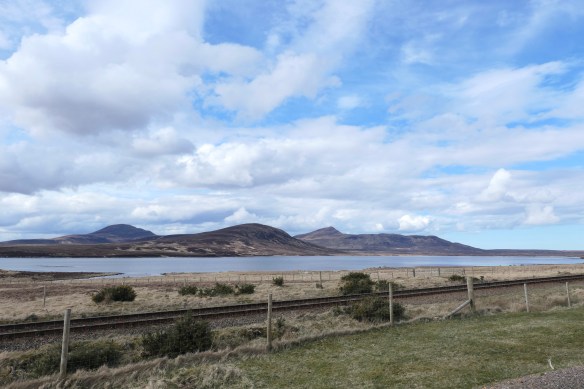
First we climb to the highest point of the route at County March Summit, where we cross from Caithness into Sutherland. It’s a bleak landscape here, crossing the famous Flow Country, the largest expanse of blanket bog in Europe, a peatland dotted with bog pools creating a priceless habitat for wildlife and special flora, covering about 1,500 square miles (4,000 km2). It’s not the place to be when the weather is bad or if you are ill equipped.
Snow fences in the Flow Country.
From the train we see the remains of old snow fences, built in an attempt to reduce the impact of the harsh Northern winters; tales of trains stranded in deep snow are legendary here!
Forsinard
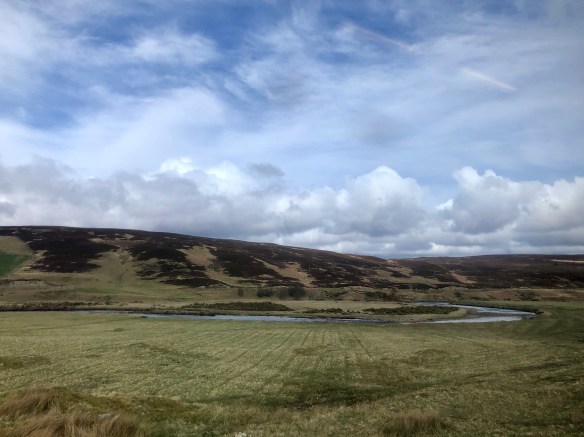
From Forsinard through Kinbrace and the gorgeous Strath of Kildonan.
Strath of Kildonan
On towards Helmsdale, the line enjoys stunning mountain views, before hugging the North Sea coast to Golspie, where shortly after it takes a turn towards the West and begins a large loop inland through Lairg.
The railway covers 40 miles on this loop, with stations at Rogart, Lairg, Invershin, Culrain and Ardgay, reappearing next to the coast just North of Tain, amazingly only about 11 miles South of where it looped inland! There have been many attempts and suggestions to build a “cut off” line to avoid the inland route, but to date neither the money nor political will has been forthcoming.
For me the most interesting feature of the Lairg loop is Invershin Viaduct, which crosses the Shin river with a single 230 feet (70 m) span.
Invershin Viaduct. Photo courtesy Graeme Smith.
From Tain the line follows Cromarty Firth to Dingwall, junction for the line to Kyle of Lochalsh. Dingwall is easily the busiest station on the whole line, a busy market town, now quite a dormitory for Inverness.
Dingwall
Reopened stations at Beauly and Conon Bridge, either side of the passing station at Muir of Ord, point to a more progressive approach by the Scotttish Government to its rural rail services. Skirting Beauly Firth the line approaches Inverness and after crossing the Caledonian Canal at Clacknaharry Swing Bridge, then the River Ness viaduct it glides above the rooftops then arrives at the terminus at the capital of the Highlands, Inverness.
Journey’s end, Inverness.
The Far North Line is one that you don’t ride if you are in a hurry, but it is one to ride if you want to fill your soul with wonderful memories.
I’m off to grab a bite to eat, then overnight on the sleeper and wake up in another country! Catch you soon,
Well, the Solstice came and passed, we celebrated in a wonderfully pagan way! Christmas and New Year also ticked by. In the meantime, Mrs Dookes and I have begun to explore our new home county and enjoy the variety it offers.
Sadly, it is not the best of seasons to ride motorcycles; so until the weather warms up and our local highways gangs stop spreading salt on the roads our exploration will not be on two wheels!
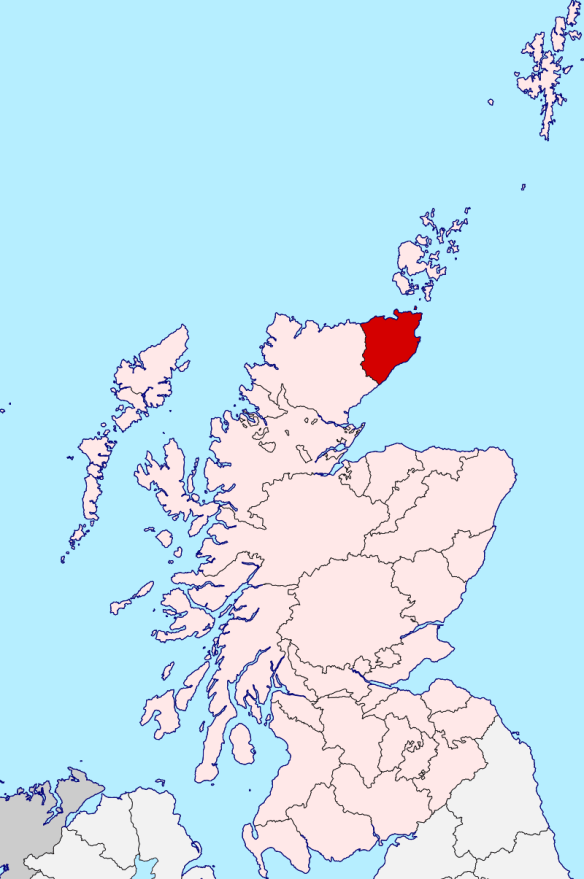
To give a taster of Caithness, I thought that I’d first better show exactly where the county is.
This a map of Scotland and that’s Caithness in red, right at the very top, so now you know!
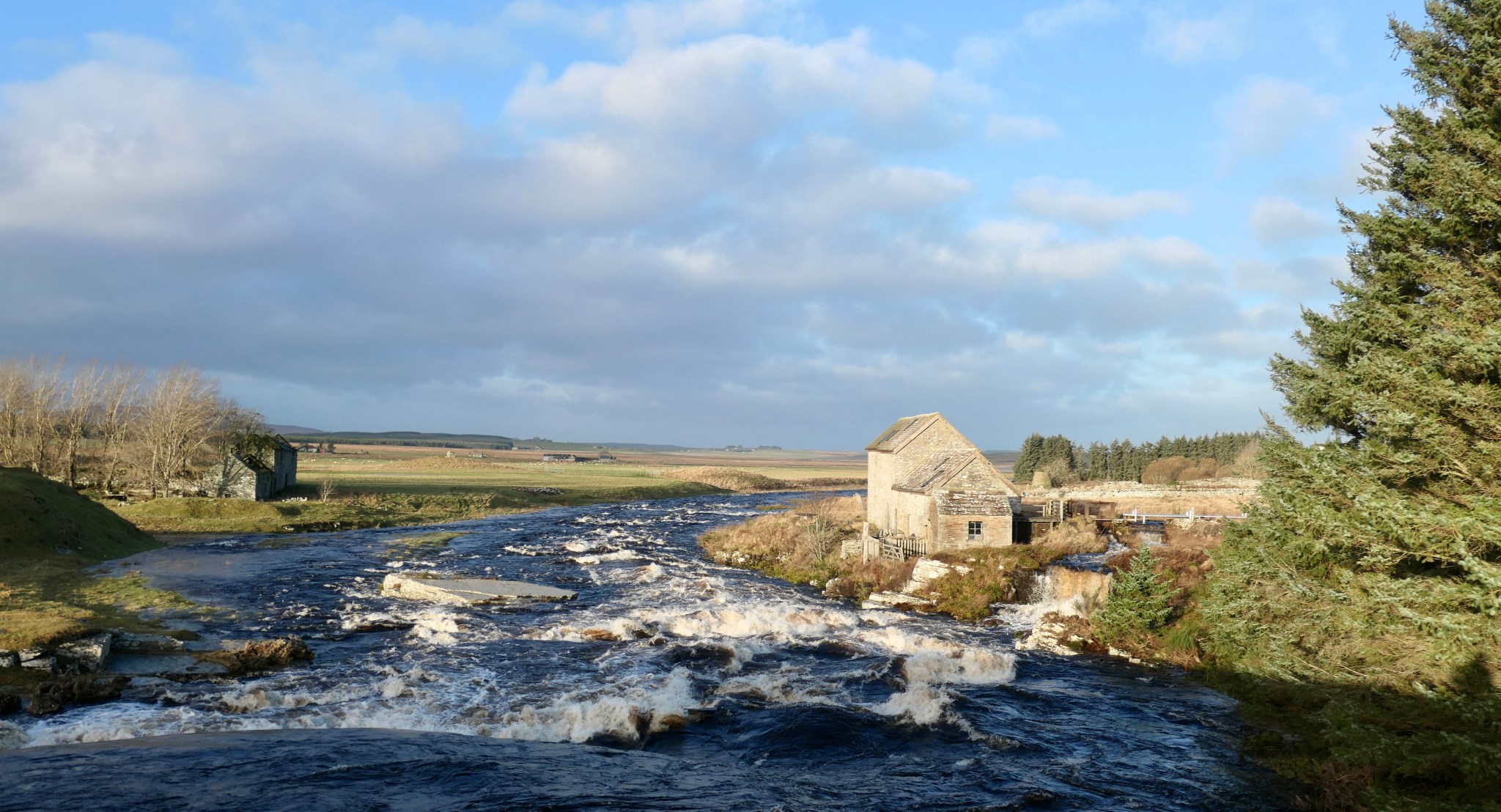
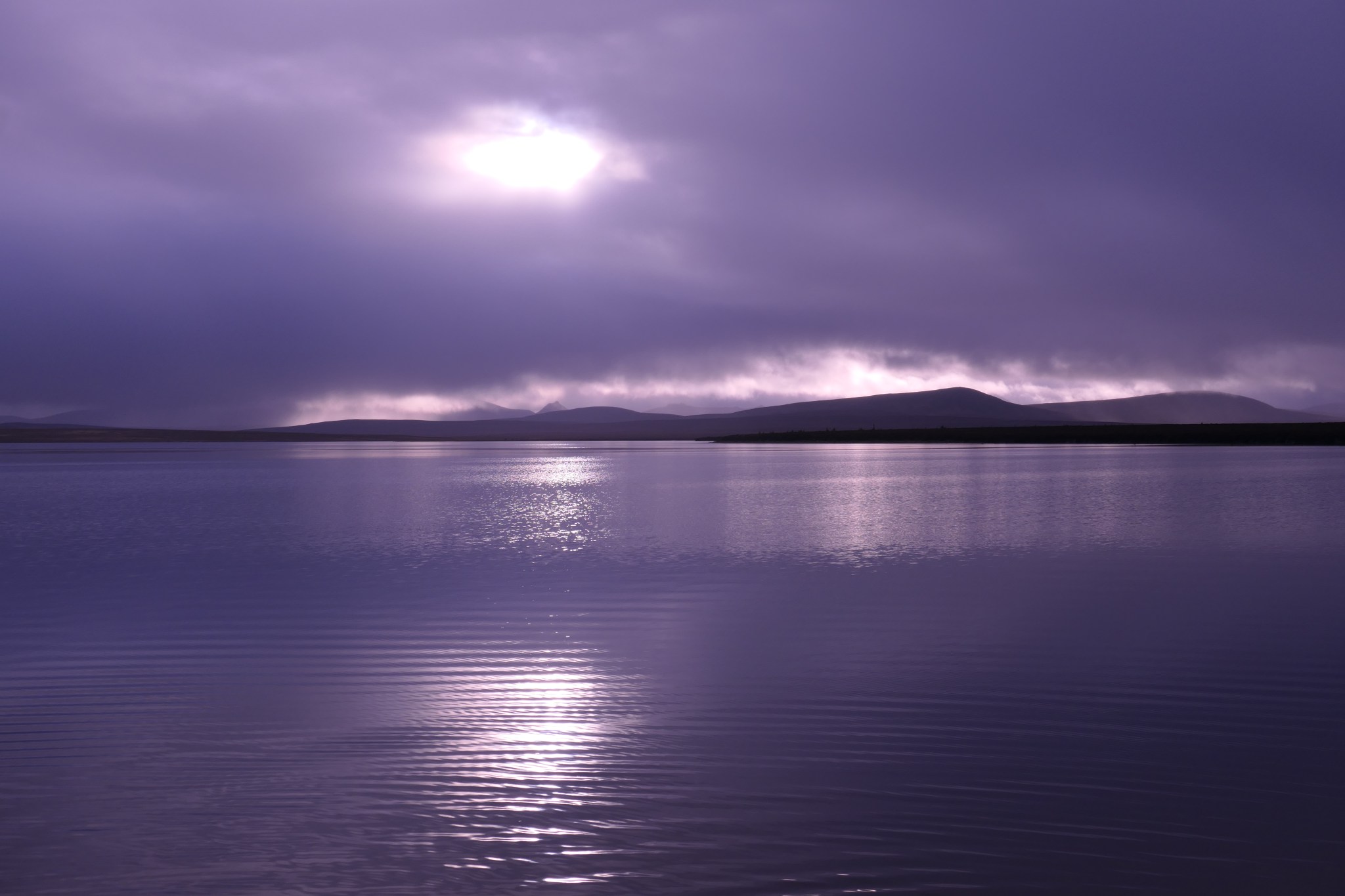
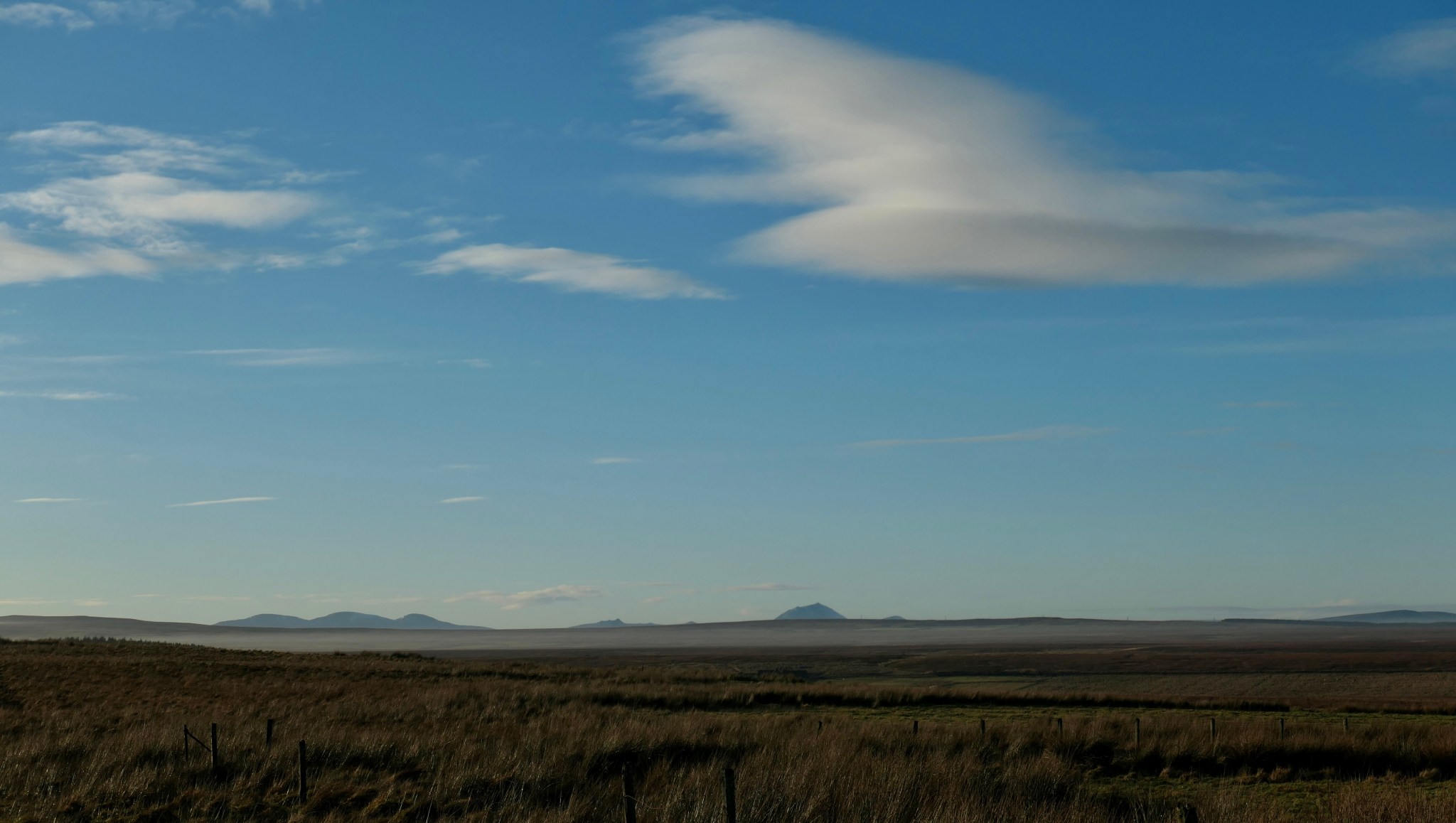
I have a bit of a problem though in trying to introduce you to Caithness, where do I start? This place is rich in diversity and variety, from rugged coasts and brave fishing villages to wide landscapes of mountains and precious wetlands. I’ll let some pictures show what I mean, click on them to see a bigger image.
Westerdale Mill on Thurso River Scaraben from Loch More The wide open Flow Country.Lybster HarbourLybster HarbourSunset at Dunnet Head
All of these photographs were taken within 20 minutes of Dookes H.Q. We are so lucky! This week things have taken a slightly more wintery feel…
A wintery snowscape from Dookes H.Q.“Hazy Shade of Winter”
We’ve had about 12 inches (300mm) of snow in the last 48 hours. It’s time to keep warm and snug especially as more is expected!
Once I can dig ourselves out of the house, I look forward to more exploring and posting more pictures!!















 Hogrider Dookes