Riding The Far North Line

As regular Blogonaughts will know, railways have always played a big part in my life.
I grew up with a railway engineer father and subsequently spent a long part of my working life running railways. More often than not, I’ve also lived within earshot of a railway line… except for the last twenty something years in Cornwall.
New Dookes H.Q. here in Caithness has returned to the status quo; when the wind is right we can hear trains!

Now please don’t get to think that we are kept awake at night by endless trains pounding the steel rails. No, we live a couple of miles from the Far North Line; a wonderfully bucolic railway that gently meanders for 168 miles linking Inverness, the capital of the Highlands, to Wick and Thurso at the extreme Northern end of Scotland. As the name suggests, it is the most northern railway in the United Kingdom. It’s not so much “InterCity”, more “Inter Village” and pretty small ones at that! The line is totally single track, with numerous passing loops. Speeds are generally not high, due in part to the somewhat tortuous nature of the route and its lighter construction., but that’s ok, there is so much lovely scenery to enjoy!
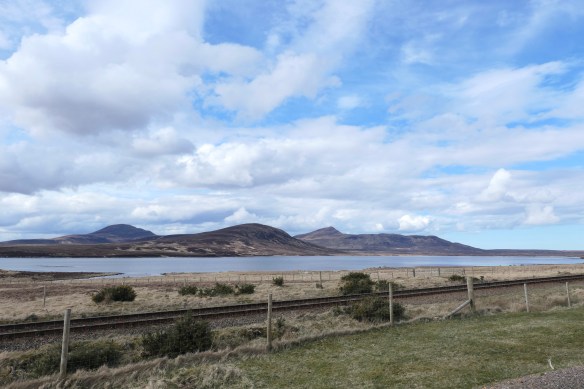
The line was built in stages starting from Inverness to Ardgay in 1862, to Golspie in 1868, Helmsdale in 1870 and to Wick and Thurso in 1874 . Each section was constructed by different companies that each subsequently ceded operations to The Highland Railway. The line was built to generally avoid major civil engineering works; there are no tunnels and only a couple of large viaducts, for the most part the route traces the contours of the land and as a result takes a somewhat roundabout course to reach is destination. By road from Inverness to Thurso is 110 miles, the train takes an extra 50 miles!
Prominent amongst the railway’s sponsors was the 3rd Duke of Sutherland, who not only had his own station at Dunrobin Castle, but his own private train that he apparently greatly enjoyed driving! He sounds like the sort of chap I would have got on well with!!

It is fair to say that the line has never been very profitable, indeed it has often be in danger of partial or total closure. Busy periods during the two World Wars saw heavy traffic to the Royal Navy bases in Northern Scotland whilst the boom in North Sea oil exploration in the 1970’s saw some increase in construction traffic to the deep water anchorage at Invergordon, along with a nearby aluminium smelter. Generally though freight has declined now to virtually nothing, whilst passenger traffic numbers are really sustained by tourists during the summer period. The stations between Dingwall and Inverness do however see some use by passengers commuting into Inverness. The line is today heavily supported by the Scottish Government who recognise its value to local communities.

I first rode the Far North Line over 40 years ago, in those days the service was provided by locomotive hauled trains and there was a lot of parcel and mail traffic that had to be manually loaded and unloaded at the various stations. Today the trains are diesel sprinter units solely dedicated to passengers as the mail and parcels have disappeared to road hauliers. To me the modern trains are not a great improvement as they are noisy, the seats lack comfort and the toilets are a tad smelly, but they are more economic to operate and maintain; if that helps to keep the line open, then I’m all for it!

I’m riding the whole length of the line today, from Wick to Inverness, taking in the short branch to Thurso. I’m in no rush, just as well, I leave Wick at 12:34 and arrive in Inverness at 17:08 with my onward sleeper connection to London leaving there at 20:45; this like so many of my trips is about the journey, not the arrival!

Both Wick and Thurso stations share a common and for a rural railway, an unusual feature, a rather delightful overall roof; though as each only cover around 80 feet of platform not many carriages can fit inside! At Wick the train generally has one vehicle under the roof, but at Thurso the train normally stops outside. Thurso is the most Northerly railway station in the UK.

Thurso

Eighteen miles from Wick the trains stop at Georgemas Junction where the short 6 mile branch diverges to Thurso. All trains go to Thurso. Georgemas also has a freight terminal where spent nuclear material form the decommisioned Dounreay Power Station is transhipped to for transport to Sellafield for processing.
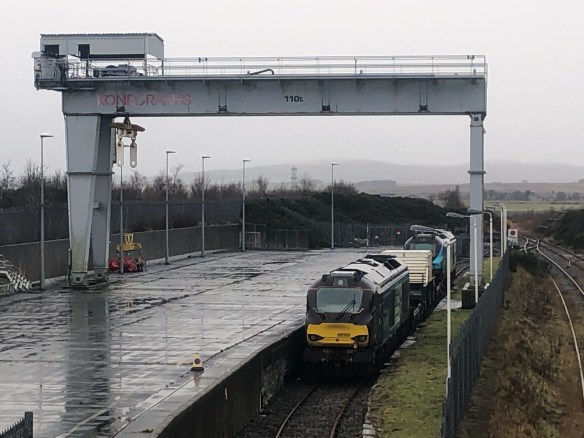
Georgemas Junction and Nuclear Flask Train

The bit of railway from Georgemas to Thurso always reminds me of a model railway, it winds around a lot, crosses the river and finally climbs into the terminus almost in the heart of the town. The trains briefly pause whilst the driver changes ends and then we are off again back to the Junction. Another direction change at Georgemas and it’s Inverness here we come..in a few hours time!!

First we climb to the highest point of the route at County March Summit, where we cross from Caithness into Sutherland. It’s a bleak landscape here, crossing the famous Flow Country, the largest expanse of blanket bog in Europe, a peatland dotted with bog pools creating a priceless habitat for wildlife and special flora, covering about 1,500 square miles (4,000 km2). It’s not the place to be when the weather is bad or if you are ill equipped.

Snow fences in the Flow Country.

From the train we see the remains of old snow fences, built in an attempt to reduce the impact of the harsh Northern winters; tales of trains stranded in deep snow are legendary here!
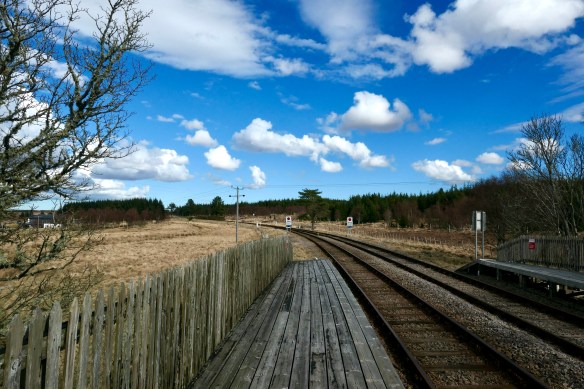
Forsinard

From Forsinard through Kinbrace and the gorgeous Strath of Kildonan.
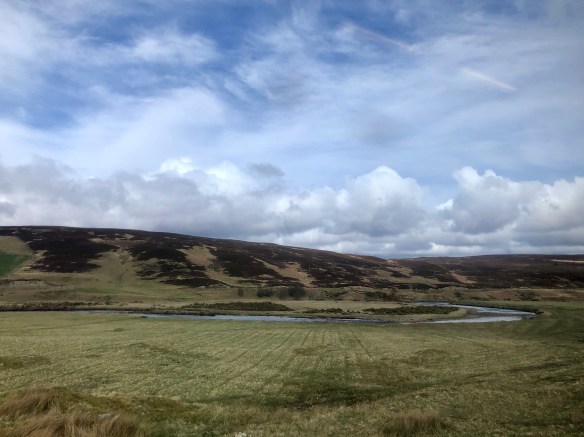
Strath of Kildonan

On towards Helmsdale, the line enjoys stunning mountain views, before hugging the North Sea coast to Golspie, where shortly after it takes a turn towards the West and begins a large loop inland through Lairg.

The railway covers 40 miles on this loop, with stations at Rogart, Lairg, Invershin, Culrain and Ardgay, reappearing next to the coast just North of Tain, amazingly only about 11 miles South of where it looped inland! There have been many attempts and suggestions to build a “cut off” line to avoid the inland route, but to date neither the money nor political will has been forthcoming.

For me the most interesting feature of the Lairg loop is Invershin Viaduct, which crosses the Shin river with a single 230 feet (70 m) span.

Invershin Viaduct. Photo courtesy Graeme Smith.

From Tain the line follows Cromarty Firth to Dingwall, junction for the line to Kyle of Lochalsh. Dingwall is easily the busiest station on the whole line, a busy market town, now quite a dormitory for Inverness.

Dingwall

Reopened stations at Beauly and Conon Bridge, either side of the passing station at Muir of Ord, point to a more progressive approach by the Scotttish Government to its rural rail services. Skirting Beauly Firth the line approaches Inverness and after crossing the Caledonian Canal at Clacknaharry Swing Bridge, then the River Ness viaduct it glides above the rooftops then arrives at the terminus at the capital of the Highlands, Inverness.

Journey’s end, Inverness.

The Far North Line is one that you don’t ride if you are in a hurry, but it is one to ride if you want to fill your soul with wonderful memories.

I’m off to grab a bite to eat, then overnight on the sleeper and wake up in another country!
Catch you soon,

Dookes

Big Skies

Now you are going to have to indulge me a little with this post, mainly because I can’t decide which photographs to leave out!

Since we moved to Caithness I have fallen in love with the sky.
It’s a big sky, with far horizons, crystal clear air, amazing clouds, glorious sunrises, and majestic sunsets.

At night it is a black as ink and flushed through by a billion stars.
One day i will master the science of photographing the night sky, but for now I have to stand an gaze at the heavens in wonder.

Daytime. I’ve come to the conclusion it’s beyond just “daytime” in these parts.
It must be a combination of being so near the cold near Arctic Sea, the clean air and our Northern latitude, that makes the air sparkle and even overcast days seem vibrant.

The mountains add to that gin clear sky feeling by pushing clouds high and aside by their mass.

Someone once speculated that there are places where the gap between Earth and Heaven is thin….
I’m beginning to feel that this little corner of the world is one of those special spots!

Sunrise and Sunset are always special times too.
Until we moved here, I had never seen such fiery displays in the heaven; I frequently enjoy sitting and absorbing the solar kaleidoscope unfold above me.

Last weekend I managed to get out for a ride on one of my Harleys.
It was mind clearing, but also made me feel very small underneath those soaring skies.

If this is what motorcycling in the Far North is going to be like, I cant wait to do more of it!

It’s going to be hard to decide where to go to next really!

“Ride like the wind at double speed
I’ll take you places that you’ve never, never seen”

Catch you soon,

Dookes

Harbouring Some History

When Dookes H.Q. was in Cornwall, I often used to visit some of the small fishing harbours dotted around the coast. I loved their quaint buildings and interesting histories.

Port Isaac, North Cornwall.

It was often hard to grasp that these little ports were once bustling centres in a much larger industry as most are today either abandoned or mostly frequented by leisure boats. The “raison d’être” for the boom times in many of these ports was the humble sardine, but today fish stocks have dwindled and tastes changed.

Only Newlyn in the far South West now supports a sizeable deep sea fishing fleet, though even that is tiny in comparison to the mid 20th Century. Other harbours, such as Looe, Padstow and St Ives have healthy numbers of “Day Boats” whilst smaller places such as Port Issac, Cadgwith and Boscastle see some local activity, mainly working pots for crab and lobster.

Port Isaac

Now, with our move to Caithness, I have been starting to investigate what the coasts around us offer and I have not been disappointed!

Splendid maritime scenery aside, we be visiting more of that in future posts, there is both a rich legacy and an active fishing industry here in the far North East of Scotland. Like Cornwall, geology has had an important role to play, with many inlets, bays and estuaries, affording natural harbours for those brave enough to take to the sea in the hunt for fish. The bigger historical picture is more complicated than that though.

Historical records show that Northern Scotland had a pretty vibrant yet local fishing industry well before the 18th Century, but it was in the late 1700’s that things started to get really serious. The story is quite complex with various factors coming together at the same time. The industrial revolution was getting into full swing. Britain seemed to be at war in all directions. Agriculture was rapidly evolving beyond subsistence farming, as the nation rose to feed the growing population needed by industry.

In the Highlands, still smarting from the echoes of the Jacobite Rebellion, changes were coming with the infamous “Clearances” where tenants and squatters were displaced by the new agricultural practices. There’s plenty about those times to fill another couple of posts, so I’ll leave that there just now, suffice to say, it had a direct and positive role in the fortunes of a number of the fishing ports.

So let’s go first to Wick, which is a small town and Royal Burgh on the North Sea coast of Caithness. It sits on both sides of the Wick River estuary. Although it was a small local fishing port, it was of no great consequence until 1768, when Sir John Sinclair of Ulbster decided to build a quay at Wick in order to promote the town as a herring fishing centre. Sinclair was by all accounts a somewhat larger than life character; a local landowner of considerable wealth, an accomplished lawyer, soldier, politician, writer and progressive farmer. He often divides opinion through his role in the clearances and being a slave owner in the West Indies. Sinclair is credited with inventing the words “Statistics” and “Statistical Analysis” which I find fascinating!

River Basin, Wick (1980) With the Harbour Bridge in the foreground, and Poultney Inner Harbour on the right. Thanks to Stanley Howe.

Progress was steadily made at Wick and herring fishing began to take off in the late 1780’s. It soon became obvious that more development and expansion was possible. The British Fisheries Society, led by another lawyer landowner, Sir William Poulteney, grasped the opportunity and entrusted harbour improvements to Scottish engineer Thomas Telford. The genius of both Poulteney and Telford was to look at the project in an holistic way; providing not only harbour developments, but fish processing facilities and accommodation for fishing crews and other support workers. The industry reached its peak between 1860 and 1890, when as many as 1000 boats were based at the harbour. Fishing then employed around 6000 fishermen and provided work for an additional 6000, often women, who gutted, salted and preserved the herrings. Over-fishing contributed to the herring all but disappearing by the early 1900s, in 1930 there were less than 30 fishing boats working out of Wick.

Today Wick is often a quiet place. There is seasonal leisure traffic and a few local fishing vessels call the harbour home. From time to time the harbour supports wind turbine transport, construction and maintenance vessels

Wick Harbour

I’ll write more about Wick in future, but now let’s pop over to the other side of Caithness and drop in on Thurso and Scrabster.

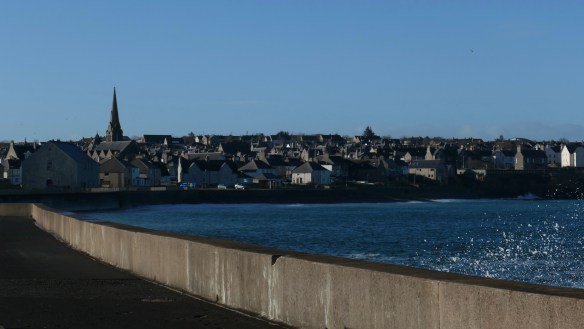
Thurso delights in being the most Northerly town on mainland Great Britain, it is just over 700 miles from London and about 300 miles from Edinburgh.

Thurso

The town straddles the Thurso River at its estuary into the Pentland Firth and has a small tidal harbour.

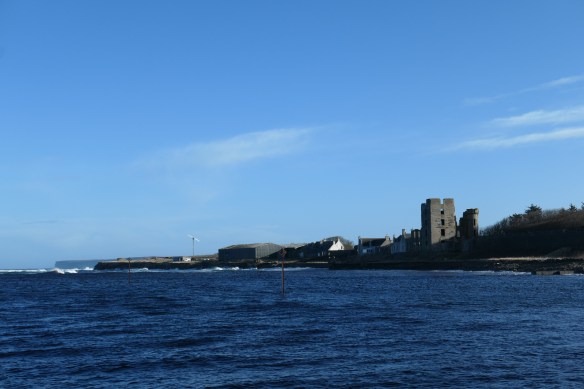
The entranse to Thurso Harbour, Castle ruin and Dunnet Head in the distance.

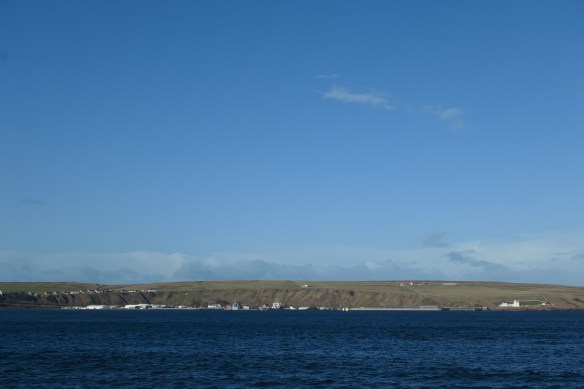
About a mile to the East of Thurso, across the bay lies Scrabster Harbour. This was constructed in 1841 to provide deep water all tide port. Scrabster initially was a fishing and ferry port, quickly becoming a vital terminus for voyages to the Northern Isles such as Orkney, Shetland and the Faroe Islands. By 1856 a ferry link was firmly established between Scrabster and Stromness on Orkney.

Scrabster from Thurso.

As Wick’s fortunes faded, Scrabster grew. Roll on, Roll off ferry operations were enabled during the 1970’s and I can vividly recall my first trip to Orkney on the MV St Ola, sailing from the terminal that shares the same name.

Through to the present day, Scrabster has experienced significant growth. The fishing industry is well supported with a modern dock, fish market, landing facilities and a large business park to cater for the various support and processing businesses.

Scrabster has become one of my favourite places to drop into, especially to grab a bargain piece of super fresh fish!

I’ll write more about some other smaller harbours around the Caithness coast in future, but for now, I’ll catch you soon, hopefully on two wheels!

Dookes

Starting To Know Caithness

Well, the Solstice came and passed, we celebrated in a wonderfully pagan way!
Christmas and New Year also ticked by.
In the meantime, Mrs Dookes and I have begun to explore our new home county and enjoy the variety it offers.

Sadly, it is not the best of seasons to ride motorcycles; so until the weather warms up and our local highways gangs stop spreading salt on the roads our exploration will not be on two wheels!

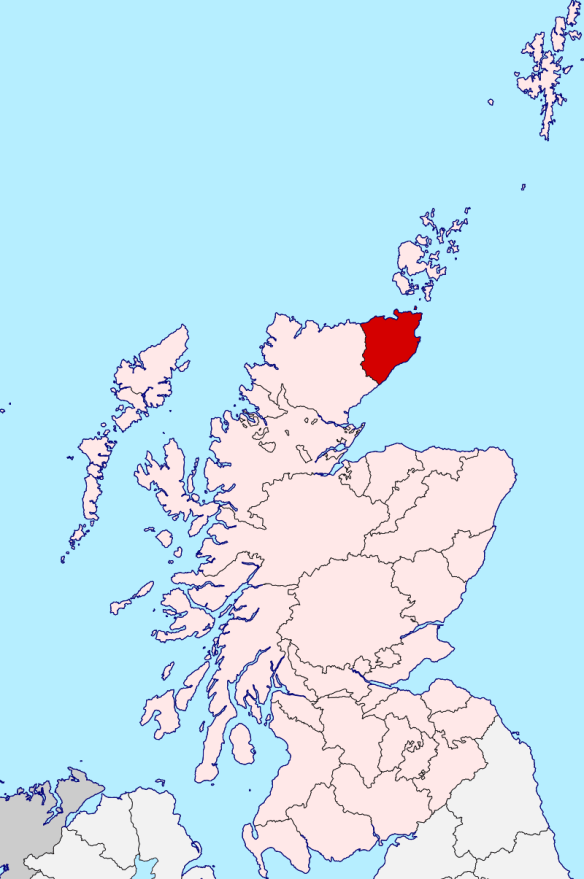
To give a taster of Caithness, I thought that I’d first better show exactly where the county is.

This a map of Scotland and that’s Caithness in red, right at the very top, so now you know!

I have a bit of a problem though in trying to introduce you to Caithness, where do I start?
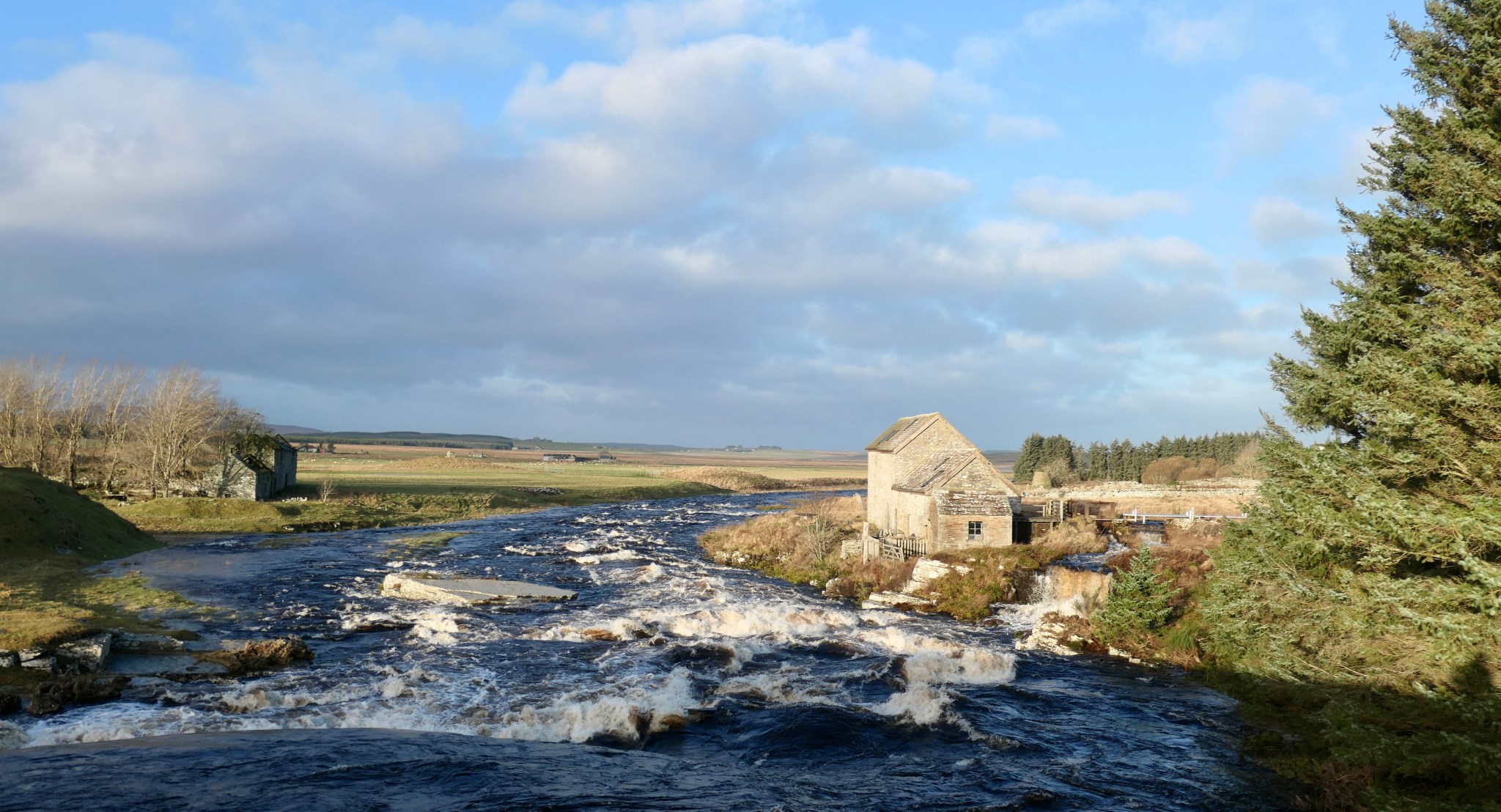
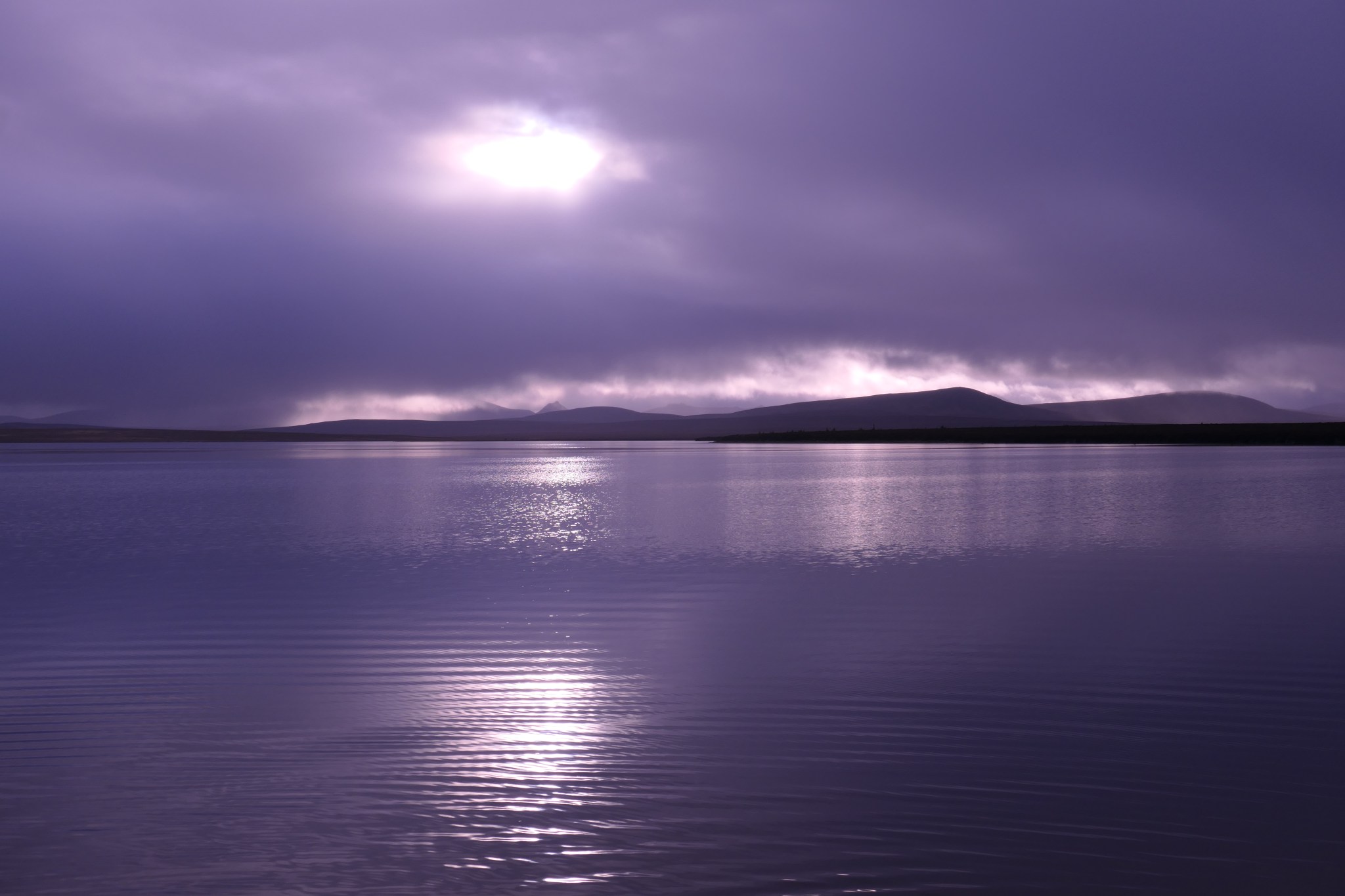
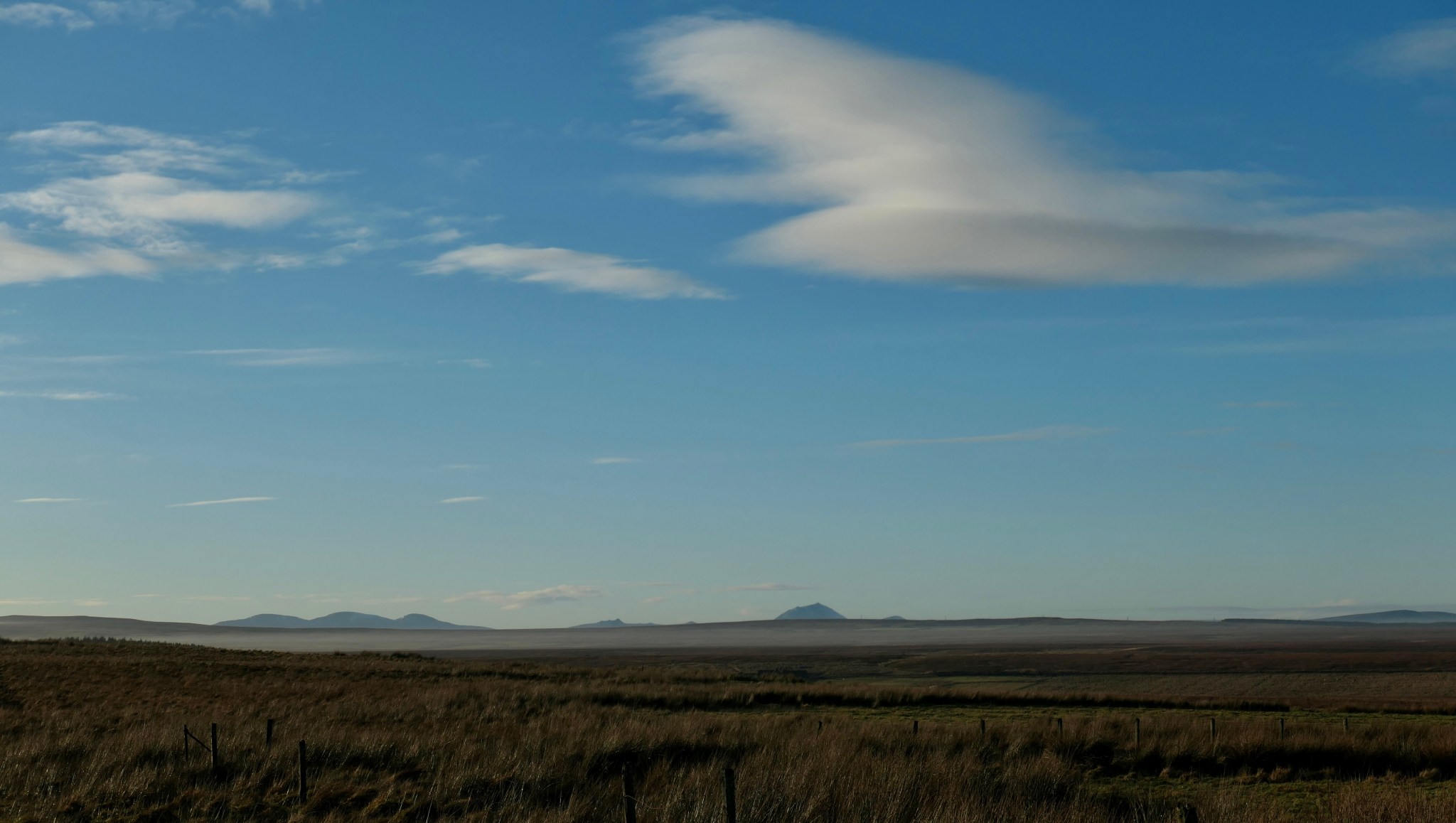
This place is rich in diversity and variety, from rugged coasts and brave fishing villages to wide landscapes of mountains and precious wetlands.
I’ll let some pictures show what I mean, click on them to see a bigger image.

All of these photographs were taken within 20 minutes of Dookes H.Q.
We are so lucky!
This week things have taken a slightly more wintery feel…

A wintery snowscape from Dookes H.Q.
“Hazy Shade of Winter”

We’ve had about 12 inches (300mm) of snow in the last 48 hours.
It’s time to keep warm and snug especially as more is expected!

Once I can dig ourselves out of the house, I look forward to more exploring and posting more pictures!!

Catch you soon,
Dookes

Moving Home – Dookes HQ Relocated – Here Comes The Solstice!

I’ve been quiet for a long time, off air and our of contact!
Life has been hectic for the past few months as Mrs Dookes and I have been in the process of moving home.

In the usual Dookes way this hasn’t been a minor undertaking. In our world it always seems that if something is going to happen it’s going to be pretty major and totally worth doing! This also hasn’t been a simple matter of popping just a few miles down the road or into the next county; oh no, we have moved from one end of the United Kingdom to the other!

Previously we were in Cornwall, in the far South West. Now we are in Caithness, thats about as far to the North East as we can go without dropping into the sea! Not only have we travelled 750 miles North, we have also changed countries and are now in Scotland.

Additionally, we are very, very, happy with our decision!

It is beautiful here , the people are great and I am looking forward to blogging furiously about the place once I get out and explore more on two wheels, but for now I give you a couple of taster pictures

Not a bad view from the back door of Dookes H.Q.!

Thursday is the Winter Solstice and I’m very happy in a Druid-like way. I said before, it’s probably my favourite day of the year.

In our Northern Hemisphere it is the shortest day, when the Sun barely shows itself above the horizon and then for the briefest possible time! Here in Caithness the daylight hours are particularly short. Sunrise on the Solstice will be at 09:02 and Sunset is at 15:20.

Caithness Sunrises are very special!

I have said previously how the relevance of this turning point has become stronger for me as I have grown older; I understand the ancient people who venerated the turning seasons and the Celestial Calendar, I celebrate their wisdom and align myself to their beliefs.

It appears that since the dawn of time our forbears have found reason to celebrate a festival of light in the depths of the darkest day of the year. So why not have a party to celebrate the ending of one celestial year and the beginning of a new one?

Sounds good to me, but then I am a Welsh Wizard/Dewin Cymreig!

Stennes Sones Orkney

Have a great Solstice everyone.
Catch you soon,
Dookes
“Now is the Solstice of the year.
Winter is the glad song that you hear.”

Adding Some Omphf!

Well, I’ve had been dithering about it for some time and then I have finally bit the bullet and trundled Hettie into Plymouth Harley Davidson for that Stage Two Tuning I wrote about a couple of months back.

Hettie

In essence it’s a fairly simple job; just dismantle half the engine, throw away a few bits, add in some new ones, bolt it all back together and ride off with a smile on your face…!

If only it were that simple!

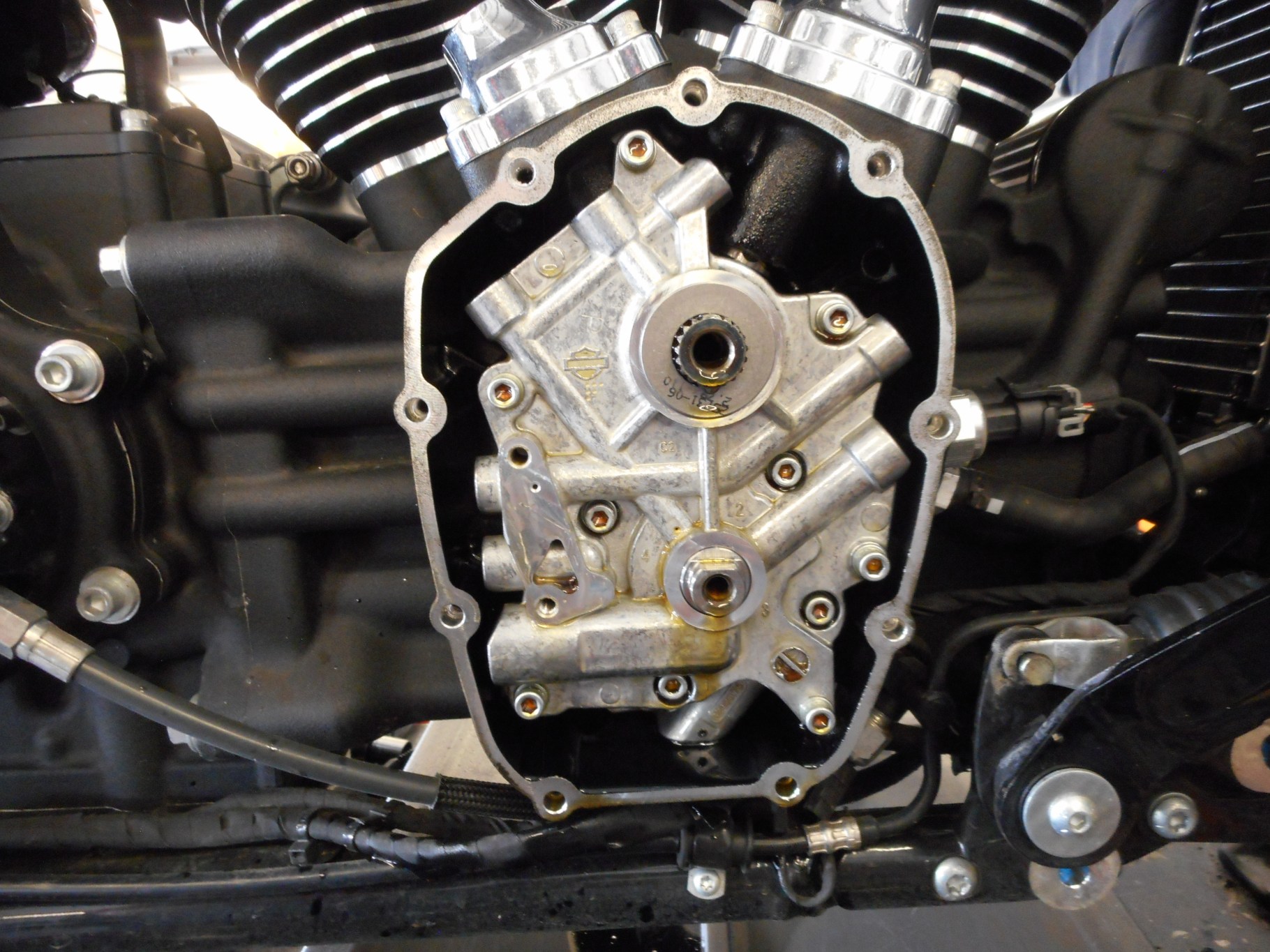
The whole job takes a skilled Harley Technician about five hours to install the new high-lift cam, pushrods and remap the ECU, it wasn’t something that I fancied doing myself. Whilst we were at it though I also arranged for a new high capacity oil pump to be fitted, you can’t have too much lubrication if there is more horse power involved.

I am grateful to Damien at Plymouth Harley Davidson for doing the work and also taking some photos for me as a record.

First of all the fuel tank had to come off. Then the air cleaner and timing cover are removed.
You can see the end of the oil pump with its drive chain at the bottom of this picture.

The drive is dismantled.

Once the oil pump is out of the way, the old camshaft is removed and replaced with the new sexy one. Unfortunately Damien didn’t take any pics of that stage, but this is what it looks like.

After that, the new oil pump goes in…I don’t know why its orange as you cant see it once everything goes back together!

Then once it’s back together, no one would ever know the difference…

Until you open the throttle…
Then it’s 0 to ‘Maximum Smiles per Hour’ in just a few seconds!

Oh and she sounds just great too!

Catch you soon,
Dookes
En France, Chillin’ and Cookin’

It seems amazing to me that its been a year since I’ve been in France…the gap has not been through choice! It’s just that Mrs Dookes and I have had so much going on in our lives that fitting in a holiday or some motorcycle touring hasn’t really been possible. The situation has frustrated us both, so a few weeks back we grabbed the nettle and booked a short trip to Brittany. Boring stuff can wait!

The nice thing about Brittany, for us, is the lovely friends that we have made here over the years; that started way back when Mrs D was an au pair, long before she met Dookes!!

We caught the overnight ferry to Roscoff and on the spur of the moment decided to drive 200 miles to visit our friend Anne and her vineyard. Yeah I know, crazy, but Anne’s wines are simply heavenly!

Located near Ancenis, in the Val de Loire, the vineyard is a bot of a mix of a traditional Muscadet producer and then something quite exceptional. Anne’s family are very connected to their land, they should be they’ve been there since 1635! As such, they can “read” what the vines are telling them and then react by producing limited “cuvees” of incredible complexity and variation; it’s very true that you have to grab them quickly!

In 2021 the produced Cuvee L’Inedite that was a heady golden wine with just the right balance of acidity and sweetness caused by early frosts as the grapes still hung on the vine. Sadly this has all now gone, but it was wonderful whilst it lasted!

2022 offered different conditions and the result was Fine Fleur, straw coloured, lightly floral on the nose, with hints of honey and again flowers in the mouth. Anne and the team at Domaine des Génaudièrs have done it again, another masterpiece!

Needless to say, the Dookesmobile was pretty quickly loaded up with an adequate amount of the heavenly harvest!!

Our next stop was with our friend Christophe and his delightful house in the middle of the Borcéliande Forest for some much needed peace and quiet. It’s only 150 miles away from Anne’s place, though sort of heading back on ourselves!

Chez Christophe

Borcéliande is a place of legend. An enchanted forest that held sway in the imagination as a place of magic and mystery. It features in the legend of King Arthur, as the home of Morgan le Fay and her Vale of no Return, whilst local Breton legends talk of a forest of fairies and whichcraft..

To me it is a place of serenity, stillness and peace. Somewhere to go to unwind, recharge and start anew; possibly its my Celtic roots that embeds me into Brocéliande, I just feel at home here.

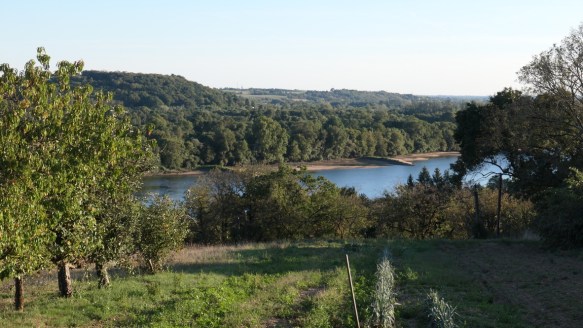
Brocéliande from the beadroom window!

There’s no rest for Dookes yet though. After a day of socialising and driving, I have to cook!

OK, it’s not a big deal, in fact one of my passions is cooking in France as I’m sure I have recounted in the past. I blame my sadly departed mate Floyd for planting the seed, I’m sure he will be looking down on me quietly amused as how it grew!

I have a wonderful old French cookbook “Des Meilleurs Petits Plats Français” that I frequently turn to when in need of a bit of culinary inspiration and as i had just bought a rather nice hunk of Monkfish, Lotte in French, the book was consulted.

Monkfish, off the bone.

Bourride de Lotte et Coquilles avec aioli was the end result, and not at all bad if i say so myself!

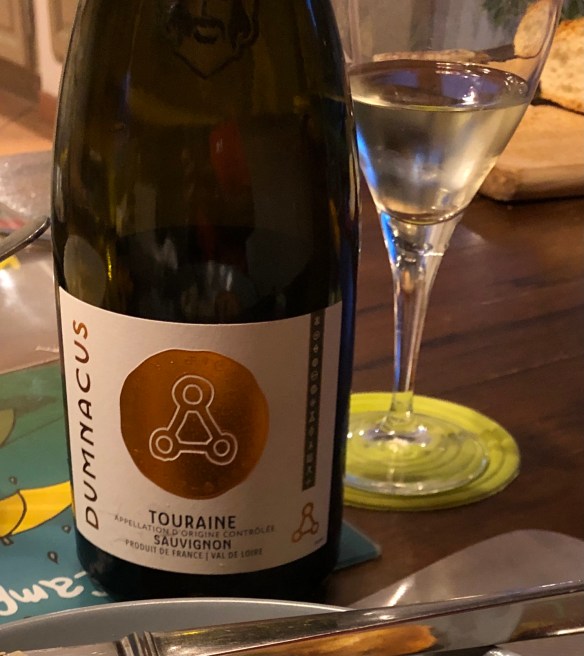
This was, naturally, accompanied with a fine white wine, a Touraine from near Angers on the left bank of the Loire.

Here’s to Mrs Dookes my companion on life’s crazy ride!
And here’s to you too Floyd, I still miss you..

Catch you soon,
Dookes
That Hurt!

Hello blogonaughts!

Back in April, I posted about fitting the new “Daymaker” LED headlamp to Harls and I also reported a minor injury to my right shoulder….
Well here we are four months later and I can now update that “minor” injury report to something altogether more tedious! Since the initial incident my shoulder and right arm has basically just got a whole lot worse, despite Sports Therapists, Physiotherapy and Doctors attention! You don’t all need to know my medical history, but I did smash up that shoulder about thirty years ago and a degree of my latest issues turned out to be related to that, joy! Anyway, yesterday saw Dookes in hospital for a reasonably simple procedure to, hopefully, rectify the problem and get life back to normal. I certainly had the best night’s sleep last night that i have enjoyed for months!

Today I feel like I have been kicked by a mule! The stabbing, sickening pain is however gone and i’m thankful for that; now all I have to do is get on with my recovery exercises and behave myself for a couple of weeks….Dookes is bouncing back!

Now, with all this shoulder and medical stuff going on, not to mention, grinding ,wearing, pain, I’ve needed something to raise the old Dookes spirits and what could be better than ordering some motorcycle parts…!

Not shiny farkles this time though, ooo no, Dookes is talking “performance parts.”
I’ve decided to fit a Stage Two tuning kit to Hettie, my FLHC Heritage Classic.

Hettie

Whats a Stage Two tune?

Simply put, Harley’s Stage Two kit contains a performance camshaft and adjustable pushrods.

These parts are intended to increase the duration of the valve opening and lift in the valve train. In other words, the new cam pushes the valves open further and keeps them open longer, which allows more fuel and air into the cylinders and equally clears the exhaust out more efficiently. Theres also a small tweek needed to the ECU mapping too.

I’ve chosen a kit which will increase engine torque and enhance performance in the low and mid-RPM range by up to 15%. This should translate into a crisp throttle response and faster acceleration at lower speeds, which comes in handy to pass slower vehicles without shifting down.

It should also sound really cool too!

I can’t wait for it to be fitted in a couple of weeks by my friends at Plymouth Harley Davidson. By then I should be fit enough to ride again too!

Catch you soon,

Dookes
Gremlins!!

I first published this post way back in 2015!

Following a comment this week from my blogging friend Michael Graeme, I thought that I would revisit and update it, as things in the Gremiln world have moved on a bit since 2015!

Don’t forget to visit Michael’s site, https://michaelgraeme.wordpress.com/ he writes some lovely tales that are well worth following!

Now with Gremlins I’m not referring the  fictional characters in the Hollywood films of the same name. These little fellows are real and play havoc with all kinds of electrical and mechanical equipment.

It is believed that these little creatures first came to notice during the First World War between 1914 and 1918. Perhaps the activities of the war released them from an underground lair? Certainly they were documented by the Royal Air Force in the 1920’s, when the Gremlin delectation for mischief with aeroplanes and engines was further recorded.

During World War II aircrew of the RAF blamed Gremlins for inexplicable occurrences during their flights and missions. Members of the United States Army Air Force also began to experience the exasperating effects of these Imp like little devils. There was even a view that Gremlins had enemy sympathies, but investigations subsequently revealed that enemy aircraft had similar and equally inexplicable mechanical problems; they were just as prevalent in the Luftwaffe and Imperial Japanese Airforce!

It appeared that Gremlins were equal opportunity beings that took no side in the battle; rather they acted in self-interest wreaking their mischief on whoever came into their range.

Since the end of the Second World War the opportunity for Gremlin mischief has literally exploded. The world is now a much more mechanical and electrical place, giving even the most inept trainee Gremlin the chance to practice their dark skills. Since the demise of powerful piston engine aircraft, there is however, one machine that Gremlins love above all others. . . Motorcycles!

Gremlins are now known to be evil road spirits. They jump onto passing motorcycles because they love to ride, feel the wind in their ears and the vibrations of the engine, they are often the cause of many problems endured by bikers. There is however, hope. Many years ago an old biker discovered that Gremlins hate the sound of a small ringing bell. There are many versions of the story of how this happened, but it appears that the evil road spirits can’t bear the ringing and that they get trapped in the hollow body of the bell. Then their hypersensitive hearing and the constant ringing in a confined space drives them insane and they lose their grip and eventually fall off.

Over time it has become apparent that these bells have even more power if they have been received as a gift; sure they work fine if you buy one yourself, but for maximum protection you really need to receive one from a friend or loved one as a gift. That way the magic is doubled, because out there somewhere, you have a friend looking out for you.

So next time you walk past a motorcycle, take a look and see if you can spot a small bell, either on the handlebars or maybe on the swing arm. Whenever you see a biker with a bell you will know that they have been blessed with the most important thing in life, love and friendship. The spirit of camaraderie and brotherhood between bikers is what the ride bell encompasses.

P1030523

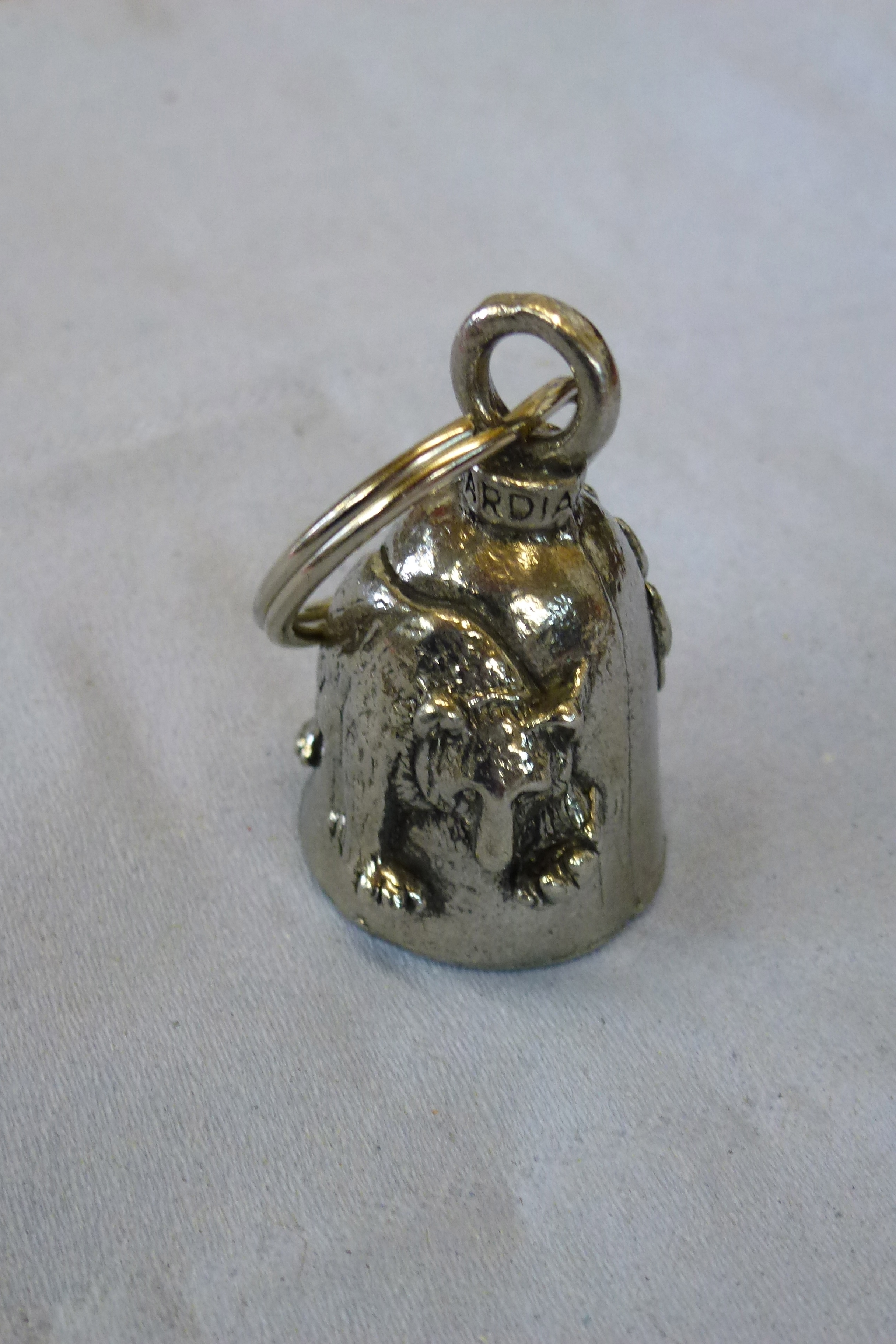
So you can imagine I was pretty happy when Mrs Dookes presented me with this little beauty to hang on Hettie.
P1030524

…..and then another one for Harls!

As you can see, I took the picture of Hettie’s bell when it was new and before I fixed it to her.
Harls bell shows it has done quite a few miles!

A word of caution though…if you steal a bell from a biker, you steal all the gremlins and the evil that comes with them. So don’t do it, the consequences could be dire!

“You got me ringing hells bells.”

Catch you soon.

Dookes

Black Magic or Witchcraft?

I received a message the other day.
“Hey Dookes, how come you haven’t been out riding the mountain passes for a while…?”

Good question, yes, it has been a while since I’ve been on a decent road trip and this is the time of year that I normally would be away. Though to be fair, locally its not a bad place to ride.

As to why:
Well, first off was the small matter of the Covid Pandemic. Now whatever you think about the whole situation surrounding that, there is no doubt that it certainly caused no end of difficulties with travel. In my case there was also the more than slight inconvenience of catching the virus long before vaccines and effective treatment; fun it was not! Then for most of last year I was tied up on a building project here at Dookes H.Q.. Anyone who has had building work done will know just how much time that absorbs.

So that leads us to this year….and just as i was starting to consider slipping off for a quick blast around the mountains, I injured my right shoulder. Bummer. The good news is that some days I’m ok to ride about 50-60 miles, the bad is that other days I’m fit for not much at all and today is one of those!! Fortunately I have an appointment with a Consultant who specialises in shoulders and I am hopeful to get the thing on the road to recovery very soon.

We have been been experiencing lovely sunny riding weather for the last month or so, which has enabled me to get out on my two lovely Harleys when the mood and shoulder permitted. I have also really been falling in love with my Heritage Classic “Hettie” until a couple of weeks ago, that is.

Now “Hettie” is typical of many modern motorcycles and other vehicles; full of electronic wizardry that is supposed to aid the rider and deliver maximum efficiency…and all of it beyond my comprehension or ability to put right if it goes wrong! I’m just a simple mechanical engineer!

One of the little gizmos that “Hettie” has is keyless ignition, using a magic fob that unlocks the motorcycle when in close proximity to it. There is no button to press, the machine just senses the fob, disables the immobiliser and allows me to start the engine…in theory.
I wanted to go for a short ride one evening a few weeks ago, but when I climbed on board the display simply told me “No Fob”. Except I was holding it in my hand!
No panic, I popped back inside Dookes H.Q. and brought out my other fob, to which the bike started with no problem.
Next day I decided to investigate and yes one fob would definitely not work; so I changed the fob battery. It still wouldn’t work.
Time to check the user manual. Nothing useful there.
Check on line user forums. Nothing useful there either.

Ring the local Harley Dealership. “Bring her in”.

Monday last week I rolled into Plymouth Harley Davidson and handed over the two fobs and “Hettie”.

Twenty minutes later technician Damien appeared and questioned just exactly what I had experienced as he could not find a fault with either the bike or the fobs! I used to hate that in my railway days, NFF, “No Fault Found”!!! We discussed the issue and he went back to the workshop to try again.

After another 30 minutes “Hettie” and Damien appeared at the front of the Dealership and he confirmed again that he couldn’t get the bike to reveal any fault, but he had, as a precaution, reset the system and reprogrammed the fobs for me.

I concluded that it was Black Magic and that Damien had weaved some kind of Witchcraft to banish the Demons!

I went to pay and was pleasantly surprised when Dealership Principal Chris told me that there was no charge and in addition they had carried out a “health check” on “Hettie” which she had passed with flying colours!
Now that’s what I call good customer service!

Time to ride home…

“Call me the breeze, I keep blowin” down the road”

Catch you soon

Dookes

With many thanks to Plymouth Harley Davidson.