The Last Lap Home

OK, I need to be honest about this trip; I’ve found it really tough!

I’m thinking that its a mixture of things:
1. I’m out of practice riding motorcycles; with all the upheaval last year I just haven’t had time to get out on any kind of two wheels. Plus with all our things in storage, I couldn’t get at them anyway.
2. I’m carrying a couple of injuries at the moment, nothing serious, but enough to inhibit me a bit and at times make life a bit uncomfortable, plus I’m as a result not as fit as I like to be!
3. The weather. Riding in our Northern latitudes in early Spring is always going to be a bit of a lottery with the weather, plus inevitably it’s going to cold a times. OK, I do wear my heated clothing and it has been quite a bonus on this trip, but after a few hours in the saddle you do still feel the cold in the unheated bits! Rain doesn’t really bother me, except when it makes the roads greasy, as my gear is all very waterproof.
4. I’m getting older. No escaping this, I’m not going to let it stop me, but maybe I need to modify my approach to motorcycle touring in future?

Anyway, we are now home in Caithness, arriving here after a 300 mile push from Lauder in the Scottish Borders last Saturday.

I think that I can describe the day as a symphony in four movements…

Lauder to Edinburgh was delightful on open roads in the early morning crisp sunshine.

Scottish Borders Roads. Smooth, Sweeping, Empty.

Edinburgh ring road to Perth via the Queensferry Crossing was busy, very busy and not over enjoyable.

Queensferry Crossing.

Perth to Inverness on the A9 climbing into the Highlands was a hard section; fantastic scenery as the mountains rose around us, annoying traffic at times and getting colder.

Welcome to The Highlands, snow on the mountains still!

Inverness to Caithness, a feeling of opening freedom, clean air, less traffic, fun roads and the joy of getting near home.
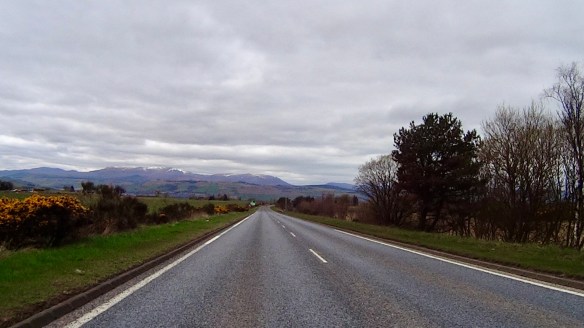
Nearly Home!

The last bit is always something to be wary of, as many accidents befall motorcyclists at the end of long trips just as they are nearing home! A bit of light rain began to fall ten minutes from Dookes H.Q. and was enough to turn the roads quite greasy, so yes, time to be extra cautious!

Caithness Roads, take us home!

The trip is over now and though I’m still physically recovering from it, I’ve had time to process it all a bit.

It’s been strange doing a long trip in my own Country and by that I mean the UK.

In comparison to my many Continental Europe trips I was struck by how busy and crowded our small island is; I didn’t have to stray into any major city centres to notice that!
Everywhere in England people seemed to be always in a massive hurry and yes it was really noticeable how much things change once we got into Scotland.

I saw evidence throughout the journey of crumbling and neglected infrastructure. Roads were deteriorating and pot holes common; bloody dangerous for the unwary motorcyclist too! Even on the arterial Motorways, potholes were not uncommon and many motorway signs were becoming barely legible through weathering and neglect.
The verges of many roads were strewn with litter and obvious fly tipping in lay-bys seemed normal.
Considerate and careful driving was not over common…
In many ways parts of the trip were quite depressing, but then there were the people, people who were friendly, wanted to ask about Harls and just were interested in what we were doing; that was nice and rather up-lifting. More about them in another post I feel.

The scenery was the thing though; at time it’s just breathtakingly beautiful.
From distant glimpses of the Welsh mountains, the wide sweeping Severn Valley, the sturdy Pennines and West Riding of Yorkshire, the high Westmorland Fells, Scottish Borders and finally the Highlands, every region has such lovely natural treasures.
The 868 miles that we covered were worth it for that alone; even though I didn’t grab many pictures, so much variety in such a little island!
Would I want to do the whole trip again? No, I don’t think so, I’ve got a lot of other new places I really want to go and most of them are pretty much on my doorstep.

The view from Dookes H.Q.
The view from home at Dookes H.Q.

Now, I’m starting to build a new garage for Harls and Hettie and when I’ve done that we will be back out on the road, after all I have the whole of Scotland to explore!


Hope to catch you soon.

“This land is my land,
This land is your land,
From Cornwall to the Scottish Highlands,
This land was made for you and me” …with apologies to Woody Guthrie!

Dookes

Harbouring Some History

When Dookes H.Q. was in Cornwall, I often used to visit some of the small fishing harbours dotted around the coast. I loved their quaint buildings and interesting histories.

Port Isaac, North Cornwall.

It was often hard to grasp that these little ports were once bustling centres in a much larger industry as most are today either abandoned or mostly frequented by leisure boats. The “raison d’être” for the boom times in many of these ports was the humble sardine, but today fish stocks have dwindled and tastes changed.

Only Newlyn in the far South West now supports a sizeable deep sea fishing fleet, though even that is tiny in comparison to the mid 20th Century. Other harbours, such as Looe, Padstow and St Ives have healthy numbers of “Day Boats” whilst smaller places such as Port Issac, Cadgwith and Boscastle see some local activity, mainly working pots for crab and lobster.

Port Isaac

Now, with our move to Caithness, I have been starting to investigate what the coasts around us offer and I have not been disappointed!

Splendid maritime scenery aside, we be visiting more of that in future posts, there is both a rich legacy and an active fishing industry here in the far North East of Scotland. Like Cornwall, geology has had an important role to play, with many inlets, bays and estuaries, affording natural harbours for those brave enough to take to the sea in the hunt for fish. The bigger historical picture is more complicated than that though.

Historical records show that Northern Scotland had a pretty vibrant yet local fishing industry well before the 18th Century, but it was in the late 1700’s that things started to get really serious. The story is quite complex with various factors coming together at the same time. The industrial revolution was getting into full swing. Britain seemed to be at war in all directions. Agriculture was rapidly evolving beyond subsistence farming, as the nation rose to feed the growing population needed by industry.

In the Highlands, still smarting from the echoes of the Jacobite Rebellion, changes were coming with the infamous “Clearances” where tenants and squatters were displaced by the new agricultural practices. There’s plenty about those times to fill another couple of posts, so I’ll leave that there just now, suffice to say, it had a direct and positive role in the fortunes of a number of the fishing ports.

So let’s go first to Wick, which is a small town and Royal Burgh on the North Sea coast of Caithness. It sits on both sides of the Wick River estuary. Although it was a small local fishing port, it was of no great consequence until 1768, when Sir John Sinclair of Ulbster decided to build a quay at Wick in order to promote the town as a herring fishing centre. Sinclair was by all accounts a somewhat larger than life character; a local landowner of considerable wealth, an accomplished lawyer, soldier, politician, writer and progressive farmer. He often divides opinion through his role in the clearances and being a slave owner in the West Indies. Sinclair is credited with inventing the words “Statistics” and “Statistical Analysis” which I find fascinating!

River Basin, Wick (1980) With the Harbour Bridge in the foreground, and Poultney Inner Harbour on the right. Thanks to Stanley Howe.

Progress was steadily made at Wick and herring fishing began to take off in the late 1780’s. It soon became obvious that more development and expansion was possible. The British Fisheries Society, led by another lawyer landowner, Sir William Poulteney, grasped the opportunity and entrusted harbour improvements to Scottish engineer Thomas Telford. The genius of both Poulteney and Telford was to look at the project in an holistic way; providing not only harbour developments, but fish processing facilities and accommodation for fishing crews and other support workers. The industry reached its peak between 1860 and 1890, when as many as 1000 boats were based at the harbour. Fishing then employed around 6000 fishermen and provided work for an additional 6000, often women, who gutted, salted and preserved the herrings. Over-fishing contributed to the herring all but disappearing by the early 1900s, in 1930 there were less than 30 fishing boats working out of Wick.

Today Wick is often a quiet place. There is seasonal leisure traffic and a few local fishing vessels call the harbour home. From time to time the harbour supports wind turbine transport, construction and maintenance vessels

Wick Harbour

I’ll write more about Wick in future, but now let’s pop over to the other side of Caithness and drop in on Thurso and Scrabster.

Thurso delights in being the most Northerly town on mainland Great Britain, it is just over 700 miles from London and about 300 miles from Edinburgh.

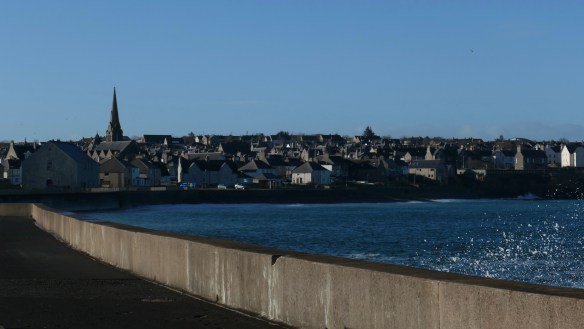
Thurso

The town straddles the Thurso River at its estuary into the Pentland Firth and has a small tidal harbour.

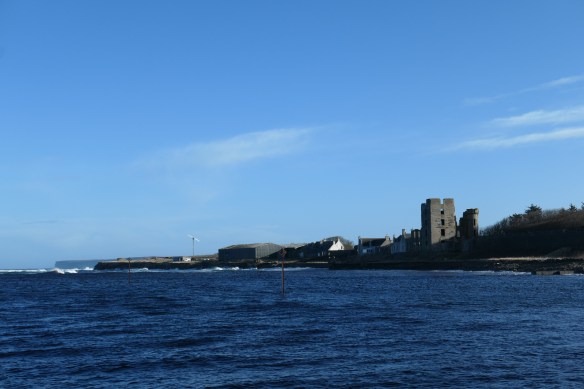
The entranse to Thurso Harbour, Castle ruin and Dunnet Head in the distance.

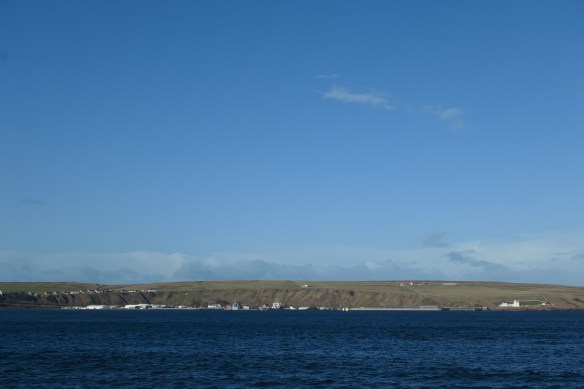
About a mile to the East of Thurso, across the bay lies Scrabster Harbour. This was constructed in 1841 to provide deep water all tide port. Scrabster initially was a fishing and ferry port, quickly becoming a vital terminus for voyages to the Northern Isles such as Orkney, Shetland and the Faroe Islands. By 1856 a ferry link was firmly established between Scrabster and Stromness on Orkney.

Scrabster from Thurso.

As Wick’s fortunes faded, Scrabster grew. Roll on, Roll off ferry operations were enabled during the 1970’s and I can vividly recall my first trip to Orkney on the MV St Ola, sailing from the terminal that shares the same name.

Through to the present day, Scrabster has experienced significant growth. The fishing industry is well supported with a modern dock, fish market, landing facilities and a large business park to cater for the various support and processing businesses.

Scrabster has become one of my favourite places to drop into, especially to grab a bargain piece of super fresh fish!

I’ll write more about some other smaller harbours around the Caithness coast in future, but for now, I’ll catch you soon, hopefully on two wheels!

Dookes

Starting To Know Caithness

Well, the Solstice came and passed, we celebrated in a wonderfully pagan way!
Christmas and New Year also ticked by.
In the meantime, Mrs Dookes and I have begun to explore our new home county and enjoy the variety it offers.

Sadly, it is not the best of seasons to ride motorcycles; so until the weather warms up and our local highways gangs stop spreading salt on the roads our exploration will not be on two wheels!

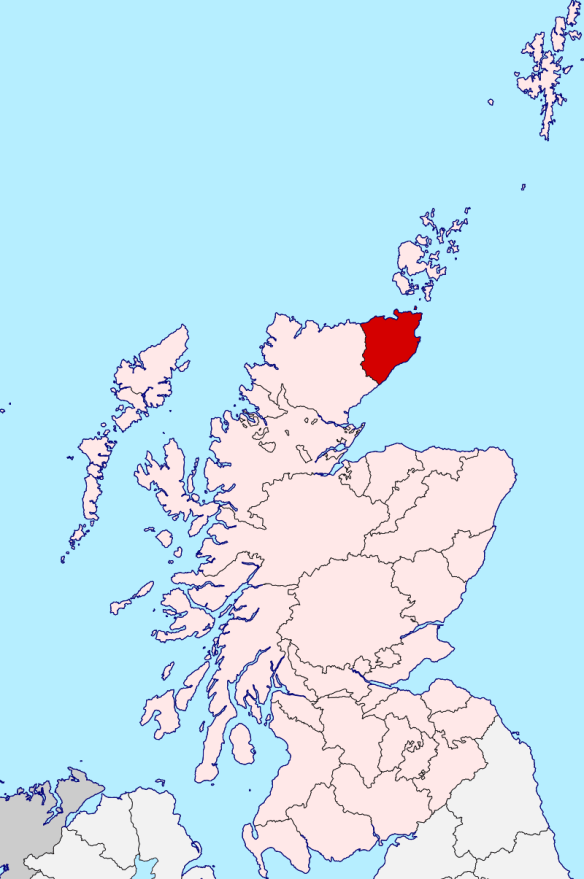
To give a taster of Caithness, I thought that I’d first better show exactly where the county is.

This a map of Scotland and that’s Caithness in red, right at the very top, so now you know!

I have a bit of a problem though in trying to introduce you to Caithness, where do I start?
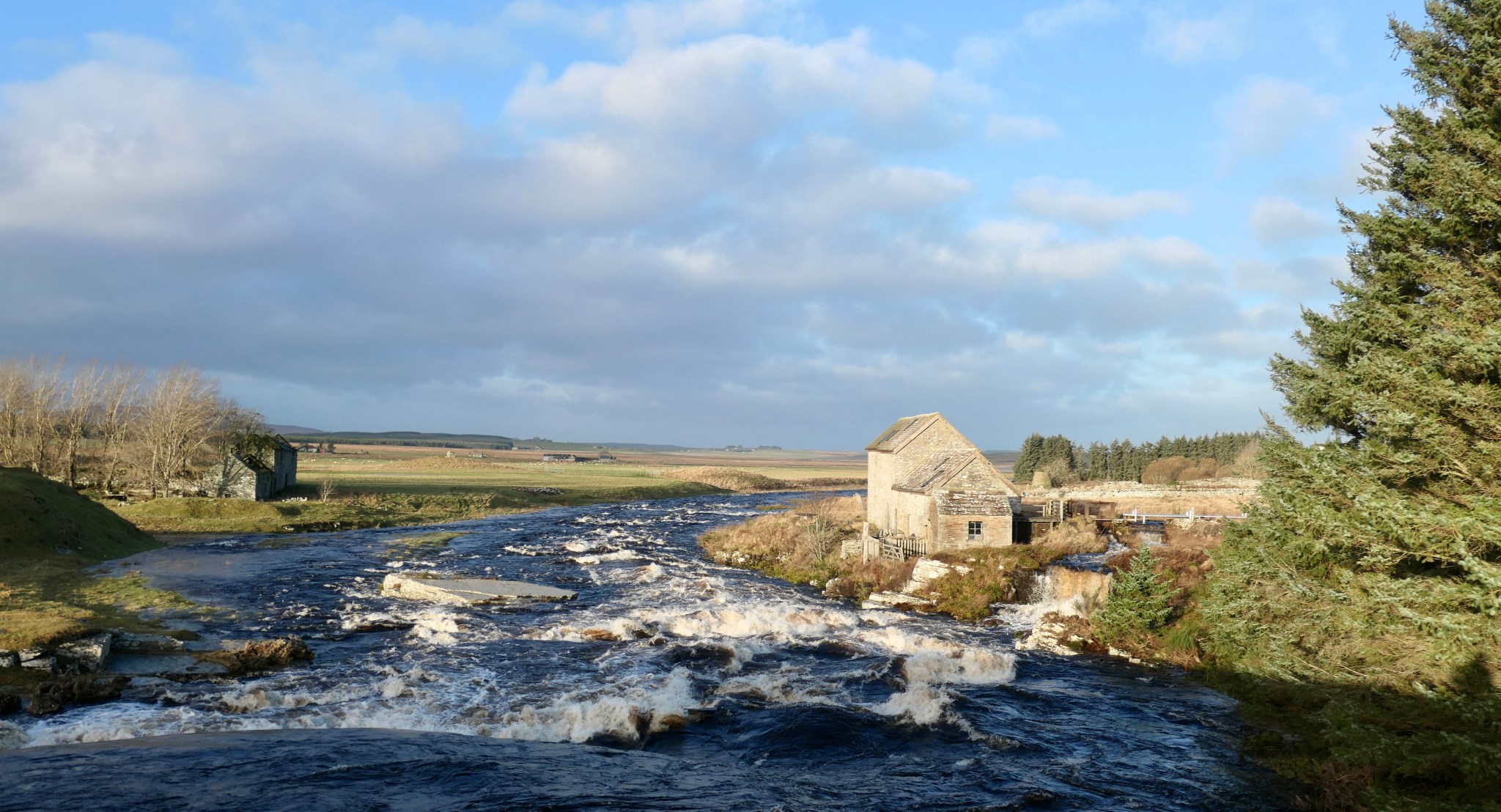
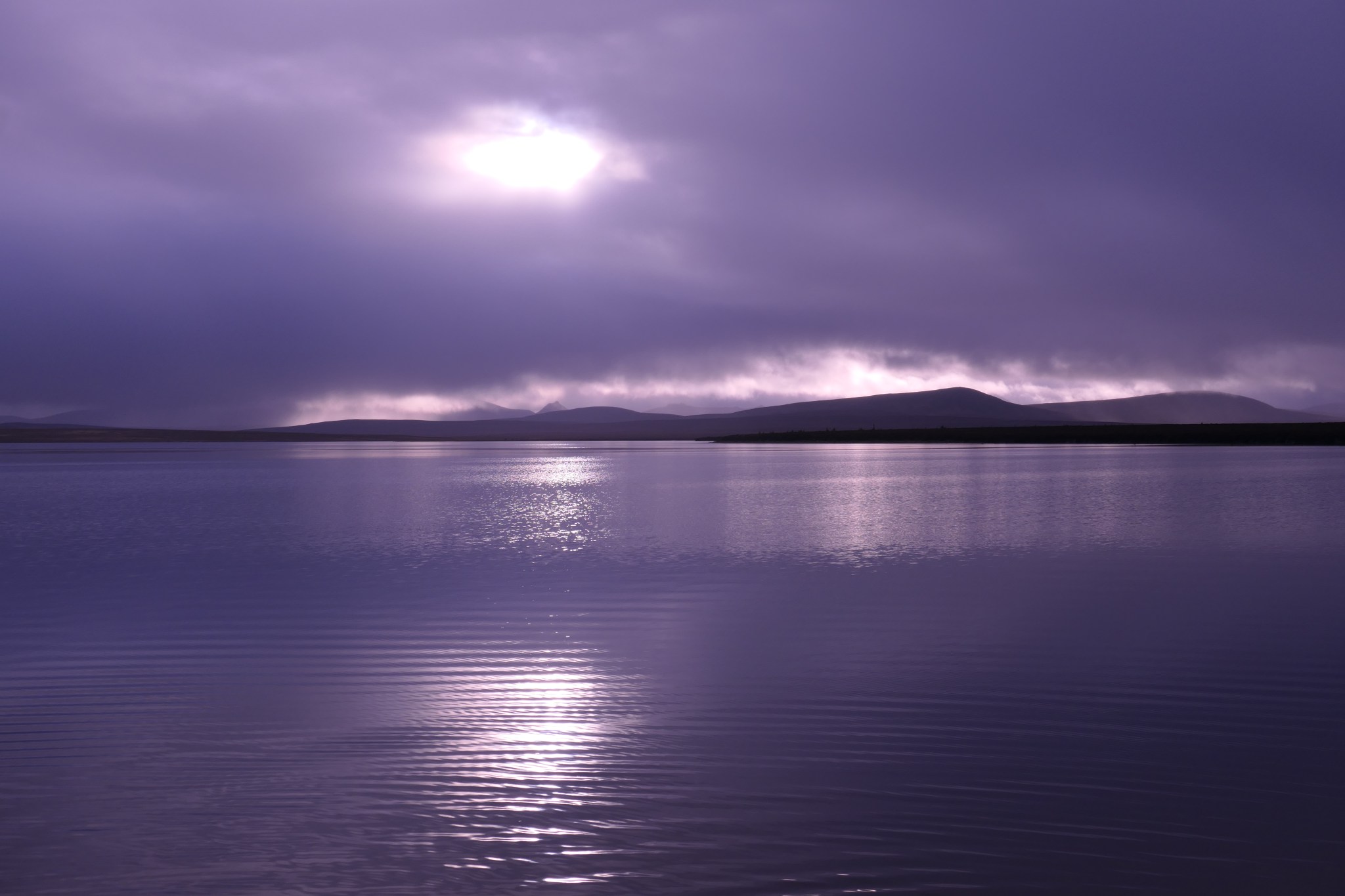
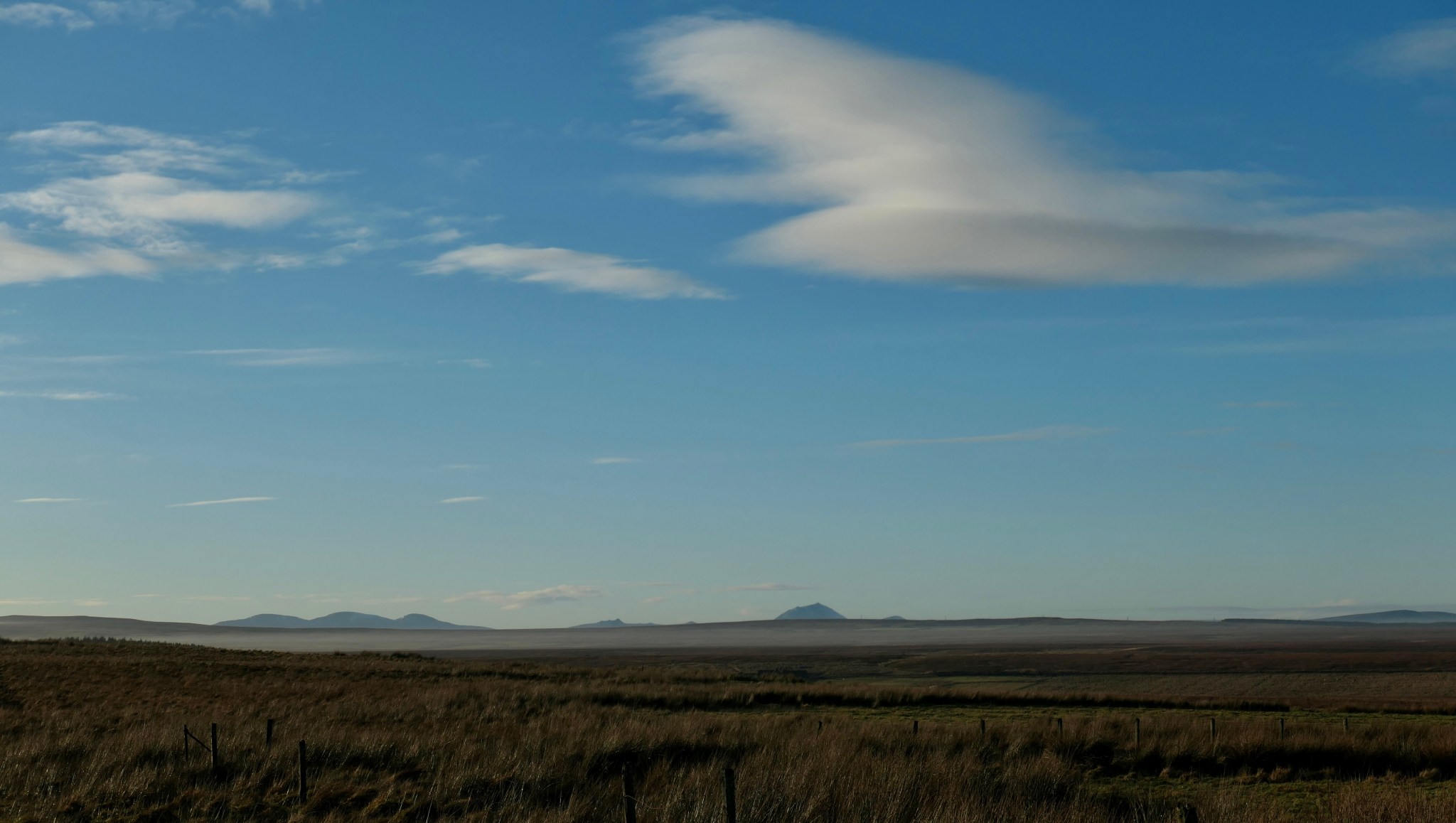
This place is rich in diversity and variety, from rugged coasts and brave fishing villages to wide landscapes of mountains and precious wetlands.
I’ll let some pictures show what I mean, click on them to see a bigger image.

All of these photographs were taken within 20 minutes of Dookes H.Q.
We are so lucky!
This week things have taken a slightly more wintery feel…

A wintery snowscape from Dookes H.Q.
“Hazy Shade of Winter”

We’ve had about 12 inches (300mm) of snow in the last 48 hours.
It’s time to keep warm and snug especially as more is expected!

Once I can dig ourselves out of the house, I look forward to more exploring and posting more pictures!!

Catch you soon,
Dookes